
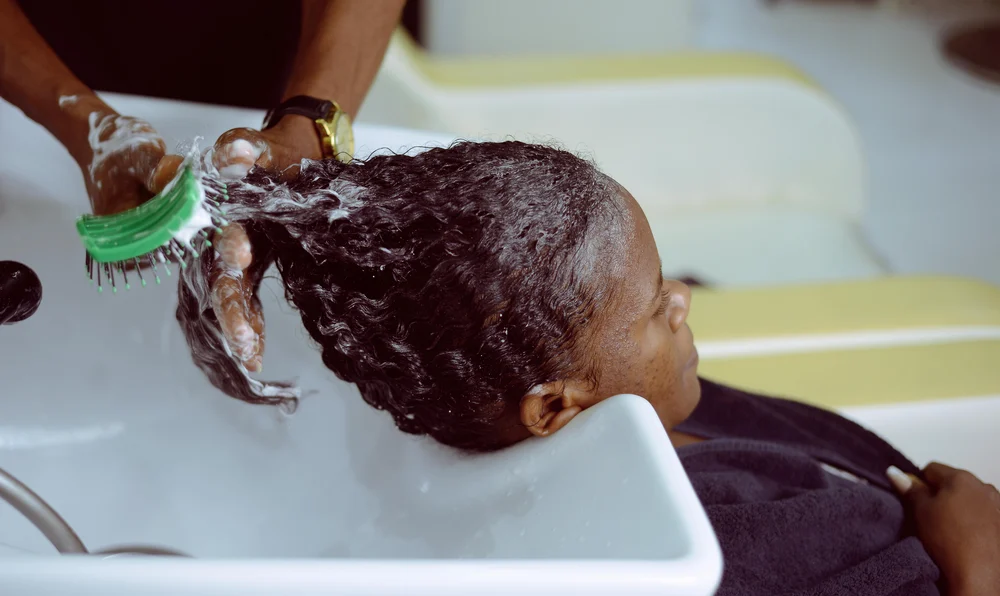
When Jenny Mitchell was about ten years old, her mother sat her down at the kitchen table and applied her first hair relaxer. By her late teens, the routine was muscle memory: every six to eight weeks, a creamy white paste that burned a little and left her hair sleek and “manageable.” At twenty-eight, she was told she had uterine cancer. The hysterectomy that followed took her cancer and her dream of biological children in the same surgery. On October 21, 2022, she became the first woman in America to walk into a federal courtroom and say what thousands now allege: the products marketed to her since childhood were never as safe as the labels suggested.
Her case — Mitchell v. L’Oréal, et al., docket number 1:22-cv-05815 in the Northern District of Illinois — opened the door. By the spring of 2026, more than 11,440 women have followed her through it.
What the Hair Relaxer Lawsuit Is Really About
The hair relaxer lawsuit is not a single case. It is a sprawling federal mass tort known as MDL 3060 — formally, In re: Hair Relaxer Marketing, Sales Practices, and Products Liability Litigation — consolidated before Judge Mary M. Rowland in the U.S. District Court for the Northern District of Illinois. Each plaintiff keeps her own case, but the pretrial work (discovery, expert testimony, scientific challenges) is handled together to avoid duplicating decades of work across thousands of courtrooms.
The core allegation is straightforward: manufacturers of chemical hair straighteners — L’Oréal, Strength of Nature, Revlon, SoftSheen-Carson, Namaste Laboratories, Dabur, and others — knew or should have known that their products contained endocrine-disrupting chemicals associated with hormonal cancers, and sold those products to generations of women, the majority of them Black, without adequate warnings. Plaintiffs argue this is a textbook failure-to-warn product liability claim, where the harm wasn’t a manufacturing accident — it was a marketing decision.
The products remain on store shelves. The FDA has not recalled them. That fact is important, both legally and emotionally, because it means women are still using these products today, often without being told there’s an active federal litigation about whether they cause cancer.
The NIH Sister Study: How a Single Paper Changed Everything
For decades, women had wondered out loud, in salon chairs and group chats, whether the products they used since childhood might be doing something to their bodies. On , the National Institutes of Health gave that suspicion data.
The NIH Sister Study, led by Dr. Alexandra White at the National Institute of Environmental Health Sciences, followed 33,497 women aged 35 to 74 for roughly eleven years. Researchers tracked which hair products participants used and which women later developed cancer. The headline finding, published in the Journal of the National Cancer Institute:
Women who used chemical hair straighteners more than four times in the previous twelve months were roughly 2.55 times more likely to develop uterine cancer than women who never used them. The lifetime risk by age 70 climbed from approximately 1.64% in non-users to about 4.05% in frequent users.
Roughly 60% of the women who reported using straighteners in the study were Black. The researchers were careful to note that the elevated risk wasn’t itself different by race — but the exposure was. Black women, on average, start using these products at younger ages, use harsher formulations, and apply them more frequently and for longer over a lifetime. The math, even with a neutral biological effect, places the burden disproportionately on one community.
A separate analysis from the Boston University Black Women’s Health Study drilled further into that disparity, reporting that postmenopausal Black women who used relaxers two or more times per year showed roughly a 50% higher uterine cancer risk than non-users — narrowing the lens to the population most affected by long-term exposure.
The chemicals at the center of the claims
The studies didn’t pinpoint a single culprit, but plaintiffs’ complaints repeatedly identify a roster of endocrine-disrupting compounds found in conventional relaxer formulations:
- Phthalates (including DEHP and DBP) — plasticizers that can mimic estrogen in the body
- Parabens — preservatives also linked to hormone disruption
- Formaldehyde and formaldehyde-releasing agents — classified as a human carcinogen by the International Agency for Research on Cancer
- Cyclosiloxanes (D4, D5, D6) — silicone compounds with reproductive toxicity concerns
- Bisphenol A (BPA) and certain heavy metals detected in product testing
The proposed mechanism is mechanically grim: scalp burns, lesions, and even microscopic cuts from regular application create a direct absorption pathway into the bloodstream. Heat applied during the process (flat irons, hooded dryers) accelerates that absorption and, in the case of formaldehyde-releasing agents, can release the carcinogen into the air for both the customer and the stylist to inhale.
Where the FDA stands — and where it doesn’t
In , the FDA formally proposed a rule to ban formaldehyde and formaldehyde-releasing chemicals in hair-smoothing and straightening products. The agency originally targeted April 2024 to finalize it. As of May 2026, that rule has still not been finalized. The deadline slipped to November 2024, then March 2025, July 2025, and most recently December 31, 2025 — a date the FDA also missed. A January 2025 federal executive order pausing pending regulations has further stalled the rulemaking. The agency continues to call the rule a “priority,” but no enforceable federal ban exists.
California’s Toxic-Free Cosmetics Act has banned formaldehyde in personal care products sold in that state. A handful of other states are considering similar legislation. For now, however, the products remain widely available across most of the country, and consumers are not receiving cancer warnings at the point of purchase.
Who Is Being Sued?
The litigation names the largest cosmetic and consumer-goods companies in the hair relaxer market. L’Oréal — which owns SoftSheen-Carson — is the lead defendant in volume of claims, but the docket includes most major manufacturers and several distributors.
| Company | Notable products | Status in litigation |
|---|---|---|
| L’Oréal USA | Dark & Lovely, Optimum Care, Mizani | Lead defendant; named in nearly all complaints |
| SoftSheen-Carson (L’Oréal subsidiary) | SoftSheen, Optimum Salon Haircare | Active; co-defendant in vast majority of cases |
| Strength of Nature Global | Just For Me, African Pride, Soft & Beautiful | Major defendant; frequently named |
| Revlon (Beauty Brands) | Creme of Nature | Active defendant |
| Namaste Laboratories | Organic Root Stimulator (ORS) Olive Oil | Active; recently lost dismissal bids in state courts (including the Garcia case in New York) |
| Godrej Consumer Products | Various hair care brands | Active defendant |
| Dabur USA / Dabur International | Various brands including Vatika lines | Active; named since first Mitchell filing |
| Avlon Industries | Affirm, KeraCare | Added in 2025 filings; named in newer complaints |
Manufacturers have denied the allegations, asserting their products are safe and compliant with cosmetic regulations. L’Oréal has publicly stated that it stands behind the safety of its products and believes the suits lack legal merit. The courts have not yet ruled on the central causation question — that’s what the bellwether trials and the upcoming Daubert hearings will begin to decide. Defendants have, however, lost several early skirmishes: a Georgia appellate court declined to dismiss the Kiara Burroughs case, and a New York Supreme Court judge rejected Namaste Laboratories’ motion to dismiss Mayra Garcia’s endometrial cancer claim in late 2025. These rulings don’t decide the underlying science, but they signal that judges are letting the cases proceed to the evidentiary stage.
Injuries Covered in the MDL
Judge Rowland has indicated that bellwether cases must involve one of three primary cancer diagnoses, but the broader MDL accepts claims for a wider range of conditions linked to long-term relaxer use.
- Uterine cancer (including endometrial cancer and uterine sarcoma) — the centerpiece of the litigation
- Ovarian cancer — included in bellwether selection criteria
- Endometrial cancer — frequently named alongside uterine claims
- Breast cancer (certain hormone-receptor subtypes, particularly estrogen-receptor positive)
- Uterine fibroids requiring surgical intervention
- Endometriosis
- Hysterectomy performed as a result of fibroids or cancer linked to product use
For families who have lost loved ones to these diagnoses, wrongful death claims are also being filed within the MDL framework. Surviving spouses, children, or estate representatives can step into a deceased plaintiff’s case — the court has issued specific case management orders governing substitution when a plaintiff passes away during litigation. If you’re navigating that path, our guide on wrongful death claims and settlement strategy walks through the additional considerations.
MDL 3060 Current Status — May 2026
The litigation is in one of its most consequential phases. Here is where things stand as of the most recent docket activity:
- Court
- U.S. District Court for the Northern District of Illinois (Chicago)
- Presiding judge
- Hon. Mary M. Rowland
- Magistrate (discovery)
- Hon. Beth W. Jantz
- Special Master (settlement)
- Ellen K. Reisman, appointed to oversee settlement negotiations
- Pending cases
- Approximately 11,440 actions consolidated in the MDL, with additional cases proceeding in state courts in Pennsylvania (Philadelphia), Georgia (Atlanta), New York, and elsewhere. Growth has averaged roughly 200 new filings per month.
- Master Complaint
- Filed and operative; subsequent complaints reference the master pleading
- Science Day
- Held January 8, 2026 — plaintiff and defense experts educated the court on the underlying chemistry and epidemiology
- Bellwether pool
- Judge Rowland personally selected 10 representative cases for the bellwether trial pool in April 2026, rejecting the earlier alternating-selection proposal from the parties
- Discovery
- Bellwether fact discovery extension closes June 10, 2026; expert discovery continuing through the summer
- Daubert motions
- Daubert and summary judgment motions due November 16, 2026 — the court will decide which expert witnesses are permitted to testify
- First trials
- Expected mid-2027 at the earliest, with global settlement discussions unlikely before late 2026 or 2027
Recent developments (Spring 2026)
Three things have moved the needle since the start of the year. First, the January Science Day saw plaintiff experts walk Judge Rowland through the epidemiological evidence — a critical moment because the strength of that presentation shapes how the court will later rule on Daubert challenges to expert testimony. Second, Judge Rowland took direct control of bellwether selection in April, locking in the 10-case pool herself rather than letting the parties continue their alternating picks. Third, a March 5, 2026 case management order formalized procedures for plaintiffs who pass away during litigation, requiring substitution motions within 90 days of notice of death. The court also approved an AI-assisted document review protocol in May 2026 for one of the manufacturers, with human-review safeguards built in — a sign of how vast the document discovery in this MDL has become.
The pace can feel maddening to women living with diagnoses today, but it is consistent with how comparable mass torts have moved. The Camp Lejeune water contamination litigation followed a similar arc, as did the talcum powder, Roundup, and 3M earplug cases before it. Patience is one of the hidden costs of mass tort participation.
Estimated Settlement Payout Tiers
No global settlement has been announced. Any figures circulating online are projections based on how comparable mass torts have resolved — not guarantees, not offers, and not promises from any defendant. With that emphatically stated, attorneys and analysts watching MDL 3060 generally model potential payouts in tiers tied to injury severity, drawing on patterns from talcum powder, Roundup, and similar litigations.
| Tier | Injury category | Estimated range |
|---|---|---|
| Tier 1 | Uterine fibroids requiring medical or surgical treatment | $100,000 – $250,000 |
| Tier 2 | Endometriosis or hysterectomy due to non-cancer fibroids | $250,000 – $500,000 |
| Tier 3 | Early-stage uterine, ovarian, or endometrial cancer (Stage I–II) | $500,000 – $1,500,000 |
| Tier 4 | Late-stage cancer (Stage III–IV) or wrongful death | $1,500,000 – $4,000,000+ |
Several factors will shift any individual case within these ranges: age at diagnosis, years of product use, frequency of use, documentary evidence of which brands were used, severity and prognosis of the diagnosis, whether the woman has dependents, lost income, medical bills, and the outcomes of the bellwether trials. A 30-year-old plaintiff diagnosed with stage III uterine cancer who can document twenty years of consistent product use will be valued differently from a 65-year-old who used relaxers occasionally.
If a settlement is structured rather than paid as a lump sum — a common arrangement in mass torts — recipients may face decisions about whether to keep, sell, or restructure the payments. Our guide on structured settlements and your options covers that decision in plain language.
Are You Eligible? The Checklist
Eligibility for a hair relaxer claim isn’t a single bright line — it’s a combination of product use history and medical diagnosis. Most attorneys handling these cases evaluate against criteria along these lines:
- You used chemical hair relaxers or straighteners at least four times per year for a sustained period
- Your use spanned at least 12 months, and ideally several years (most plaintiffs have decade-plus use histories)
- You were later diagnosed with a qualifying condition: uterine cancer, ovarian cancer, endometrial cancer, certain breast cancer subtypes, fibroids requiring treatment, endometriosis, or you underwent a hysterectomy related to one of those conditions
- Your diagnosis came after you began using the products (causation requires the exposure to precede the injury)
- You can produce medical records confirming the diagnosis and ideally some documentation of product use (receipts, salon records, photographs, or detailed personal recollection paired with pharmacy or retail purchase history)
- You are within the statute of limitations for your state — the most common case-killer, and the reason early consultation matters
Some women worry they won’t qualify because they can’t remember exact product names or dates. Don’t write yourself off prematurely. Attorneys handling these cases know that nobody keeps a thirty-year hair-product diary. Patterns of use, family memory, salon records, and even social media photos can build a credible exposure timeline.
Statute of Limitations by State
The statute of limitations is the legal clock that determines how long you have to file. For most states, the clock starts not on the date of last use, but on the date you knew (or reasonably should have known) that your injury was caused by the product — known as the discovery rule. Because the NIH Sister Study was widely publicized in October 2022, courts in many jurisdictions treat that date as the practical start of the clock for women diagnosed earlier. State laws vary, however, and the differences can be decisive.
| State | Time limit | Notes |
|---|---|---|
| California | 2 years | Discovery rule applies |
| Texas | 2 years | Discovery rule generally applies in latent-injury cases |
| New York | 3 years | Toxic tort discovery rule applies (CPLR §214-c) |
| Florida | 2 years | Reduced from 4 years in 2023 tort reform — act quickly |
| Illinois | 2 years | MDL venue state; discovery rule applies |
| Georgia | 2 years | Active state-court litigation in Atlanta |
| Pennsylvania | 2 years | Active Philadelphia state-court docket |
| Ohio | 2 years | Discovery rule applies for latent injuries |
| Michigan | 3 years | Discovery rule applies |
| North Carolina | 3 years | Plus 10-year statute of repose — strict outer limit |
| Virginia | 2 years | Limited discovery rule |
| Maryland | 3 years | Discovery rule applies |
| New Jersey | 2 years | Discovery rule well-established |
| Washington | 3 years | Discovery rule applies |
| Arizona | 2 years | Discovery rule applies |
| Indiana | 2 years | Plus 10-year product liability statute of repose |
| Tennessee | 1 year | Shortest in the country — act immediately |
| Louisiana | 1 year | Civil-law tradition; discovery rule applies |
| Massachusetts | 3 years | Discovery rule applies |
If your state isn’t listed, or if you’re unsure when your clock started, consult an attorney licensed in your state before the deadline becomes irrelevant. Even a delay of a few weeks can be the difference between a viable claim and a barred one.
The Evidence You’ll Want to Gather
Strong mass tort cases live and die on documentation. Begin pulling these together as early as possible, ideally before you sign with any law firm:
- Product purchase records — Amazon order history, CVS and Walgreens loyalty card transactions, Target/Walmart receipts, beauty supply store accounts. Many retailers can produce purchase histories on request going back several years.
- Salon records — appointment books, receipts, credit card statements showing payments to salons, even social media tags or check-ins
- Medical diagnosis records — pathology reports, biopsy results, imaging (MRI, CT, ultrasound), surgical reports, oncology consultation notes
- Treatment history — chemotherapy and radiation records, hospital admission summaries, medications, follow-up oncology visits
- Photographs — pictures from across the decades showing the hairstyles consistent with relaxer use can corroborate a product-use timeline
- Witness statements — family members, longtime stylists, or close friends who can attest to your use patterns
- Employment records — for lost wages claims, particularly if treatment forced time off work
If you’ve experienced a misdiagnosis or delayed diagnosis along the way, that may be a separate matter worth exploring — our medical malpractice guide outlines when delayed cancer detection becomes its own legal claim.
How to File Your Hair Relaxer Claim — Step by Step
- Confirm a qualifying diagnosis. Without medical documentation of a qualifying condition, there is no claim. Pull your records from your treating physicians and oncologist.
- Document your product use. Make a written timeline — when you started, which brands you remember, how often, where you bought the products or had them applied. Memory plus paper trail is the goal.
- Request a free case review. Most law firms handling MDL 3060 cases offer no-cost, no-obligation consultations. They will review your facts and tell you whether you have a viable claim. Do not pay any upfront fees — legitimate mass tort firms work on contingency.
- Sign a retainer agreement. If you decide to move forward, your attorney’s contingency fee will be specified in writing. Standard mass tort contingency fees run 33%–40% of any recovery, plus litigation costs.
- Complete the plaintiff fact sheet. The MDL court requires each plaintiff to complete a detailed questionnaire — your attorney’s intake team will guide you through it. This is one of the most time-consuming steps; expect two to four weeks.
- Your case is filed in MDL 3060 (or, in some scenarios, in state court). Filing typically occurs one to three months after intake completes.
- Discovery and expert review. Your case becomes part of the broader MDL process. You may be asked for additional records, a deposition (if your case is selected for closer review), or independent medical examinations.
- Bellwether outcomes inform settlement. Once bellwether trials run in 2027 and beyond, defendants and plaintiffs’ leadership typically begin global settlement discussions. Your case will be valued against the framework that emerges.
- Resolution. Most plaintiffs will not personally appear at trial. Resolution typically comes through a settlement matrix that places each case in a tier based on documented injuries and exposure.
For a deeper look at how mass torts differ from class actions and how multi-plaintiff litigation gets managed, see our guide to filing class actions and mass torts.
What to Expect — A Realistic Timeline
Mass torts are not fast. Setting expectations honestly matters more than promising a quick payout.
- Free case review
- Roughly 15 minutes by phone or video
- Intake and documentation
- 2 to 4 weeks, depending on how quickly medical and product-use records can be gathered
- Filing in MDL 3060
- 1 to 3 months after intake completes
- Discovery and expert phase
- 12 to 24 months — most plaintiffs experience this as a quiet stretch where the lawyers do the heavy lifting
- Bellwether trials
- Expected to begin mid-2027
- Global settlement framework
- Likely late 2026 through 2027 and beyond, depending on bellwether outcomes
- Individual payouts
- Once a settlement framework is in place, individual valuations and payments typically follow within 6 to 18 months
That is a long horizon. Some women, particularly those with advanced diagnoses, will not see the end of it. The court has issued procedures for cases where a plaintiff passes away during the litigation — the estate or a qualified family member can substitute in. That is a hard sentence to write and a harder reality to live, but it is part of what makes early filing matter.
Frequently Asked Questions
- Is the hair relaxer lawsuit a class action?
- No. It is a multidistrict litigation (MDL), which keeps each plaintiff’s case individual while consolidating pretrial work. Class actions treat plaintiffs as a single group with one outcome; MDLs allow each woman’s case to be valued on its own facts.
- How much will it cost me to file a claim?
- Reputable law firms handling these cases offer free consultations and work on contingency — they only get paid if you recover compensation. You should not be asked for upfront fees, filing fees, or retainers out of pocket.
- Are hair relaxers still being sold?
- Yes. The FDA has not recalled chemical hair relaxers, and they remain widely available. The FDA’s proposed formaldehyde ban has missed multiple deadlines and is currently stalled. California has banned formaldehyde in personal care products under state law, but most states have no such restriction.
- I started using relaxers as a child. Does my use as a minor count?
- Yes. The complaints in MDL 3060 routinely document use beginning in childhood. Jenny Mitchell — the first plaintiff — began using relaxers around age ten and used them every six to eight weeks for nearly two decades. Lifelong exposure histories are central to the litigation.
- What if I no longer have receipts or product packaging?
- Most women don’t. Attorneys reconstruct exposure histories from a combination of personal recollection, family member testimony, retail purchase histories (Amazon, CVS, Walgreens loyalty programs can go back years), salon records, and photographic evidence. Missing receipts are not a disqualifier.
- Can men file a hair relaxer lawsuit?
- The overwhelming majority of plaintiffs are women, but the MDL doesn’t categorically exclude any plaintiff who used the products and developed a qualifying condition. Specific cases turn on the medical diagnosis and exposure history.
- Can I file if my mother or sister died from uterine cancer?
- Yes. Wrongful death claims can be filed by an estate representative or qualifying family member, typically within the same statute of limitations period. The court has specific procedures for substitution when a plaintiff dies during litigation.
- What is a “bellwether trial” and why does it matter to my case?
- Bellwether trials are early test trials chosen from the broader MDL to indicate how juries will react to the evidence. Judge Rowland selected 10 such cases in April 2026. Their outcomes don’t bind other cases legally, but they shape settlement valuations powerfully — favorable plaintiff verdicts pressure defendants toward higher settlements; defense wins push the other way.
- Will I have to go to court?
- Almost certainly not. Most plaintiffs in mass torts never see the inside of a courtroom. Cases typically resolve through a settlement matrix, with depositions or hearings limited to bellwether plaintiffs and those whose cases are selected for closer review.
- What chemicals in hair relaxers are at issue?
- The complaints focus on a roster of endocrine-disrupting compounds: phthalates (including DEHP and DBP), parabens, formaldehyde and formaldehyde-releasing agents, cyclosiloxanes (D4, D5, D6), bisphenol A, and certain heavy metals. The NIH study did not identify a single culprit chemical — that scientific question is part of what the Daubert hearings will probe.
- Is there a global settlement yet?
- No. A Special Master, Ellen K. Reisman, was appointed to oversee settlement discussions, but no global settlement framework has been announced. Most attorneys do not expect resolution before late 2026 at the earliest, more likely 2027.
- Could the products I used be linked to other cancers besides uterine?
- The MDL primarily focuses on uterine, ovarian, and endometrial cancers. Earlier NIH research also associated hair straightener use with breast and ovarian cancers. Certain breast cancer subtypes (especially estrogen-receptor positive) are included in some complaints.
- My doctor never said relaxers caused my cancer. Can I still file?
- Yes. The causation question is a legal and scientific issue litigated in the MDL, not a determination your treating physician needs to make. Most oncologists will not opine on individual product causation — that’s what plaintiff and defense experts in MDL 3060 are working through.
- What organizations advocate for affected women?
- The Black Women’s Health Imperative and the Environmental Working Group have been active on hair relaxer chemical safety. The American Cancer Society and NIH have published consumer-facing information on the underlying research.
- How is this different from the asbestos or Camp Lejeune cases?
- The structures are similar — mass exposure to a substance with delayed cancer effects — but the timelines differ. Asbestos litigation and the mesothelioma trust fund system have decades of precedent and established payouts. Hair relaxer litigation is still in its causation-proving phase. Camp Lejeune is the closest structural parallel of an active mass tort.
- What if my daughter started using relaxers because of me — does she have a claim?
- If she has been diagnosed with a qualifying condition and meets the use criteria, she may have her own independent claim. Each woman’s case is evaluated separately on her own facts. For women’s health claims involving children or fetal exposure, our birth injury attorney guide covers related territory.
- What if I’m hesitant because I still use these products?
- You are not alone in that, and it does not disqualify you. Many plaintiffs continued using the products until well after diagnosis simply because they didn’t know about the link. Continued use after diagnosis can be a factor an attorney will discuss with you, but it is not an automatic bar to filing.
- Will signing up with an attorney now affect my privacy?
- Attorney-client communications are confidential. Your name will appear on a publicly-filed complaint if your case is filed individually, but the MDL court has procedures for protective orders covering medical records and other sensitive information. Discuss privacy expectations during your free consultation.

Daniel Hayes is the founder and sole researcher at AdvoraHQ. He covers U.S. personal finance, insurance, and consumer law — working directly from IRS publications, federal and state statutes, court opinions, and SEC filings rather than secondary summaries. His focus is the gap between what readers think they know and what the source documents actually say. Daniel is not a licensed attorney, CPA, or financial advisor; his articles are educational and not personalized advice. Reach him at Daniel.Hayes@advorahq.com.