
⚡ Quick answer: Here’s the whole guide in 60 seconds.
- Good = 670–739 · Very Good = 740–799 · Exceptional = 800–850. The 2026 U.S. average is 714.
- Checking your own score is a soft pull — it never lowers your score, no matter how often you do it.
- Best free scores: your bank/card app, Credit Karma (VantageScore), or Experian.com (FICO 8).
- Fastest score boost: pay down card balances before your statement date — often visible within one billing cycle.
- Medical debt: paid bills and unpaid balances under $500 generally don’t hurt you; unpaid bills of $500+ that are a year or older still can.
- Need a specific product? Jump to score requirements by life goal or the FAQ.
Your credit score quietly shapes some of the biggest decisions in your financial life — the interest rate on your mortgage, whether a landlord approves your rental application, even the deposit a utility company asks for. Yet most people only think about it when something goes wrong.
As of FICO’s Spring 2026 report, the average U.S. FICO score sits at 714, down slightly from a 2024 record high of 716, with the dip driven largely by the resumption of student-loan delinquency reporting. At the same time, a record 48.1% of consumers now score 750 or higher — a genuinely “K-shaped” picture where the top tier keeps growing while roughly 1 in 3 Americans still scores below 670.
Here is the part that surprises people: surveys regularly find that more than a third of Americans have never checked their own credit score, often because they believe checking will lower it. It won’t. Looking at your own score is a “soft pull,” and a soft pull never affects your number. This guide breaks down exactly what the credit score ranges mean, what counts as a good credit score, how your score compares to others your age, how to check yours for free, what moves the number up or down, and the most current rules for 2026 — including the medical-debt situation, which changed substantially in 2025.
📊 The Basics
Credit Score Ranges Explained: The FICO Score Chart
A credit score is a three-digit number, typically between 300 and 850, that summarizes how likely you are to repay borrowed money on time. The higher the number, the lower the risk you appear to lenders — and the better the rates and terms you tend to qualify for. The most widely used model is the FICO score, which powers lending decisions for the large majority of top U.S. lenders.
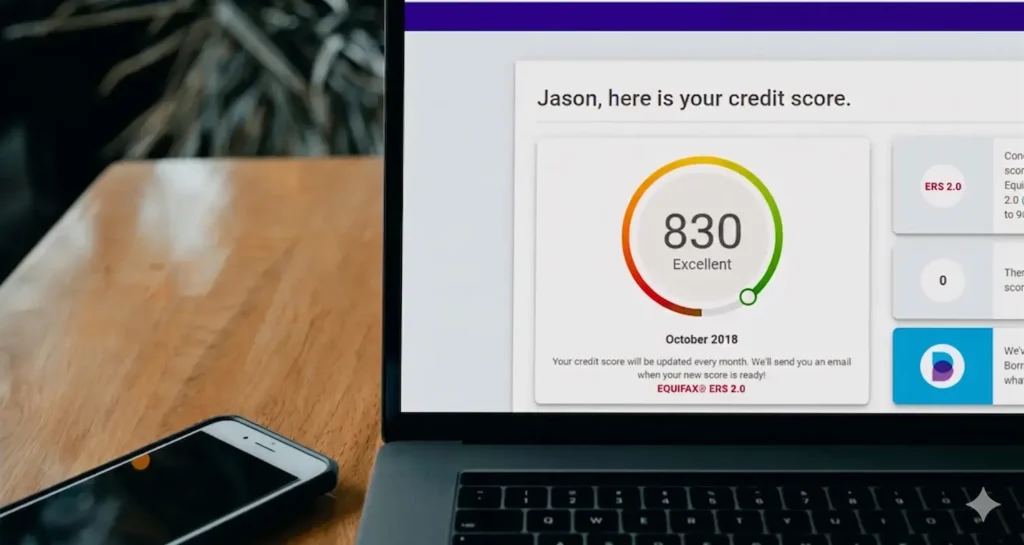
So what is a good credit score? In plain terms, anything in the 670–739 range is considered “good,” and 740 and above is where the best pricing lives. FICO sorts every score into five credit score levels. Here is the credit score chart with the approximate share of consumers in each band as of FICO’s 2026 data:
| Score Range | Rating | Approx. Share of People | What It Typically Means |
|---|---|---|---|
| 800–850 | Exceptional | ~25% | Best rates available almost everywhere |
| 740–799 | Very Good | ~23% | Excellent rates and easy approvals |
| 670–739 | Good | ~21% | Above-average rates; most loans approved |
| 580–669 | Fair | ~17% | Higher rates; limited card options |
| 300–579 | Poor | ~15% | Subprime only; high rates or denials |
These percentages shift gradually over time. The headline trend in 2026 is that the top end keeps thickening: the share of people in the 800–850 “Exceptional” tier reached a record of roughly 24.8%, the highest on record, according to FICO. The FICO score ranges above use the standard FICO 8 model; a handful of lenders use FICO 9, FICO 10, or industry-specific versions, but the labels stay the same.
🎂 Benchmarks
Average Credit Score by Age (2026 Benchmarks)
One of the most useful ways to judge your own score is against people at a similar life stage — a 24-year-old with a two-year-old credit file isn’t really being outscored by a 60-year-old with three decades of history; they’re just earlier in the curve. Because length of credit history is worth 15% of a FICO score on its own, averages climb steadily with age. Based on 2025–2026 FICO and industry data, typical scores by age group look like this:
| Age Group | Average FICO Score | FICO Tier |
|---|---|---|
| 18–29 (Gen Z) | ~680 | Good |
| 30–39 (Millennials) | ~691 | Good |
| 40–49 (Gen X) | ~704 | Good |
| 50–59 | ~721 | Good / Very Good |
| 60+ | ~752 | Very Good |
💡 Young and building credit? Don’t chase the 750+ that a 60-year-old carries — aim to clear 670 with a thin, clean file: one or two accounts, on-time payments, low utilization. A 25-year-old at 680 is already tracking right at the generational average.
⚖️ Scoring Models
FICO vs. VantageScore: How the Ranges Compare
FICO isn’t the only game in town. VantageScore — built jointly by the three major credit bureaus — uses the same 300–850 scale but slices it into slightly different tiers and weights the factors a bit differently. Many free score apps show you a VantageScore rather than a FICO score, which is one reason your number can look different from one site to the next. The average VantageScore 3.0/4.0 stood at roughly 698–701 as of early 2026.
| VantageScore Range | VantageScore Label | Roughly Aligns With FICO |
|---|---|---|
| 781–850 | Excellent | Very Good to Exceptional |
| 661–780 | Good | Good to Very Good |
| 601–660 | Fair | Fair |
| 500–600 | Poor | Poor to Fair |
| 300–499 | Very Poor | Poor |
Beyond the score ranges, FICO Score 8 and VantageScore 3.0 differ in how they treat a thin credit file. FICO 8 generally needs at least six months of credit history, with at least one account updated in the last six months, before it can generate a score at all. VantageScore 3.0 was built to score people faster — it can produce a score from as little as one month of history on a single account. That’s a big part of why a brand-new borrower often sees a VantageScore on a free app weeks before any lender-facing FICO score exists.
The takeaway: don’t panic over small gaps between models or bureaus. A 20–40 point spread between your FICO and VantageScore is normal because they read your file differently. Lenders know this. What matters is the tier you’re in and the trend over time, not a single number on a single day.
❓ Score Lookups
Is Your Score Good? Common Credit Score Questions Answered
Below are direct answers to the specific score questions people search most. Each one maps back to the FICO chart above.
Is 850 the highest credit score? Exceptional
Yes. Both FICO and VantageScore top out at 850. There is no score higher than 850 on either of the two mainstream models.
What is the highest (and best) credit score? Exceptional
The highest possible credit score is 850. In practical terms, though, “best” is anything 800 or above — lenders rarely distinguish between an 820 and an 850, since both unlock the same top-tier pricing.
What is a perfect credit score? Exceptional
A perfect credit score is 850. Only a small fraction of consumers ever reach it, and you don’t need it: a score in the low 800s — or even high 700s — qualifies you for essentially the same rates.
Is an 800 credit score good? Exceptional
Yes. An 800 score sits firmly in the “Exceptional” tier, the top band on the FICO scale. With an 800, you’ll generally see the lowest advertised rates and the easiest approvals.
Is a 762 or 750 credit score good? Very Good
Yes. Both 762 and 750 fall in the “Very Good” range (740–799), placing you ahead of more than half of all consumers. You’ll qualify for excellent rates on most loans and cards.
Is a 730 credit score good? Good
Yes. A 730 is solidly in the “Good” tier (670–739) and above the national average. You’ll be approved for most credit products, though pushing into the 740s unlocks the very best pricing.
Is a 700 credit score good? Good
Yes, with room to grow. A 700 sits within the “Good” tier (670–739), just below the current national average of 714. It’s a solid foundation, but moving toward 740 will meaningfully improve the rates you’re offered.
What credit score do most Americans have?
The national average FICO score is about 714 as of FICO’s Spring 2026 report — squarely in the “Good” range. Most Americans fall somewhere between the high-600s and high-700s.
What is a good starting credit score? Fair
There’s no single “starting” score — a brand-new file typically has no score at all until it’s at least a month or two old. Once it becomes scorable, first-time borrowers commonly land somewhere in the low-to-mid 600s (Fair range) and climb into “Good” territory within the first year of on-time payments and low utilization.
🔍 Tools
How to Check Your Credit Score for Free
You never need to pay to see your free credit score. Multiple legitimate services give it to you at no cost, and checking your own counts as a soft inquiry — so a free credit score check never lowers your number. Here’s how to check your credit score for free, and how the best options compare.
The best free options
- AnnualCreditReport.com — The only federally authorized site for free credit reports from all three bureaus. You can now pull each report weekly at no cost. (Note: this shows your report, not always a score.)
- Credit Karma — Free VantageScore from TransUnion and Equifax, updated regularly, with no credit card required.
- Experian.com — A free FICO Score 8 based on your Experian file.
- Your bank or credit card — Many issuers (Discover, Chase, Citi, Capital One and others) show a free monthly FICO score right inside your account.
- Credit Sesame & WalletHub — Free scores with frequent (often daily) updates and credit-monitoring alerts.
| Service | Score Type | Bureau(s) | Update Frequency | Cost |
|---|---|---|---|---|
| AnnualCreditReport.com | Report (no score) | All 3 | Weekly | Free |
| Credit Karma | VantageScore 3.0 | TransUnion, Equifax | Weekly | Free |
| Experian.com | FICO Score 8 | Experian | Monthly | Free |
| Bank / Card Issuer | FICO (varies) | Varies | Monthly | Free |
| Credit Sesame / WalletHub | VantageScore | TransUnion | Daily | Free |
Soft vs. hard inquiries
- Soft inquiry (soft pull)
- A check that does not affect your score. Includes checking your own score, pre-approval offers, and background checks. You can do these as often as you like.
- Hard inquiry (hard pull)
- A lender’s review when you formally apply for credit. Each one can cause a small, temporary drop of roughly 5–10 points and stays on your report for about two years.
⚠️ A legitimate free credit check never asks for a credit card number up front. If a “free score” site asks for payment info, close the tab.
So you can check your credit score without affecting it as often as you want — the key is to avoid stacking up applications (hard pulls) in a short window.
💰 Free vs. Paid
Free Credit Scores vs. Paid Credit Reports
For roughly 95% of people, free options are more than enough. A free FICO or VantageScore plus your weekly free reports from AnnualCreditReport.com covers everything you need to track your standing and catch errors. Paying for a service is only worth considering in a few specific situations:
- You’re about to apply for a mortgage. Mortgage lenders use older, industry-specific FICO versions (FICO 2, 4, and 5) that can differ from the free score you see. A paid 3-bureau report can show you all the versions a lender might pull.
- You’re actively rebuilding credit. Daily updates and alerts can help you see the impact of each move.
- You’re worried about identity theft. Paid plans bundle monitoring and alerts — though, as covered below, you can get much of this free.
FICO actually produces dozens of industry-specific scores — an auto-lending FICO, a bankcard FICO, a mortgage FICO — each tuned to predict default for that product. That’s why your “auto” score and your “free app” score can differ by 20+ points. If you’re shopping for a specific product, see our breakdown of personal loan rates by credit score to understand how lenders translate your number into an interest rate.
🧮 The Formula
What Affects Your Credit Score? The 5 FICO Factors
If you’re wondering what affects your credit score, FICO is unusually transparent about it. The model weighs five credit score factors, and they’re not equal — payment history and amounts owed together make up nearly two-thirds of your score.
| Factor | Weight | What It Measures |
|---|---|---|
| Payment History | 35% | Whether you pay on time. The single biggest lever. |
| Amounts Owed (Utilization) | 30% | How much of your available credit you’re using. |
| Length of Credit History | 15% | The age of your oldest and average accounts. |
| Credit Mix | 10% | The variety of credit types (cards, loans, etc.). |
| New Credit | 10% | Recent applications and newly opened accounts. |
What hurts your credit score most: late payments, high utilization (using more than ~30% of your limits), and a flurry of new applications. What helps your credit score: paying every bill on time, keeping balances low relative to limits, and letting accounts age. Utilization is the fastest lever you control — paying down a maxed-out card can lift your score within a single billing cycle. If you’re carrying balances across several cards, a 0% APR balance transfer card can buy you breathing room while you pay the principal down, and consolidating may make sense too — here’s how to weigh debt relief vs. debt consolidation.
🏥 2026 Update
Do Medical Bills Affect Your Credit Score? (2026 Update)
Short answer: Yes — but far less than they used to. As of mid-2026, an unpaid medical collection of $500 or more that is at least a year old can still appear on your credit report and lower your score. Smaller balances, paid medical debts, and very recent medical bills generally do not. This area changed dramatically in 2025, so here is exactly where things stand.
How the rules evolved
- 2022 (bureau policy): Equifax, Experian, and TransUnion voluntarily began removing paid medical collections regardless of amount, and added a 12-month grace period before unpaid medical debt can appear at all.
- 2023 (bureau policy): The bureaus voluntarily stopped reporting unpaid medical collections with an original balance under $500.
- Jan 2025 (federal rule): The CFPB finalized a rule that would have removed virtually all medical debt from credit reports.
- Jul 2025 (court ruling): A federal court in the Eastern District of Texas vacated that rule in its entirety, finding it exceeded the CFPB’s authority and conflicted with the Fair Credit Reporting Act. The CFPB itself consented to the outcome. The rule never took effect.
- Mid-2026 (today): There is no federal rule banning medical debt from credit reports. The protections that remain are the voluntary 2022–2023 bureau policies above. Separately, around 15 states have passed their own laws restricting medical-debt reporting, though the court’s reasoning raised unsettled questions about whether federal law preempts those state protections — a fight that is still playing out.
What to do if you have medical debt
Medical billing errors are extremely common, so start by checking your report and disputing anything inaccurate. Within the one-year grace period, contact the provider directly — ask about itemized bills, financial-assistance or charity-care programs, and payment plans, which often pause collections. Negotiating the balance below $500, or getting it paid and removed, can keep it off your report entirely.
📉 Troubleshooting
Why Did My Credit Score Drop for No Reason?
A score rarely drops for no reason — the cause is usually just invisible at a glance. If you’re asking why did my credit score go down when you paid everything on time, one of these is almost always the culprit:
- A hard inquiry from a recent application (5–10 point dip).
- A higher reported balance — even if you pay in full, the balance on your statement date is what gets reported, spiking your utilization.
- You closed a credit card, which lowered your total available credit and pushed utilization up.
- An issuer closed an account or cut your limit without you asking — same utilization effect.
- An old account fell off your report, shortening your average credit age.
- You were removed as an authorized user on someone else’s account.
- Identity theft or a fraudulent account — the one cause worth acting on immediately.
If the drop is sudden and large with none of the above explaining it, pull your free reports and look for accounts you don’t recognize. Building a cash buffer also prevents the most common real cause of damage — a missed payment during an emergency; see how much emergency fund you really need.
📈 Action Plan
How to Improve Your Credit Score
Wondering how to raise your credit score or how to improve your credit score fast? Some moves work within a single billing cycle, while others build over months. Here are the fastest, highest-impact quick wins (typical impact within 10–30 days):
- Pay down card balances before the statement date to lower reported utilization — often the single fastest lever.
- Request a credit limit increase to drop utilization without paying anything down (ask whether it triggers a hard pull first).
- Become an authorized user on a responsible person’s old, low-balance card to inherit its history.
- Dispute errors on your report — inaccurate negative items can be removed.
💡 Stuck in the 580–680 range? The fix is usually the “avalanche” approach: pay revolving balances down below 30%, then below 10%, and automate minimum payments so nothing slips. That combination typically moves people from “Fair” into “Good” fastest.
These are just the headline tactics. For the full, step-by-step playbook — including dispute letter templates and a 30/60/90-day plan — read our deep-dive guide on how to fix your credit score fast. Building responsibly from a thin file is its own challenge; if you’re aiming higher, see how to build credit for premium cards and a sensible credit card rewards strategy that won’t tempt you into overspending.
🚫 Mythbusting
Credit Score Myths, Debunked
Bad credit advice spreads fast. Here are the most persistent myths — and the reality.
- Myth: Checking your own credit hurts it. False. Checking your own score is a soft pull with zero impact.
- Myth: Your income is part of your score. False. Income doesn’t appear in the FICO formula at all (though lenders consider it separately).
- Myth: Closing old cards helps. Usually false. Closing a card can raise your utilization and shorten your credit age — often hurting your score.
- Myth: One missed payment ruins you forever. False. It hurts, but the impact fades over time and the mark drops off after seven years.
- Myth: Carrying a small balance helps your score. False. You get no bonus for carrying debt; paying in full is ideal and saves interest.
- Myth: All three bureaus show the exact same score. False. Lenders don’t always report to all three, so your files — and scores — differ.
Untangling money myths early pays off for life; that’s the whole premise behind the financial literacy skills schools never teach.
🎯 Milestones
Credit Score Requirements for Major Life Goals
Different milestones have different thresholds. These are typical minimums as of mid-2026 — actual requirements vary by lender, so treat them as approximate guideposts, not guarantees.
| Goal | Typical Minimum | For the Best Terms |
|---|---|---|
| Renting an apartment | 620+ | 700+ |
| Conventional mortgage | 620+ | 740+ |
| FHA home loan | 580+ (3.5% down) | 620+ |
| Auto loan (purchase, best rates) | 660+ | 720+ |
| Auto lease | 680+ | 700+ |
| Premium rewards cards | 700+ | 740+ |
| Personal loan (best rates) | 660+ | 720+ |
Leasing a car generally has a stricter bar than buying one: dealerships and captive lenders view a lease as a longer-term commitment with no collateral recovery upside, so they typically want 680+ just to qualify and 700+ to land the advertised money factor. For first-time buyers, young adults, and renters building from scratch, the practical target is the high-600s, then 740+ once you’re shopping for a mortgage — that jump can save tens of thousands in interest over a 30-year loan. If you’re a homeowner already, your score also affects whether refinancing your mortgage makes sense, and how a HELOC vs. a home equity loan will be priced.
⚠️ Watch Out
Common Credit Score Mistakes to Avoid
Even people with good intentions sabotage their scores. The most common avoidable mistakes:
- Not checking your reports at least once a year for errors.
- Maxing out cards or letting utilization creep above 30%.
- Missing payments — set up autopay for at least the minimum.
- Closing your oldest account and shortening your credit history.
- Applying for too much credit in a short window (stacked hard pulls).
- Ignoring errors on your report instead of disputing them.
- Co-signing for a risky borrower — their late payment becomes yours.
Most of these trace back to not having a plan. A simple framework for budgeting, saving, and borrowing deliberately is the foundation — see our guide to smart financial planning. And if debt has spiraled to the point where you’re considering drastic options, understand the real consequences first by reading about when people turn to a bankruptcy lawyer — it should always be a last resort.
🛡️ Protection
Credit Monitoring vs. Identity Theft Protection
These two get marketed together, but they do different things. Credit monitoring simply alerts you when something changes on your report — a new account, a hard inquiry, a balance jump. You can get this for free through Credit Karma, Credit Sesame, or your bank, which is enough for most people.
Identity theft protection goes further: it scans the dark web, may include insurance, and offers restoration help if your identity is stolen. Paid services like LifeLock or Identity Guard fall here. Frame these honestly as optional — they’re worth considering only if you’ve already been a fraud victim or have specific reasons for concern. A free credit freeze at all three bureaus (which costs nothing) blocks new accounts and is often more effective than a paid monitoring subscription.
💬 Q&A
Frequently Asked Questions
Can checking my own credit hurt my score?
No. Checking your own credit is a soft inquiry and never affects your score, no matter how often you do it.
How often should I check my credit score?
At least once a month is plenty for most people. Pull your free reports from AnnualCreditReport.com periodically — you’re now entitled to one from each bureau every week.
What’s the fastest way to improve my credit score?
Lowering your credit utilization by paying down card balances before the statement date is usually the quickest win, often showing up within one billing cycle.
Do utility and phone bills affect my credit score?
Not by default — they’re only reported if you fall far behind and the account goes to collections. Some opt-in programs let you add on-time utility payments to help your score.
Does paying off medical debt help my score?
It can. Paid medical collections are removed from reports under current bureau policy, so paying off a qualifying medical collection can eliminate the negative mark.
How long do late payments stay on my report?
A late payment generally stays for about seven years, though its impact fades steadily over time.
How long do hard inquiries last?
Hard inquiries remain on your report for about two years but typically only affect your score for the first 12 months.
Can I dispute incorrect items on my report?
Yes. Under the Fair Credit Reporting Act you can dispute inaccurate items directly with the bureau, which must investigate — usually within 30 days — and correct or remove anything it can’t verify.
What’s the difference between FICO and VantageScore?
Both use a 300–850 scale but different formulas and weightings, so your numbers will differ slightly. FICO is used in the majority of lending decisions; VantageScore appears on many free apps and can score thinner files faster.
Will closing a credit card hurt my score?
It can, by raising your utilization and shortening your average credit age. Generally, keep older no-fee cards open.
What is a good credit score to buy a house?
620 is a common conventional minimum, and 580 can work for an FHA loan, but 740+ unlocks the best mortgage rates.
Does my income affect my credit score?
No. Income isn’t part of any FICO or VantageScore formula, though lenders review it separately when you apply.
How many points does a hard inquiry cost?
Typically around 5–10 points, and the effect is temporary. Rate-shopping for one loan within a short window usually counts as a single inquiry.
Why is my score different on every app?
Because apps may show different models (FICO vs. VantageScore) pulled from different bureaus at different times. The tier matters more than the exact figure.
Can I reach an 850 perfect score?
It’s possible but unnecessary. Anything 800+ qualifies you for the same top-tier rates as a perfect 850.
Is medical debt still on credit reports in 2026?
Yes, partly. After the federal rule was vacated in 2025, unpaid medical collections of $500 or more can still appear, while paid and smaller medical debts are excluded under bureau policy.
What is a good credit score for a college student or first-time borrower?
Aim for 670+. Most students start in the Fair range on a thin file and climb into “Good” within a year of on-time payments on a starter or student credit card.
Does Klarna or another buy-now-pay-later service check your credit score?
Most BNPL providers, including Klarna, typically run a soft credit check for standard installment plans, which doesn’t affect your score. They don’t publish a hard minimum score, but approval gets easier as your score and payment history improve. Missing a BNPL payment, though, can be reported and does hurt your score — treat it like any other credit obligation.
Legal Disclaimer: This article is for informational purposes only and does not constitute financial or credit advice. Credit scores and the factors that influence them vary by individual circumstances. Consult a certified credit counselor for personalized advice.
Sources include FICO and myFICO (FICO.com), the Consumer Financial Protection Bureau (CFPB.gov), the Federal Trade Commission (FTC.gov), and AnnualCreditReport.com. Figures cited as of mid-2026.
Last Updated:

Daniel Hayes is the founder and sole researcher at AdvoraHQ. He covers U.S. personal finance, insurance, and consumer law — working directly from IRS publications, federal and state statutes, court opinions, and SEC filings rather than secondary summaries. His focus is the gap between what readers think they know and what the source documents actually say. Daniel is not a licensed attorney, CPA, or financial advisor; his articles are educational and not personalized advice. Reach him at Daniel.Hayes@advorahq.com.