
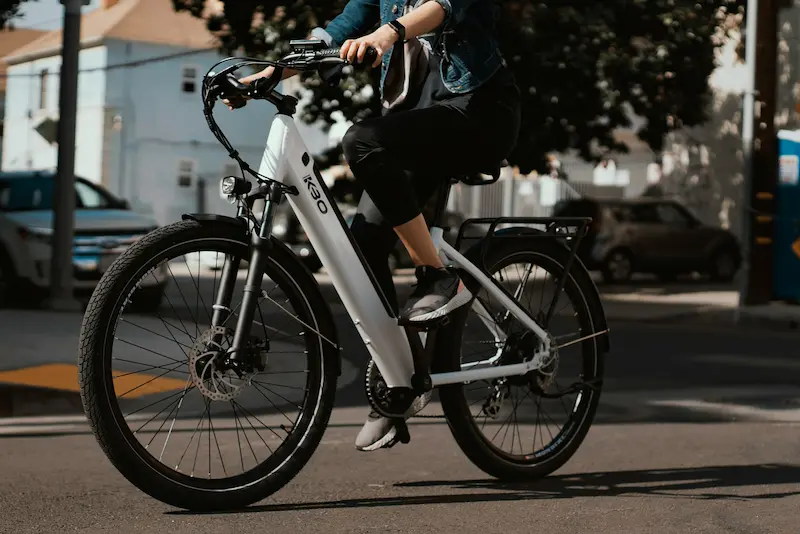
Is Your E-Bike Covered by Renters Insurance, or Are You Out $2,000? (2026 Guide)
Your e-bike cost $2,500. You locked it outside your apartment building this morning. By noon, it was gone — bolt cutters through a cable lock, and the thief was two blocks away before anyone noticed. Now comes the sinking feeling: does renters insurance cover e-bike theft? The answer is: probably yes — but probably not for the full amount you paid.
E-bike ownership across the United States has surged, and so has the number of people relying on an electric commuter bike to get to work every day. The average e-bike retails between $1,500 and $5,000 — far exceeding what most standard renters insurance policies actually reimburse — and a fast electric cycle capable of 28 mph brings an entirely separate coverage problem most owners never see coming until they file a claim. Even a budget electric bike from a big-box retailer can run close to $1,000, which is enough on its own to bump against the low end of most bicycle coverage caps. Without understanding your policy’s sub-limits, exclusions, and class-based restrictions, you could file a claim expecting full reimbursement and receive far less — or nothing at all.
The short answer, before you read anything else:
- Yes, standard renters insurance covers e-bike theft — but only up to a bicycle sub-limit, typically $1,000–$2,500, no matter what your total personal property coverage is.
- E-bikes over 750 watts or with throttle-only operation can be reclassified as a “motor vehicle” and excluded entirely.
- A bike stolen off-property (at work, campus, a coffee shop) is still covered under most policies — the sub-limit and your deductible still apply.
- For a $2,000+ e-bike, you need a scheduled personal property endorsement or a specialized e-bike policy to actually recover full value.
- The #1 reason theft claims get denied isn’t the bike’s value — it’s an inadequate or missing lock.
This 2026 guide breaks down exactly how renters insurance handles e-bike theft, how your specific state’s e-bike laws can quietly change what your insurer will pay, which bikes fall outside coverage entirely, and what steps you can take right now to protect your investment.
Worried about losing $2,000+ to e-bike theft? Get straight answers to the most-asked questions about renters insurance and e-bike coverage — then dive into the full guide for state-by-state rules, prevention tips, and claim strategies.
Jump to Your Question
Group 1: Coverage Basics
Does Standard Renters Insurance Cover E-Bike Theft?
Yes — but with strict limits. Most renters insurance policies cover e-bike theft under personal property coverage, but only up to the policy’s sub-limit for bicycles (typically $1,000–$2,500). If your e-bike costs more, you’ll only recover up to that sub-limit — leaving you exposed for the difference.
How Much E-Bike Coverage Do I Actually Get?
Most renters policies cap bicycle and e-bike coverage at $1,000–$2,500 by default. For a $2,500+ e-bike, you’ll need either a scheduled personal property endorsement — a rider that lists your specific bike by serial number and agreed value — or a specialized e-bike policy. Without one, you’ll receive only the sub-limit minus your deductible.
Group 2: Hidden Exclusions
What Is the Hidden “Motor Vehicle” Catch?
E-bikes over 750 watts or with throttle-only operation (no pedaling required) are often classified as motor vehicles by insurers. Once classified as a motor vehicle, your renters insurance completely excludes coverage — even for theft. Class 3 e-bikes capable of 28 mph face this exclusion most often. Always check your e-bike’s wattage and class before assuming you’re covered.
Does the E-Bike Class Matter for Coverage?
Yes. Insurers differentiate by class: Class 1 (pedal-assist only, 20 mph) is usually covered; Class 2 (throttle plus pedal-assist, 20 mph) is often covered; Class 3 (pedal-assist, 28 mph) is frequently excluded as a motor vehicle. Check your specific policy carefully, because class definitions vary by insurer and by state. When in doubt, call your insurer with your bike’s exact specifications.
Group 3: Off-Premises Theft
Is My E-Bike Covered If Stolen Outside My Apartment?
Yes — renters insurance covers your belongings worldwide, so a bike stolen at work, a coffee shop, or a college campus is generally covered. For items you simply carry away from home, most standard policies apply your full personal property limit; the widely quoted 10% off-premises reduction applies mainly to property kept at another residence (such as a dorm), and some carriers impose their own off-premises sub-limit. Either way, for a bike the bicycle sub-limit is almost always the binding ceiling — and your deductible still applies. Confirm the exact terms with your insurer.
Group 4: Claim Protection
When Do I Need Specialized E-Bike Insurance?
You need specialized e-bike insurance if: your e-bike’s value exceeds your policy’s sub-limit ($2,500+), you own a Class 3 e-bike, you ride competitively or commute daily, or you want coverage for accidental damage, liability, and accessories. Specialized policies cost as little as $8–$35/month depending on the provider and your bike’s value, offering up to $20,000+ in coverage at agreed or replacement value — rather than the depreciated payout you may receive under a renters policy that hasn’t been upgraded to replacement-cost coverage.
What Must I Do to Ensure My Theft Claim Isn’t Denied?
To avoid claim denial: (1) Use a heavy-duty, insurer-approved lock — check whether your policy names a required lock rating; (2) Keep purchase receipts and serial numbers in a secure, accessible location; (3) File a police report within 24 hours of discovering the theft; (4) Photograph your bike and your lock setup before any incident occurs; (5) Register your bike with Bike Index or a similar registry; and (6) read your policy’s specific security requirements. Many claims are denied because the bike was not secured the way the policy required.
Group 5: Cost & Top Providers
How Much Does the Best Ebike Insurance Cost in 2026?
Specialized e-bike policies now start around $8–$14/month for a mid-value commuter e-bike and scale up with your bike’s insured value. That’s often cheaper than the $50–$200/year a scheduled renters endorsement adds — and it comes with none of the sub-limit math.
Sundays vs. Velosurance: Which E-Bike Insurance Is Better?
Sundays Insurance is usually the cheaper entry point and covers your bike wherever it is, home or away. Velosurance/Markel tends to offer deeper customization (racing coverage, uninsured motorist protection) but requires the bike be locked to a true immovable object for away-from-home theft claims. Neither is universally “better” — it depends on how and where you ride.
Continue reading for the full breakdown, state-law nuances, theft prevention gear, and claim strategies
Does Renters Insurance Actually Cover E-Bike Theft?
To understand renters insurance e-bike coverage, start with how personal property coverage works. Most renters policies insure your belongings — furniture, electronics, clothing, sporting equipment — against named perils including theft, fire, and vandalism. A standard policy might carry $30,000 in total personal property coverage. That figure, however, does not mean your $3,000 e-bike is fully protected in the event of theft.
The critical nuance is sub-limits. Insurers apply category-level caps to certain high-theft or high-value item types. Bicycles — including e-bikes — are one such category. Even with a robust overall personal property limit, your insurer may restrict all bicycle claims to $1,000, $1,500, or $2,500, regardless of what the bike cost you. This gap is one of the most common and costly surprises renters face after a theft. Our comprehensive overview of renters insurance coverage and what it actually protects breaks down how these sub-limits work across different item types and how to address them.
Real-World Claim Examples (Anonymized)
Consider a renter in Portland, Oregon, whose $2,800 e-bike was stolen from a shared building bike room. Her renters policy carried a $1,500 bicycle sub-limit and a $500 deductible. Net payout: $1,000 — leaving her $1,800 short. In a separate case, a Chicago renter who owned a $4,500 Class 3 e-bike received nothing: his insurer invoked the motor vehicle exclusion for the high-wattage bike and denied the claim entirely. These scenarios aren’t outliers. They reflect a systemic gap between what renters expect from coverage and what policies are actually designed to deliver.
Losing a $2,000+ bike without adequate insurance is the kind of unexpected financial hit that an emergency reserve is supposed to absorb. Our guide on how much emergency fund you actually need provides a practical framework for thinking through exactly this type of scenario.
Ready to see where your own policy stands? Compare renters insurance quotes that accommodate scheduled e-bike coverage.
The Hidden “Motor Vehicle” Catch: Wattage, Speed, and Class
The most consequential — and least understood — exclusion in renters insurance for e-bikes is the motor vehicle exclusion. Most renters and homeowners policies explicitly exclude coverage for motor vehicles. Whether your e-bike triggers that exclusion depends on how your specific insurer defines the term, which varies more than most people realize.
The Consumer Product Safety Commission (CPSC) defines e-bikes with motors under 750 watts and maximum motor-powered speeds under 20 mph as consumer products — bicycles — not motor vehicles. Individual insurance carriers, however, are not bound by CPSC classifications. Some apply their own internal wattage thresholds. Others focus specifically on throttle-only operation (riding without pedaling) as the disqualifying factor. Others use top speed as the primary criterion. Understanding your insurer’s specific definition is the only reliable path to knowing whether you’re covered.
Wattage thresholds in practice across the industry:
- 250-watt motors: Almost universally treated as bicycles. Covered under renters insurance personal property provisions in virtually all cases.
- 500-watt motors: Generally covered. Review your policy language carefully for throttle-only operation clauses, which can trigger exclusions even at lower wattages.
- 750-watt motors: The federal legal ceiling for classification as a bicycle — but the gray zone for insurance purposes. Coverage varies substantially by carrier. This is where most disputes arise. It’s also the ceiling most specialized e-bike insurers use for eligibility.
- 1,000-watt+ motors: Frequently classified as motor vehicles by insurers. Excluded from renters insurance — and from most specialized bicycle insurance — in many policies. A machine at this power level is closer to a moped than an electric commuter bike, and most standalone e-bike insurers won’t touch it either.
| Class | Max Assisted Speed | Operation Type | Typical Renters Insurance Coverage |
|---|---|---|---|
| Class 1 | 20 mph | Pedal-assist only; no throttle | Usually covered (bicycle sub-limit applies) |
| Class 2 | 20 mph | Throttle and pedal-assist | Often covered — verify throttle exclusion language with your insurer |
| Class 3 | 28 mph | Pedal-assist; some throttle variants | Frequently excluded as a motor vehicle |
| “Class 4” / Off-Road | 28+ mph | Throttle-dominant; high wattage (1,000W+) | Almost always excluded from standard renters coverage |
| This matrix reflects general industry trends and does not constitute a guarantee of coverage. “Class 4” is not part of the standard three-class system — it is an informal label for out-of-class or off-road electric bikes that exceed Class 3 limits. Coverage determinations vary by insurer, policy wording, and state law. Always confirm your e-bike’s class and wattage directly with your insurer. | |||
How State E-Bike Laws Affect Your Renters Insurance Claim
Insurers don’t classify your e-bike in a vacuum — many lean on how your state legally defines it. As of 2026, roughly 36–40 states plus D.C. have adopted some version of the three-class system, but a growing number are rewriting the details, and a handful of states still classify e-bikes on their own terms entirely. That matters for your claim: an insurer reviewing a theft or damage claim may point to your state’s classification, registration rules, or equipment requirements to decide whether your bike was legally — and therefore insurably — a bicycle at all.
| State | 2026 Notes | Insurance Implication |
|---|---|---|
| California | Uses the three-class system; new-sale e-bikes must carry UL 2849 battery/charger certification and a visible label; Class 3 riders need a helmet and must be 16+. | An uncertified battery or a modified motor can give an insurer grounds to argue the bike no longer meets the legal e-bike definition it was insured under. |
| New York | Three-class system statewide, but Class 3 operation is largely restricted to New York City, with extra battery-certification rules for sellers. | A Class 3 e-bike ridden legally in NYC but not elsewhere in the state can create confusion at claim time about which class rules the insurer applies. |
| New Jersey | The state eliminated the three-class system in a 2025–2026 law (P.L. 2025, c. 285). Nearly all e-bikes are now “motorized bicycles” requiring a license, DMV registration, and mandatory insurance, with a compliance deadline in mid-2026. | This is the one state where skipping e-bike insurance isn’t just a financial risk — it can be a legal violation. Some specialized insurers, including Velosurance, now sell New Jersey–compliant liability policies specifically for this requirement. |
| Florida | Three-class system, generally no minimum age requirement, among the more permissive states for e-bike use. | Fewer state-level equipment hurdles, so coverage disputes are more likely to hinge on wattage/throttle than on legal classification. |
| Texas | Three-class system adopted statewide with comparatively few added restrictions. | Coverage decisions typically track the standard Class 1–3 framework insurers already use nationally. |
| State e-bike law is changing quickly in 2026 — several states have pending legislation that could shift these rules again. This table is a starting point, not a substitute for checking your state DMV or transportation department and your specific policy. | ||
The practical takeaway: if you live in a state that has recently changed its e-bike rules — or one that never adopted the three-class system at all — call your insurer and describe your bike’s exact class, wattage, and top speed rather than assuming “it’s basically a bicycle” will hold up at claim time.
Best Ebike Insurance vs. Renters Insurance: 2026 Comparison
Renters insurance is convenient — you may already carry a policy, and adding your e-bike as a scheduled item is a straightforward option. But renters insurance was structured long before e-bikes became mainstream assets, and its design reflects that gap. Specialized e-bike insurance is purpose-built for electric bicycle owners and addresses risks that standard renters policies often ignore — most notably accidental damage, dedicated cycling liability, and agreed-value payouts that don’t depreciate over time.
Do You Need Bicycle Accident Insurance?
This is the distinction most e-bike owners miss: renters insurance is theft and named-peril coverage. It generally does not pay if you simply crash your e-bike, damage the frame in a fall, or fry the battery in an accident that wasn’t caused by fire or theft. That’s what bicycle accident insurance — a feature of most specialized e-bike policies — is built for. If you commute daily in traffic or ride trails regularly, accidental damage is arguably a bigger real-world risk than theft, and it’s a gap a scheduled renters endorsement does not close.
Do High-Value E-MTBs Need Mountain Bike Insurance?
If what you’re really asking is whether you need mtb insurance for an e-mountain bike, the honest answer leans toward yes for anything over a couple thousand dollars. Trail riding multiplies both crash risk and component wear (suspension, motor housings, batteries), and off-road use can also complicate a renters insurance claim if the insurer argues the loss happened during “recreational vehicle” use rather than ordinary bicycle use. Specialized mountain bike insurance policies are built around exactly this scenario — crash damage on the trail, not just theft from a rack.
| Coverage Feature | Renters Insurance | Specialized E-Bike Insurance |
|---|---|---|
| Annual Cost (Approximate) | $150–$300/yr full policy; +$50–$200/yr for endorsement | ~$100–$420/yr (roughly $8–$35/month) depending on provider and bike value |
| E-Bike Coverage Limit | $1,000–$2,500 sub-limit; full value available with scheduled endorsement | Up to $20,000+ at replacement or agreed value |
| Theft Coverage | Yes (bicycle sub-limit applies) | Yes (full agreed/replacement value) |
| Accidental Damage | Typically not covered | Yes |
| Liability Coverage | General renters liability only — not bike-specific | Dedicated cycling liability coverage (optional add-on with most providers) |
| Roadside Assistance | Not available | Available on select plans |
| Payout Type | Actual cash value (depreciated) unless replacement-cost coverage is selected | Replacement cost or agreed value (no depreciation) |
| Class 3 E-Bikes Covered | Often excluded via motor vehicle clause | Yes (most specialized providers, up to 750W) |
| All cost and coverage figures are approximate and vary by provider, state, e-bike value, and selected coverage tier. Review all policy documents before purchasing. No coverage outcome is guaranteed. | ||
When Do You Need Specialized Insurance for High-Performance E-Bikes?
Several scenarios make standalone e-bike insurance not just advisable, but financially essential:
- Your e-bike’s retail value exceeds your renters policy’s bicycle sub-limit
- You own a Class 3 e-bike and your insurer’s motor vehicle exclusion applies
- You rely on your e-bike as your primary electric commuter bike — substantially raising theft exposure and component wear risk
- You ride an e-MTB or another high-value trail bike, where crash and component coverage matters as much as theft protection
- You want coverage for crashes, battery damage, and accessory theft (helmets, lights, locks)
- You use your e-bike for delivery or gig economy work, which can trigger a commercial use exclusion in standard renters policies — the same reason that commercial auto insurance exists separately from personal auto coverage
- You live in New Jersey, where a 2026 state law now makes e-bike insurance mandatory for most riders (see the state-law section above)
For e-bike owners who want broader personal liability protection — for instance, if you ride frequently in dense urban areas — umbrella insurance can stack additional liability limits above both your renters and e-bike policies. Understanding the distinction between excess liability and umbrella insurance helps you build the right coverage structure for your risk profile.
How Much Is Bike Insurance? (E-Bike Insurance Cost Breakdown)
The financial case for a standalone policy is straightforward once you see real numbers side by side. A $3,500 e-bike covered by a renters policy with a $1,500 bicycle sub-limit and a $500 deductible yields a maximum theft payout of $1,000. A specialized policy running roughly $15–$25/month pays full agreed value — often $2,500 or more on top of what the renters policy would return, the very first time you file a claim.
Here’s what the leading specialized e-bike insurers actually charge and cover as of 2026:
- Sundays Insurance: Starts as low as $8/month, insures a single bike up to about $21,500, and has no minimum premium. In the U.S., policies are underwritten by U.S. Specialty Insurance Company through Tokio Marine HCC, an A.M. Best A+ rated carrier. Sundays also offers a 14-day money-back trial. See current Sundays e-bike plans.
- Velosurance: Real-world quotes for a $1,500 Class 2 e-bike run roughly $11–$13/month for physical damage and theft alone, more once liability and roadside assistance are added. Underwritten by Markel American Insurance Company (A.M. Best A-rated). Pays agreed value, not depreciated cash value. Get a Velosurance quote.
- Markel (direct): The underwriter behind Velosurance and Spoke; pricing and coverage are effectively the same whether you buy through Markel directly or one of its agency partners.
- Spoke Bicycle Insurance: Offered through Marsh & McLennan Agency, also underwritten by Markel. Minimum annual premium is around $100/year (roughly $8+/month), rising with your bike’s value and selected options. Covers Class 1, 2, and 3 e-bikes up to 750 watts. Compare Spoke’s e-bike coverage.
Velosurance Ebike Insurance and Sundays Bike Insurance Reviews
Velosurance Ebike Insurance Review
Velosurance’s biggest strength is customization — medical payments, uninsured motorist protection, worldwide travel coverage, and race coverage can all be layered onto a base policy, and payouts are agreed-value with no depreciation. The catch: for theft away from home, Markel-underwritten policies (Velosurance included) typically require the bike be “secured to an immovable object with an appropriate security locking device,” and define an immovable object narrowly — something fixed in concrete or stone that can’t be lifted, removed, or unbolted. A bike rack that itself can be unbolted from the sidewalk may not satisfy that definition. Read the exact policy wording before you assume a given rack qualifies.
Sundays Bike Insurance Review
Sundays Insurance tends to win on price and simplicity — plans start at $8/month, there’s no minimum premium, and new customers get a 14-day trial with a full refund if they cancel without filing a claim. It insures e-bikes up to roughly $21,500 and covers theft and damage whether the bike is at home, at work, or traveling. Sundays maintains its own approved-lock guidance as well, so — like every specialized insurer — you’ll want to confirm your specific lock meets its requirements rather than assuming any solid U-lock qualifies.
One important caveat that applies to all four providers above: most mainstream specialty insurers generally require an electric motor of 750 watts or under and cover only Class 1 through Class 3 e-bikes. If you ride a higher-wattage off-road or “Class 4” build, you’ll likely need a niche specialty insurer or a powersports/motor-vehicle policy instead. Confirm eligibility before you buy, and since all four let you get a no-obligation quote in a few minutes, it’s worth pulling numbers from at least two before deciding.
How to Prevent Electric Bike Theft (And Keep Your Policy Valid)
Preventing theft is the most effective financial strategy available to e-bike owners — and it carries direct insurance implications. Many renters insurance policies and specialized e-bike policies contain language requiring that the bike be adequately secured at the time of theft. If your bike was secured only with a cable lock, or was left unsecured entirely, your claim may be denied regardless of your coverage limits. The National Insurance Crime Bureau (NICB) consistently identifies improper security as a leading reason bicycle theft claims are contested, reduced, or denied outright.
What Lock Rating Does Your Insurer Actually Require?
Insurers don’t all define “adequate security” the same way, and it’s worth reading the actual policy language rather than the marketing page:
- Some policies simply require the bike to be “secured property” with no specific lock type named.
- Others name an exact standard — most often Sold Secure, a UK-originated, police- and industry-backed lock-testing standard (Bronze / Silver / Gold / Diamond) that’s become an international reference point and is printed right on the packaging of locks from brands like Kryptonite, ABUS, and OnGuard.
- Markel and Velosurance policies go further for off-property theft: they require the lock be attached to a genuinely immovable object — fixed in concrete or stone, not just bolted hardware — which is a stricter bar than “any solid rack.”
The practical rule: don’t assume a $150 U-lock automatically satisfies your policy. Check your declarations page or call your insurer and ask, in plain language, what rating or attachment method they require for a theft claim to pay out.
What Counts as Negligence That Can Void Your Claim?
Insurers distinguish between “my bike was stolen despite reasonable security” and “my bike was taken because it wasn’t secured.” Leaving an e-bike unlocked outside a store for even a minute or two, leaving a battery key in place, or resting a bike against a wall “just while I run in” are the kinds of scenarios insurers treat as negligence — and a negligence finding can void a claim outright, independent of your coverage limits. If you wouldn’t feel comfortable explaining exactly how the bike was secured to a claims adjuster, it probably wasn’t secured well enough.
Is Theft From a Shared Bike Room or Garage Covered?
Generally yes — a bike stolen from your building’s shared bike room or a locked apartment garage is still a covered loss under most renters and specialized policies. But claims from indoor, shared spaces face extra scrutiny precisely because there’s often no visible forced entry to point to. Two things help here: lock the bike itself inside the room (don’t rely on the room’s lock alone), and ask your property manager whether the building keeps access logs or camera footage, since that documentation can be the difference between a smooth claim and a contested one.
Invest in Heavy-Duty, Rated U-Locks
The single most effective deterrent against e-bike theft is a high-security U-lock. Cable locks and lightweight chain locks offer minimal resistance against bolt cutters and angle grinders; treat them as supplemental tools only — never as primary security for a $2,000+ asset. Three heavy-duty U-lock options worth serious consideration:
- Kryptonite New York Fahgettaboudit: Rated at the top of Kryptonite’s own security scale and built to resist bolt cutters and prolonged attacks. The 18mm hardened steel shackle is among the most cut-resistant options currently available for any bicycle lock. Best for commuters who park in high-theft urban environments. See Kryptonite’s current lineup.
- ABUS Granit X-Plus 540: German-engineered with a 13mm hardened steel shackle and ABUS’s proprietary X-Plus cylinder, resistant to picking, drilling, and freeze attacks. Meaningfully lighter than the Kryptonite without sacrificing serious protection — an excellent everyday choice for e-bike commuters. See ABUS lock options.
- OnGuard heavy-duty D-locks: A more budget-accessible line that still outperforms cable locks and basic chain locks by a substantial margin, with several models now carrying Sold Secure Diamond ratings. The compact design locks through both the rear triangle and the rear wheel simultaneously — the recommended technique. See OnGuard’s lock lineup.
Lock placement strategy: Always secure through the rear triangle of the frame — never only through the wheel — and around a fixed, immovable object. Fill the U-lock’s interior space as completely as possible; empty space inside the shackle allows attackers to use leverage for prying attacks. Register your bike’s serial number with Bike Index or Project 529 before any incident occurs — pre-registration is free and significantly improves recovery odds.
Top-Rated GPS Trackers and Wireless Alarms for E-Bikes
A GPS tracker does not prevent theft but dramatically increases post-theft recovery rates and provides critical evidence for insurance claims. Wireless alarms add a deterrent layer effective against opportunistic theft, though their value varies by location and surrounding noise levels.
- Apple AirTag (with a hidden mount for your e-bike): Inexpensive and powered by Apple’s extensive Find My network — one of the largest passive tracking networks on the planet. Conceal it inside a seat post, inside handlebar tubing, or within integrated frame storage. Most effective for users already in the Apple ecosystem. See AirTag details.
- Tile Pro: The leading Android-compatible alternative, backed by a strong community-based recovery network. Slightly larger form factor but fits well inside frame bags, top-tube storage, or saddle bags. See Tile Pro details.
- Sherlock GPS Tracker: Purpose-designed for bicycles, sliding inside standard handlebar tubes and remaining completely invisible from the outside. Uses dedicated cellular/GPS connectivity for real-time location, precise to a few meters. Among the most capable dedicated bike trackers available in 2026. See Sherlock’s tracker.
Building the budget for quality security gear is part of a broader financial resilience picture. If you’re thinking through how to handle a scenario like a stolen $2,000 bike — whether through insurance, savings, or both — our guide to how much emergency fund you actually need provides a useful practical framework.
What to Do If Your Electric Bike Is Stolen: A 9-Step Guide
Acting quickly and systematically after a theft maximizes your recovery odds and directly affects your insurance claim outcome. Follow this sequence:
- File a police report immediately. Do this within 24 hours of discovering the theft. Obtain the report number — your insurer will require it to process a claim. Late or missing police reports are among the most common reasons e-bike theft claims are delayed or denied entirely.
- Check your GPS tracker data. If you installed an AirTag, Sherlock, or Tile Pro, open the associated app and document the current or last-known location. Share real-time location data with police if the tracker is active. Do not attempt to retrieve the bike independently.
- Search theft registries immediately. Check Bike Index and Project 529. If your bike was pre-registered, law enforcement and pawn shops can identify it by serial number — making recovery substantially more likely.
- Monitor online resale marketplaces. Search your bike’s model, color, and serial number on Facebook Marketplace, Craigslist, and OfferUp. Stolen e-bikes frequently appear within 48–72 hours. Report suspicious listings to police — do not contact the seller directly under any circumstances.
- Contact your insurance company. Notify your insurer as soon as you have the police report number. Ask specifically about your e-bike’s sub-limit, your deductible amount, and the exact documentation and lock/security requirements they need to process the claim.
- Gather all supporting documentation. Locate your original purchase receipt, serial number records, photographs of the bike, and any maintenance or service records. Include your Bike Index or Project 529 registration confirmation if the bike was pre-registered.
- Submit your formal claim. File through your insurer’s app, website, or by phone. Be accurate and complete. Provide the police report number, all documentation, and any photographs taken before the theft.
- Follow up consistently. Claims can stall without active follow-through. Contact your insurer every five to seven business days if you have not received a substantive update. Keep written records of every communication — agent names, dates, and key points discussed.
- Appeal a denial if necessary. If your claim is denied, request the denial in writing and identify the specific policy language cited. You have the right to submit a formal appeal. Respond to each cited exclusion point by point with supporting documentation. For significant denied amounts, a licensed public adjuster may provide valuable assistance navigating the process.
If your e-bike was used for commercial delivery or gig work and your claim is denied under a commercial use exclusion, that falls into a distinct coverage category — the same principle explaining why commercial auto insurance exists separately from personal vehicle coverage for fleet and delivery operators.
Where to Compare and Buy the Best E-Bike Insurance in 2026
Finding the right coverage is easiest when you compare your options before a loss occurs — not after. Three practical approaches are available to renters in 2026:
- Add a scheduled endorsement to your existing renters policy. Contact your current insurer and ask about scheduling your e-bike as a named, itemized personal property item. Scheduling lists the bike by serial number and insured value, effectively bypassing the standard bicycle sub-limit. Cost typically adds $50–$200 per year to your existing premium. Does Lemonade cover e-bikes? Yes — Lemonade allows scheduled personal property coverage for e-bikes, though Class 3 bikes may face restrictions depending on your state. Does State Farm renters insurance cover e-bikes? Generally yes for Class 1 and Class 2, with bicycle sub-limits applying unless a scheduled rider is added. Does Allstate renters insurance cover electric bikes? Similarly structured — sub-limits apply, and a personal articles floater can extend coverage for higher-value bikes.
- Purchase a standalone specialized e-bike policy. Providers such as Velosurance, Markel, Sundays Insurance, and Spoke offer dedicated policies covering Class 3 e-bikes, accidental damage, cycling liability, accessories, and replacement value — often at comparable or lower annual cost than a scheduled endorsement for high-value bikes.
- Request quotes from at least two providers before deciding. Entering your e-bike’s specifications — class, wattage, retail value, and intended use — with two or three of the providers above will surface real differences in lock requirements, deductibles, and add-ons that a single quote won’t show you.
If you are transitioning from renting to owning your home, note that the same sub-limit structure and motor vehicle exclusions apply equally to homeowners insurance policies. Our guide to hidden homeowners insurance coverages covers the scheduled endorsement strategy in that context and reveals other protections most policyholders overlook.
Your credit score influences your insurance premiums — often by meaningful amounts across multiple policy types. If you’re looking to reduce your overall cost of coverage over time, our guide on how to fix your credit score fast walks through proven steps that can translate into lower insurance rates.
Finally, if you plan to travel internationally with your e-bike — on a cycling tour, destination trip, or extended travel abroad — be aware that standard renters insurance and most domestic e-bike policies carry geographic restrictions. Reviewing the best travel insurance plans for equipment coverage is a worthwhile addition to any international cycling trip checklist.
Frequently Asked Questions: E-Bike and Renters Insurance
Tap any question to expand the answer.
Does Lemonade renters insurance cover e-bike theft?
Lemonade covers e-bike theft under its personal property protection, subject to its standard bicycle sub-limit. You can add a scheduled personal property rider to cover a higher-value bike at its full insured value. Class 3 e-bike coverage varies by state and policy terms — contact Lemonade directly with your bike’s exact class and wattage specifications before assuming full coverage applies.
Is my e-bike covered if stolen off my property?
Yes — renters insurance protects your personal property worldwide, so a theft at work, a coffee shop, or a campus rack is generally covered. For items you simply carry away from home, most standard policies apply your full personal property limit rather than a reduced one; the widely quoted 10% off-premises figure applies most strictly to property kept at another residence, such as a dorm room, and some carriers apply their own off-premises sub-limit. Regardless, your bicycle sub-limit is the practical ceiling on a bike claim, and your deductible applies whether the bike was taken from your building’s bike room or from a rack across town. Verify your policy’s off-premises terms directly with your insurer.
Does homeowners insurance cover e-bikes?
Yes, under the same personal property structure as renters insurance — with the same bicycle sub-limits and motor vehicle exclusions. If you own your home, our guide to hidden homeowners insurance coverages details the scheduled endorsement strategy and other high-value item protections most policyholders overlook.
Does renters insurance cover a stolen e-bike battery?
This varies by insurer and policy. Some treat the battery as a component of the e-bike and cover it under the bicycle sub-limit. Others classify it separately as an electronics item with a different sub-limit. If your battery was stolen independently — from a charging station or a separate locked storage area, for example — confirm with your insurer whether it falls under bicycle coverage or electronics coverage, as the applicable caps differ.
Can I insure a used or secondhand e-bike?
Yes — both scheduled endorsements and specialized policies can cover secondhand e-bikes. You will typically need documentation of current market value, such as a comparable sale listing or a professional appraisal. Agreed-value policies from providers like Velosurance or Markel are particularly useful for used bikes: they pay the stated insured value at claim time, regardless of any depreciation that has occurred since purchase.
Does renters insurance cover e-bike accidents and injuries to others?
Standard renters insurance includes a liability provision that may cover you if you injure another person while riding your e-bike. It does not typically cover your own medical expenses resulting from a crash. Specialized bicycle accident insurance adds medical payment coverage and crash damage reimbursement — features renters insurance does not offer. For broader personal liability protection above your renters and e-bike policy limits, umbrella insurance can stack additional coverage. See our comparison of excess liability vs. umbrella insurance to understand how those liability layers interact.
What is the average deductible for an e-bike theft claim under renters insurance?
Renters insurance deductibles typically range from $250 to $1,000, with $500 being the most common threshold. On a $1,500 bicycle sub-limit with a $500 deductible, your net recovery on a theft claim is $1,000. Specialized e-bike insurance deductibles are often lower — sometimes as little as $100 — and pay out at full replacement or agreed value, making the net financial outcome substantially better for higher-value bikes.
What if I don’t have proof of purchase for my e-bike?
Without an original receipt, insurers may accept alternative documentation: bank or credit card statements showing the purchase transaction, photographs of the bike with identifiable features, manufacturer warranty registration, or a professional appraisal. Registration records from Bike Index or Project 529 can meaningfully supplement a claim file when formal proof of purchase is unavailable. Going forward: photograph your bike from multiple angles, record the serial number, and store both in a cloud service immediately upon purchase.
Does renters insurance cover e-bike delivery driving (Uber Eats, DoorDash, Instacart)?
No. Standard renters insurance carries a blanket commercial use exclusion, and using an e-bike for paid delivery or gig work generally counts as commercial use — even though the bike itself is a “personal” item the rest of the time. If the bike is stolen or damaged while you’re actively working a delivery shift, expect the claim to be denied unless you carry a commercial or gig-specific policy. A few specialized e-bike insurers offer delivery-rider add-ons; ask directly rather than assuming your standard policy extends to gig work.
Will filing an e-bike theft claim raise my renters insurance premium?
It can. A theft claim is still a claim, and insurers frequently factor claim history into renewal pricing — meaning your premium may increase at your next renewal, and repeated claims can put your policy at risk of non-renewal in some states. This is one more reason a lower-deductible specialized e-bike policy, kept separate from your renters insurance, can be worth the modest monthly cost: it protects your renters policy’s claims history along with your bike.
What happens if my e-bike is stolen while attached to a car rack?
Your auto insurance won’t help here — personal property carried on, in, or attached to a vehicle isn’t something auto policies cover. A bike stolen off a car rack falls under your renters (or homeowners) insurance as ordinary off-premises theft, subject to the same bicycle sub-limit and deductible that would apply anywhere else. If the rack itself was locked and the bike was additionally cabled or U-locked to the rack, document that setup — it can matter for the security requirement discussed above.
Is a stolen e-bike covered if the battery key or lock key was left on or near the bike?
Almost certainly not. Leaving a battery key in place, a lock unlocked, or a bike otherwise readily rideable by anyone who walks up to it is the kind of fact pattern insurers treat as negligence rather than theft despite reasonable precautions — and a negligence finding is one of the more common grounds for a flat denial, separate from any sub-limit or exclusion question.
This article is for informational purposes only and does not constitute insurance advice. Coverage terms, limits, and exclusions vary significantly by insurer, policy type, and state, and state e-bike laws are changing frequently in 2026. Examples provided are illustrative estimates only. Always read your specific policy documents carefully and consult a licensed insurance agent before making any coverage decisions.

Daniel Hayes is the founder and sole researcher at AdvoraHQ. He covers U.S. personal finance, insurance, and consumer law — working directly from IRS publications, federal and state statutes, court opinions, and SEC filings rather than secondary summaries. His focus is the gap between what readers think they know and what the source documents actually say. Daniel is not a licensed attorney, CPA, or financial advisor; his articles are educational and not personalized advice. Reach him at Daniel.Hayes@advorahq.com.