
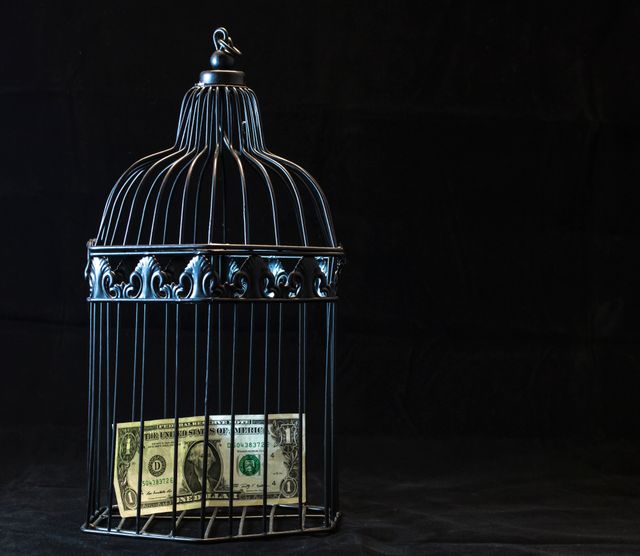
Store Credit Cards and Deferred Interest: The “0%” Offer That Isn’t
“No interest if paid in full” does not mean the interest is waived — it means it is being calculated in the background from the day you bought the item, and if any balance is left when the period ends, the whole of it is added to your account at once.
- A true zero-percent offer charges nothing during the period. A deferred interest offer charges everything if you finish a dollar short.
- The minimum payment on these offers usually will not clear the balance before the deadline — divide the balance by the number of months yourself.
- Being more than sixty days late on a minimum payment can end the promotion even if you were on track to pay it off.
- In the last two billing cycles, federal rules require your extra payments to go to the promotional balance — and before that, you can ask for them to.
Jump to the calculator to see what you need to pay each month, and what the charge would be if you finish late.
“0% intro APR for 12 months” — truly interest-free
No interest accrues at all during the period. If a balance remains after 12 months, interest applies only to what’s left, starting from that point forward.
“No interest if paid in full in 12 months” — interest accruing out of sight
Interest has been accruing on the full purchase since day one. If a balance remains after 12 months, all of that accrued interest is added at once, calculated on the original amount.
| At the end of the period | True 0% intro offer | Deferred interest offer |
|---|---|---|
| You paid it in full | No interest charged. Balance is zero. | No interest charged. Balance is zero. |
| You have one dollar left | Interest applies only to that one dollar, going forward. | All accrued interest on the original purchase becomes due, not interest on the one dollar. |
| You have half the balance left | Interest applies only to the remaining half, going forward. | The full accrued interest on the original purchase becomes due — the same amount as if you’d paid nothing at all. |
| What the interest is calculated on | Only the remaining balance. | The original purchase amount. |
| What date it’s calculated from | The date the introductory period ends. | The date of the original purchase. |
| What you owe going forward | The remaining balance, at the ongoing purchase APR. | The remaining balance plus all deferred interest, both now at the ongoing purchase APR. |
Here is how the charge is calculated, the rules that protect you, and what to do if it has already happened.
Will You Finish in Time — and What If You Don’t?
This tool degrades gracefully: without JavaScript, the fields above remain a plain labelled form, and Tables 1 and 2 in this article carry the same information.
On-screen note: the rate must be read from your own agreement, not assumed. A promotion can also end early if a minimum payment is more than sixty days late. Other purchases on the same card can complicate the balance. Nothing entered here is stored or sent anywhere.
What Deferred Interest Actually Is
The offer is exactly what it says, and that is the problem. The word doing the work is “if.” Everything else in this article follows from that one word.
Under a deferred interest arrangement, interest accrues on your balance from the day you make the purchase. It is simply not charged to you if you pay the whole promotional balance in full before the period ends. If any balance remains when the period expires, the interest that has been accruing the entire time becomes payable — calculated on the original balance from the transaction date, not on whatever amount you actually have left. Phrases like “same as cash” generally describe this same structure.
Ordinary credit card interest — the grace period, the daily periodic rate, how a balance compounds when you carry it — works differently and is covered in full in How Credit Card Interest Works: APR Explained. This article covers only what changes when a deferred interest promotion is layered on top.
Regulation Z requires that when “no interest,” “same as cash,” or a similar phrase is advertised, the words “if paid in full” and the length of the deferred interest period must appear clearly and conspicuously, in immediate proximity to that phrase (12 CFR § 1026.16(h)). That disclosure — and the account-opening terms that follow it — is where the real deadline and rate live, not the “12 months” printed on a sign at the register.
It is worth saying plainly: this is a lawful, disclosed financial product. It is not a scam. The honest criticism is structural — it is built so that the difference between paying nothing and paying a large, sudden charge is invisible until the deadline has already passed.
“0% APR” vs “No Interest If Paid in Full”
A true promotional rate offer charges no interest at all while it’s active. If you still owe money when it ends, interest starts accruing on the remaining balance from that point forward, at the ongoing rate — nothing retroactive. A deferred interest offer has already been accruing interest the whole time, and a remaining balance at the deadline releases all of it at once, calculated on the original amount.
A promotional purchase offer like this is a different product from a balance transfer offer, which moves an existing balance from one card to another rather than financing a new purchase; this article does not cover balance transfers.
Use Tool 2 below to check which structure a specific offer’s wording most likely describes.
- No interest accrues during the period, at all — interest-free
- If a balance remains, interest applies only to what’s left, from that date forward
- Nothing is calculated retroactively
- Interest accrues the entire time — accruing out of sight
- If a balance remains, all of it becomes due, calculated on the original amount
- The calculation reaches back to your purchase date
Which Kind of Offer Is This?
This tool reads wording, not accounts, and it never tells you an offer is safe. Without JavaScript, it remains a plain labelled form, and the paired comparison above carries the same information.
What It Costs If You’re a Dollar Short
Here is the arithmetic, using a clearly labelled illustrative amount and rate — not a claimed market average.
Say you buy a $1,000 item under a 12-month deferred interest promotion with an illustrative rate of 29.99% stated in the terms. You pay diligently, month after month, and by the deadline you’ve paid $950 — 95% of the purchase. Fifty dollars remain. The charge is on the original amount from the purchase date, not on what is left: the issuer doesn’t charge interest on the $50 you still owe. It charges the interest that accrued on the full $1,000 for the entire 12 months, because that is what the terms describe. Finishing at ninety-five percent is not ninety-five percent of the way there — it can trigger the entire calculation, as though none of your payments had happened at all.
| Line | Amount |
|---|---|
| Original purchase | $1,000.00 |
| Paid over the period | $950.00 |
| Remaining at the deadline | $50.00 |
| Rate in the terms (illustrative) | 29.99% |
| Interest accrued from the purchase date, on the original $1,000, over 12 months | $299.90 |
| Total now owed | $349.90 |
Four Ways to Lose the Promotion
Each of these ends — or can end — the deferred interest benefit on its own.
A balance remains when the period ends
This is the trap everyone expects. Any amount left unpaid, however small, is enough.
The minimum payment isn’t designed to finish in time
Being more than sixty days late
Other purchases on the same card
Using the card for anything besides the promotional purchase can cost you the grace period on those other purchases: if you don’t pay the entire card balance — including the deferred portion — by the due date, new purchases start accruing interest from the date you made them, with no grace period at all. This is why “use it once and put it away” is the right advice, but for a more specific reason than it usually gets credit for.
| What happens | Does it end the promotion? | How to prevent it |
|---|---|---|
| A balance remains at the end | Yes — triggers the full retroactive charge | Pay in full before the expiration date in your terms, not simply “12 months from purchase” |
| A minimum payment more than sixty days late | Yes — even if you were on track to pay in full | Never let a payment go more than sixty days past due |
| Paying only the minimum throughout | Not by itself, but it usually leads to the first trigger | Divide the balance by the number of months and pay that amount |
| Other purchases on the same card | Doesn’t end the promotion, but can cost the grace period on those purchases | Use the card for the promotional purchase only, or pay the full statement balance every month |
| A payment posting after the deadline | Yes, if it leaves any balance unpaid at expiration | Pay early — a full billing cycle before the deadline if you can |
What the Rules Actually Give You
Almost nobody publishes this part. Regulation Z’s payment allocation rule for deferred interest balances gives you two real protections and one honest limitation.
- In the two billing cycles immediately before your promotion expires, the issuer must apply any payment you make above the minimum to the deferred interest balance first — ahead of any other, higher-rate balance on the card (12 CFR § 1026.53(b)(1)(i)). In practice: your last two payments before the deadline are automatically working on the balance that matters most.
- Outside that two-cycle window, the issuer may — but generally is not required to — allocate your excess payment the way you request. You can ask, in writing, that anything you pay above the minimum go toward the promotional balance months earlier than the rule requires (12 CFR § 1026.53(b)(1)(ii)). This is permissive for the issuer, not a right you can compel — but it costs nothing to ask, and the CFPB confirms that this is exactly how a reader can ask for it.
- Outside that window, absent a request, excess payments generally go first to whichever balance on the card carries the higher rate — and a deferred interest balance is treated as carrying a rate of zero for this purpose. If you’re also carrying a cash advance or another purchase balance at a normal rate, your extra payments can be quietly working on that balance instead of the one with a deadline.
- A billing cycle does not count as one of the “final two” if your promotion’s expiration date falls before that cycle’s payment due date. Do not assume the protection automatically covers the last two statements you happen to receive — count backward two full billing cycles from the actual expiration date in your terms, not from your due dates.
- None of this helps if you never pay more than the minimum. The rule governs where extra money goes; it doesn’t create extra money.
The final-two-cycles rule is the implementing regulation for a payment-allocation protection Congress added through the Credit CARD Act; Regulation Z at § 1026.53 is where it now lives, with the edge cases spelled out in its official interpretations.
How to Be Certain You Finish
The method is arithmetic, not willpower.
- Divide the original balance by the number of months in the promotional period, round up to the next dollar, and pay that amount every month — regardless of what the minimum on your statement asks for.
- Aim to finish a full billing cycle early. A payment that posts after the deadline does not count, even if you mailed or scheduled it before.
- Set the payment as a recurring transfer rather than relying on remembering it each month.
- Check the actual expiration date printed in your terms rather than counting twelve months from the day you bought the item — the two are not always the same.
- If finishing on time has genuinely become impossible, paying the balance down further in the final month still doesn’t reduce the retroactive charge, because that charge is calculated on the original amount, not on what’s left. If money is tight in the last month, that fact — not shame, just arithmetic — should shape what you do with it.
It Already Happened. Can You Fight It?
Start by checking the arithmetic against your own terms: the rate that was applied, the period that was used, and whether the promotion actually expired when you thought it did. Billing statements and account terms are sometimes misread, and the calendar math in this article’s edge case above — about which two cycles count — is a common place for that to happen.
If the charge is accurate, a goodwill request to the issuer sometimes succeeds — particularly where the balance was nearly cleared, the account has a solid payment history, or a payment posted late for a reason outside your control. This is a request, not an entitlement, and issuers grant it at their discretion. Nothing in the regulation requires them to reverse a correctly applied charge.
A billing error dispute is a different tool entirely, with its own procedure and deadline, and it applies when the charge is incorrect — the wrong rate, the wrong period, a math error — rather than simply unwelcome. Don’t use the dispute process to contest a charge that was calculated correctly under your terms; use the goodwill request instead.
You can also file a complaint with the federal consumer regulator, which forwards it to the issuer and requires a response (submit a complaint to the CFPB). That is a route, not a remedy — it creates a paper trail and a forced response, not a guaranteed outcome.
If the charge stands and the balance is now larger than expected, it becomes ordinary card debt at the account’s ongoing interest rate going forward.
Is the Store Card Worth Opening at All?
Some store cards are closed-loop — usable only at the retailer or its affiliated group. Others carry a payment network and can be used more broadly, closer to a general-purpose card. Check which type you’re being offered before assuming either way.
Store card rates tend to run higher than general-purpose card rates: in 2024, the average APR reached 25.2% for general-purpose cards and 31.3% for private-label (store) cards, according to the CFPB’s 2025 Consumer Credit Card Market Report (CFPB Issue Spotlight, 2025).
The honest test isn’t whether the signup discount sounds good — it’s whether that one-time discount is larger than what the hard inquiry, the low starting limit, and a real interest rate would cost you if things don’t go perfectly. That’s not a verdict this article can hand you; it’s a comparison only your own numbers can answer.
| Factor | What it gives you | What it costs you |
|---|---|---|
| The signup discount | A one-time percentage off your purchase | Nothing directly, but it can push you toward opening an account before comparing the real cost |
| The promotional financing | The ability to spread a purchase out interest-free, if you finish | The deferred interest risk described throughout this article |
| The credit limit | Usually enough to cover the intended purchase | Often low, which can push your utilization sharply higher on a single card |
| The application at checkout | A fast approval decision | Generally a hard inquiry on your credit report |
| Credit history | Reports to the credit bureaus like most other cards | One more account and due date to track |
| Where you can use it | Depends on the card — closed-loop or network-enabled | Assuming the wrong type before you check |
| Closing it later | Frees you from the account and its terms | Its own effects on your credit file |
What It Does to Your Credit
A store card generally reports to the credit bureaus and can build payment history the same way any other credit card account does — that’s the honest counterweight to everything above.
An application at checkout generally results in a hard inquiry on your credit report, the same as applying for any other credit card. For how that affects your score and for how long, see Credit Limit Increase: Soft Pull or Hard Pull?
Store cards often start with a low credit limit, and a single large purchase on a low limit can move your utilization ratio sharply — one of the more visible ways this product affects your credit file. The mechanics of that ratio, and what counts as a healthy level, are covered in Credit Utilization Ratio: What’s the Ideal %?
Closing the account later has its own consequences for your credit file, covered in How to Cancel a Credit Card Without Hurting Your Credit.
Safer Ways to Spread the Cost
A genuine promotional-rate card charges nothing during its period and, if a balance remains, applies interest only to what’s left from that point forward — no retroactive calculation at all.
Buy-now-pay-later arrangements are structured differently and generally don’t apply retroactive interest the way deferred interest does, though they carry their own fees and consequences for missed payments. See Does Buy Now, Pay Later Affect Your Credit Score? for how that structure works and reports.
Paying outright, or waiting and saving for the purchase, remains a plain option worth naming — no promotion, no deadline, no calculation running in the background.
Frequently Asked Questions
- What is deferred interest?
- Deferred interest is interest that accrues on a purchase from the date you buy it, but is only charged to you if you haven’t paid the promotional balance in full by the end of the promotional period.
- Is deferred interest the same as 0% APR?
- No. A true 0% APR offer charges no interest during the period no matter what’s left at the end. A deferred interest offer charges all of the interest that accrued from day one if any balance remains.
- Does 0% APR mean no interest at all?
- Only if it’s a genuine promotional rate rather than a deferred interest arrangement wearing similar language — use the wording checker above to see which one a specific offer describes.
- What happens if I leave one dollar on a deferred interest balance?
- The entire amount of interest that accrued on the original purchase, calculated from the purchase date, becomes due — not interest on the one dollar you actually have left.
- Is “12 months same as cash” a deferred interest offer?
- Generally yes. “Same as cash” is one of the common phrasings issuers use to describe a deferred interest structure.
- Why did my store card charge me interest going back to the purchase date?
- Most likely because a balance remained when the promotional period ended, or a minimum payment was more than sixty days late — both of which trigger the interest that had already been accruing in the background since your purchase.
- Will paying most of it off reduce the retroactive charge?
- Generally no. The charge is calculated on the original purchase amount from the purchase date, not on what’s left, so paying most of the balance down does not shrink that calculation if any amount remains unpaid.
- Can I be charged even if I pay it off in time?
- If you pay the full promotional balance by the deadline and haven’t gone more than sixty days late on a minimum payment, the deferred interest is generally not charged.
- Does the minimum payment clear the balance before the deadline?
- Usually not. The minimum is typically set to keep the account current, not to retire the balance by the deadline — do the division yourself rather than relying on it.
- Can I ask for my extra payments to go to the promotional balance?
- Yes, you can ask. Outside the final two billing cycles, the issuer may grant that request, though it isn’t required to.
- What happens to my payments in the last two billing cycles?
- Federal rule requires the issuer to apply any payment you make above the minimum to the deferred interest balance first, during the two billing cycles immediately before the promotion expires.
- Can I pay a deferred interest balance off early?
- Yes, and finishing a full billing cycle before the deadline is safer than finishing exactly on it, since a payment that posts after the deadline doesn’t count.
- Can a retroactive interest charge be removed?
- Sometimes an issuer will grant a goodwill request, particularly with a strong payment history or a balance that was nearly paid off — but this is discretionary and never guaranteed.
- Are store credit cards worth it?
- That depends on whether the one-time signup discount outweighs what the low limit, the hard inquiry, and the card’s interest rate could cost you. There’s no single right answer, only your own math.
- Are store credit cards bad for your credit?
- Not inherently. The main risk is the low starting limit, since a single purchase can push your utilization far higher than it would on a general-purpose card.
- Do store credit cards build credit?
- Yes, generally. Most report to the credit bureaus and can build payment history the same way any other credit card account does.
- Can I use a store credit card anywhere?
- It depends on the card. Closed-loop cards work only at the issuing retailer or its group; network-enabled cards can be used more broadly.
- Should I open a store card just for the signup discount?
- Weigh the one-time discount against the ongoing account: the hard inquiry, the effect of a low limit on your utilization, and what a missed deferred interest deadline would actually cost.
This article is for educational and informational purposes only and is not financial or legal advice. AdvoraHQ recommends no card, retailer, issuer, or financing product and earns nothing from any application. Promotional terms, interest rates, expiration dates, minimum payment calculations, and the conditions under which a promotion ends are set by your own account agreement, vary between offers, and change; your agreement governs. The payment allocation rules described here are set by federal regulation and were verified against the current text as of publication. The tools on this page use only the figures you enter, store nothing, send nothing anywhere, apply simplified assumptions, and produce estimates — the amount actually charged is calculated by your issuer using the method in your terms. A request to reverse a charge is discretionary and is never guaranteed. Read your account agreement and contact your issuer about your own account.
Last updated:

Daniel Hayes is the founder and sole researcher at AdvoraHQ. He covers U.S. personal finance, insurance, and consumer law — working directly from IRS publications, federal and state statutes, court opinions, and SEC filings rather than secondary summaries. His focus is the gap between what readers think they know and what the source documents actually say. Daniel is not a licensed attorney, CPA, or financial advisor; his articles are educational and not personalized advice. Reach him at Daniel.Hayes@advorahq.com.