
What Is Hurricane Insurance? The Big Picture
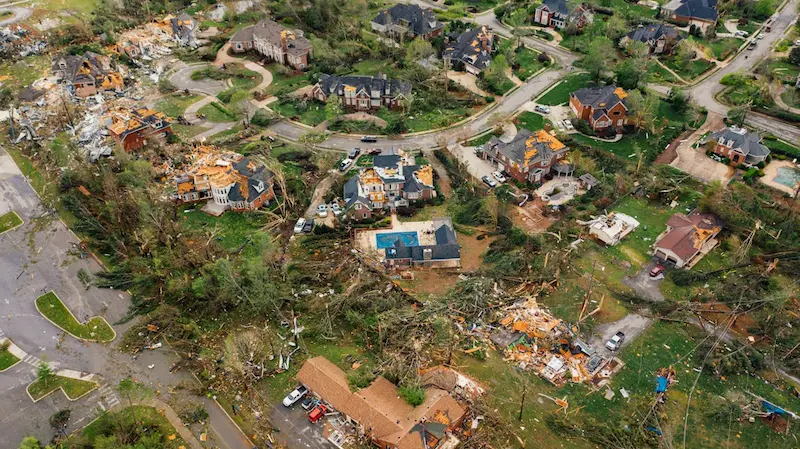
There is no single insurance product sold under the label hurricane insurance. Instead, complete financial protection from a hurricane requires assembling multiple policies that together cover the three primary threats a storm delivers: wind damage, storm surge flooding, and interior water intrusion. Understanding how these layers interact is the foundation for every coverage decision a coastal homeowner must make.
Hurricanes were responsible for the costliest insured-loss events in U.S. history. Hurricane Andrew in 1992 reshaped the entire Florida market. Hurricane Katrina in 2005 resulted in more than $41 billion in insured losses at the time, confirming the insurance industry’s fears about catastrophic exposure. These events permanently changed how coastal homeowners insurance is written, priced, and regulated.
Today, hurricane insurance is a shorthand that consumers use to describe this bundle of protection. Insurers, regulators, and agents use the term to refer broadly to any coverage that activates when a named tropical storm or hurricane causes damage. The distinction matters enormously when a claim is filed.
The Three Policies That Make Up Complete Hurricane Coverage
Every coastal homeowner should understand the three distinct coverage layers and what each one does — and does not — cover.
1. Homeowners Insurance (Wind Included or Excluded)
A standard homeowners policy — typically an HO-3 form — covers wind damage in most U.S. states. In high-risk coastal areas, however, insurers frequently exclude wind coverage entirely, requiring a separate windstorm policy. Even when wind is included, a separate, higher hurricane or named-storm deductible almost always applies in coastal regions. The HO-3 also covers personal property, liability, and additional living expenses if your home becomes uninhabitable after a storm.
2. Windstorm Insurance (Separate or Endorsement)
In areas where standard homeowners policies exclude wind, a separate windstorm policy fills the gap. This is required along much of the Florida coast, in parts of Texas, coastal North Carolina, Alabama, and other high-risk zones. In states like Florida, Citizens Property Insurance Corporation offers wind-only policies specifically for properties in designated high-risk coastal territories. Windstorm policies cover physical wind damage to the structure — roof damage, broken windows, siding loss — but never flooding.
3. Flood Insurance (NFIP or Private)
Storm surge — the wall of ocean water pushed inland by a hurricane’s winds — is categorized as flooding under U.S. insurance law and is excluded from every homeowners and windstorm policy. Flood insurance must be purchased separately. The primary source is the federal National Flood Insurance Program (NFIP) administered through FEMA, though private flood insurance has grown significantly as an alternative with potentially broader coverage limits and faster claims service.
| Damage Type | Homeowners (HO-3) | Windstorm Policy | Flood Insurance |
|---|---|---|---|
| Wind damage to roof/structure | Yes (if not excluded) | Yes | No |
| Debris impact damage | Yes (if not excluded) | Yes | No |
| Rain entering through wind-caused opening | Yes (if not excluded) | Yes | No |
| Storm surge flooding | No | No | Yes |
| Inland flooding (heavy rain runoff) | No | No | Yes |
| Personal property loss | Yes | Varies | Yes (with limits) |
| Additional living expenses | Yes | Rarely | No (NFIP) |
| Liability coverage | Yes | No | No |
| Coverage terms vary by insurer and state. Always review your specific policy declarations page. | |||
Hurricane Deductibles Explained: Hurricane vs. Named Storm vs. Windstorm
Deductibles are among the most misunderstood elements of hurricane insurance. Storm-related deductibles are almost always percentage-based rather than a flat dollar amount — meaning your out-of-pocket cost scales with the insured value of your home, not the cost of repairs. This distinction can mean tens of thousands of dollars.
How Percentage Deductibles Work
A standard homeowners deductible might be $1,000 or $2,500. A hurricane deductible on the same policy might be 2% to 5% of your dwelling coverage limit — called Coverage A. On a home insured for $400,000, a 2% hurricane deductible means you pay the first $8,000 out of pocket before insurance contributes a single dollar. A 5% deductible on that same home would cost you $20,000 before coverage kicks in.
Three Types of Storm Deductibles — and How They Differ
The term used in your policy determines exactly when the deductible applies. The three most common types are:
- Hurricane Deductible: Applies only when a storm is officially classified as a hurricane by the National Weather Service or National Hurricane Center. If a storm causes severe wind damage but is only a tropical storm at the time, this deductible does not activate.
- Named Storm Deductible: Broader than a hurricane deductible. It activates when any storm receives an official name from the National Hurricane Center — including tropical storms that never reach hurricane strength. This is the more common type in modern coastal policies.
- Windstorm or Wind/Hail Deductible: The broadest of the three. It applies to any wind-related damage event, including regular thunderstorms, straight-line winds, tornadoes, and unnamed storms. A hurricane deductible is a subset of this category.
Importantly, these deductibles replace — they do not stack on top of — the standard deductible for a covered storm event. Only one applies to a single claim. Which one depends on how the policy is written, what kind of storm caused the damage, and your state’s regulations.
Deductible Triggers: What Sets the Clock
Triggers are the specific conditions that must be met for a hurricane or named-storm deductible to apply. They vary by state and insurer, but the most common trigger structures include:
- When the National Weather Service officially names a tropical storm or hurricane
- When a hurricane watch or warning is declared for any part of the state
- When a storm reaches a defined intensity threshold (e.g., Cat 1 or higher)
- Damage occurring within a defined window — typically from 24 hours before the storm is named through 72 hours after it is downgraded or the last warning is lifted
In Florida, the hurricane deductible applies to damage occurring from the time the National Weather Service issues a hurricane watch or warning for any part of the state through 72 hours after the watch or warning is discontinued. This means damage from a storm that grazes the coast without making direct landfall can still trigger your hurricane deductible.
Nearly 30% of homeowners in hurricane-prone areas were unsure whether their policy had a hurricane or named-storm deductible, according to a 2023 survey by Insurance.com.
— Insurance Information Institute (III)
Florida’s Specific Hurricane Deductible Rules
Florida law mandates that all homeowners insurers offer hurricane deductibles of 2%, 5%, or 10% of the dwelling’s insured value. Insurers may also offer a $500 flat hurricane deductible for low-value homes or certain policy types. The chosen deductible applies once per calendar year — not once per storm — meaning if two hurricanes strike Florida in the same season, the homeowner generally pays the deductible only once for the second event if the first claim has not been settled, depending on specific policy language.
| Home Insured Value (Coverage A) | 2% Deductible | 5% Deductible | 10% Deductible |
|---|---|---|---|
| $200,000 | $4,000 | $10,000 | $20,000 |
| $350,000 | $7,000 | $17,500 | $35,000 |
| $500,000 | $10,000 | $25,000 | $50,000 |
| $750,000 | $15,000 | $37,500 | $75,000 |
| $1,000,000 | $20,000 | $50,000 | $100,000 |
| These are illustrative figures. Your actual deductible is on your declarations page. | |||
Florida’s Insurance Market in 2026: Crisis, Reform, and Cautious Recovery
Florida operates the most expensive and complex homeowners insurance market in the United States. Understanding its history and current trajectory is essential context for any coverage decision.
How the Crisis Developed
Florida’s property insurance crisis peaked between 2020 and 2023, driven by a combination of factors: widespread litigation abuse, Assignment of Benefits fraud, skyrocketing reinsurance costs after multiple major hurricanes, and the insolvency of at least seven private carriers from 2020 through 2023. These forces drove over 1.4 million Florida homeowners onto Citizens Property Insurance Corporation — the state’s insurer of last resort — by late 2023, representing approximately 15% of the state’s entire residential property insurance market.
Legislative Reform: SB 2-A and SB 2-D
Florida’s legislature responded with two sweeping reform packages. Senate Bill 2-A (passed in a special session in December 2022) and Senate Bill 2-D (passed in May 2023) addressed the root causes of market instability. Key provisions included:
- Elimination of one-way attorney fees that had incentivized litigation against insurers
- Prohibition on Assignment of Benefits (AOB) for new property insurance policies issued on or after January 1, 2023 — meaning contractors can no longer take over claim rights from policyholders
- Tighter deadlines for filing claims and supplemental claims
- New financial stability requirements for insurers operating in the state
- Stricter standards for bad-faith claims against insurers
The 2026 Market: Signs of Stabilization
The reforms are producing measurable results. As of early 2026:
- Citizens’ policy count has dropped dramatically from its 2023 peak of over 1.4 million to approximately 396,000 policies, signaling meaningful private market re-entry
- Citizens’ market share fell from roughly 15% of Florida’s residential insurance market in late 2023 to approximately 7% by mid-2025
- New claims at Citizens declined by 80% from September 2024 to September 2025
- New litigation and pending litigation at Citizens dropped 40% and 47% respectively over the same period
- Citizens received OIR approval to reduce homeowners multiperil rates by an average of 8.8% in 2026 — the first rate reduction since 2015
- An estimated 60% of Citizens customers would see average premium reductions of 11.5%, with larger cuts in hard-hit counties: Broward County at 14.1% and Miami-Dade at 13.9%
The 2025 Atlantic hurricane season was notably quiet, contributing further to improved financial conditions across the market. Multiple private carriers have filed for rate decreases for 2026, and the appetite to write new business in Florida has expanded materially since the 2022–2023 lows.
What Florida Homeowners Still Pay
Despite the improving trend, Florida remains the most expensive state in the nation for homeowners insurance. Statewide average annual premiums for homeowners insurance hovered around $3,800 to $5,800+ as of early 2026, depending on location, home age, and coverage levels. Coastal and older properties in South Florida can face significantly higher costs — sometimes $8,000 to $20,000+ annually when homeowners insurance, wind, and flood coverage are combined.
- North Florida homeowners typically pay $2,000 to $5,000 per year for combined coverage
- Central Florida homeowners typically pay $3,000 to $6,000 per year
- South Florida coastal homeowners often pay $5,000 to $12,000+ per year
Citizens Property Insurance Corporation: Florida’s Insurer of Last Resort
Citizens Property Insurance Corporation is a state-created nonprofit insurance entity established by the Florida Legislature. It was formed in the aftermath of Hurricane Andrew (1992) to serve as the market of last resort when private carriers cannot or will not provide coverage at affordable rates. Understanding Citizens — its policies, eligibility rules, and limitations — is essential knowledge for every Florida property owner.
What Citizens Offers
Citizens writes several types of coverage for Florida property owners:
- Homeowners (HO-3) Policies — for owner-occupied primary residences, covering wind, fire, theft, and other perils
- Dwelling Fire Policies — for investment properties, rental properties, and vacant homes
- Wind-Only Policies — for properties in Miami-Dade, Broward, Palm Beach, and other designated coastal territories where private insurers have excluded wind from standard homeowners policies
- Condominium Unit Owner Policies — covering individual unit owners for personal property and betterments
Eligibility: The 20% Rule
Homeowners are only eligible for Citizens if they cannot obtain equivalent coverage in the private market, or if the least expensive private market option costs more than 20% above Citizens’ rate for comparable coverage. At renewal, if a private carrier offers a policy within that 20% threshold, Citizens may require the policyholder to move to the private market — a process called a depopulation takeout. When comparing offers, homeowners should carefully evaluate deductibles, coverage terms, and flood requirements — not premium alone — before accepting or rejecting a private market alternative.
Citizens’ Flood Insurance Requirement (2026)
A major policy shift affects many Citizens policyholders in 2026. Florida law now requires Citizens policyholders to maintain flood insurance, phased in according to their home’s replacement cost value. As of 2026, Citizens policyholders with homes valued at $400,000 or more in replacement cost are required to carry flood insurance. This requirement applies regardless of whether the property is in a FEMA-designated Special Flood Hazard Area. The mandate will expand to cover lower-value properties in subsequent years.
Citizens’ Financial Backstop
Citizens is backed by the Florida Hurricane Catastrophe Fund (FHCF), a state-run reinsurance program. The Cat Fund is currently required by law to provide up to $17 billion in claims-paying capacity, though it typically falls short of this statutory maximum. Shortfalls are covered through bond issuance, which is repaid through assessments — surcharges levied on all Florida property insurance policyholders through their carriers, even those who suffered no losses. Citizens’ 100-year probable maximum loss was measured at $12.859 billion as of end-2024, reflecting its reduced exposure from depopulation.
Citizens’ Catastrophe Bond Program
To supplement the Cat Fund, Citizens participates aggressively in the catastrophe bond market. The cat bond market provided $3.125 billion of reinsurance limit to support Citizens during the 2025 hurricane season, placing it third among the largest cat bond sponsors in the market. This financial architecture provides Citizens with meaningful claims-paying capacity even in severe hurricane scenarios.
Wind Mitigation: The Most Powerful Tool for Lowering Your Premium
Wind mitigation refers to construction features and retrofits that reduce a home’s vulnerability to hurricane-force winds. Florida law requires insurers to offer premium discounts for homes that have qualifying wind-resistant features — and these discounts can be substantial, often reducing the wind portion of a premium by 30% to 50%.
The Uniform Mitigation Verification Inspection (OIR-B1-1802)
To claim wind mitigation credits, Florida homeowners must obtain a wind mitigation inspection using the state-standardized form OIR-B1-1802 (also called the Uniform Mitigation Verification Inspection form). A licensed inspector — typically a general contractor, building inspector, or wind mitigation specialist — evaluates the property and documents its qualifying features. The inspection report is then submitted to the insurer, which applies the applicable discounts. Inspection reports are valid for 5 years; homeowners should have a new inspection performed if they reroof, install storm shutters, or make other qualifying improvements.
Features That Earn the Largest Discounts
The OIR-B1-1802 form evaluates several structural characteristics. The features that generate the largest premium discounts include:
- Roof Shape: Hip roofs (sloping on all four sides) earn significantly larger discounts than gable roofs, which are more vulnerable to wind uplift
- Roof-to-Wall Connections: Hurricane clips, single wraps, double wraps, and structural anchor bolts — in increasing order of protection and discount
- Roof Deck Attachment: Thicker decking (5/8 inch or more) with closer nail spacing provides greater resistance to wind uplift and earns more credit
- Secondary Water Resistance (SWR): A self-adhering modified bitumen membrane applied to the roof deck beneath shingles, preventing water intrusion if the roof covering is lost
- Opening Protection: Impact-resistant windows and doors, or properly rated storm shutters that meet Florida Building Code standards for the applicable wind zone
- Roof Covering: Roof covering installed to meet or exceed Florida Building Code requirements for the applicable wind speed zone
My Safe Florida Home Program
Florida’s My Safe Florida Home program provides free wind mitigation inspections and matching grants to eligible homeowners for qualified mitigation improvements such as roof reinforcements and opening protection. The program has been funded and active in recent years to help homeowners both reduce their risk and lower their insurance costs. Eligibility and funding availability change each legislative session; homeowners should check the program’s current status with the Florida Department of Financial Services before applying.
Estimated Premium Impact of Mitigation Features
| Feature | Typical Discount Range | Notes |
|---|---|---|
| Hip Roof (vs. Gable) | Up to 33% | One of the highest-value single features |
| Secondary Water Resistance (SWR) | Up to 20% | Reduces interior loss when roof covering fails |
| Hurricane Clips / Wraps (Roof-to-Wall) | 5% – 25% | Higher connection strength = higher discount |
| Impact-Resistant Windows and Doors | 10% – 40% | Must meet Florida Building Code; varies by coverage zone |
| Rated Storm Shutters | 8% – 30% | Must have documentation of code compliance |
| Improved Roof Deck Attachment | 5% – 15% | Nail pattern and decking thickness both evaluated |
| Actual discounts vary by insurer and the specific credit schedule filed with the OIR. Discounts may be additive in some combinations. | ||
Coastal States Beyond Florida: State-by-State Wind and Hurricane Coverage
Florida is not alone in requiring separate windstorm coverage or imposing special hurricane deductibles. Nineteen states plus Washington, D.C. allow insurers to impose separate hurricane or windstorm deductibles. Each state has a different regulatory framework, residual market mechanism, and set of coverage requirements. Below is a guide to the major coastal markets.
Texas
The Texas Windstorm Insurance Association (TWIA) is the state-backed insurer of last resort for wind and hail damage in 14 first-tier coastal counties and portions of Harris County east of Highway 146. Standard homeowners policies from private carriers typically exclude wind damage for properties in these high-risk zones, making a TWIA policy essential for most coastal Texas homeowners. TWIA policies carry percentage-based deductibles of 1% to 5% of the dwelling coverage limit, and these apply specifically to named-storm events. TWIA was created after Hurricane Celia devastated Corpus Christi in 1970.
Louisiana
Louisiana’s private insurance market has contracted significantly following Hurricanes Katrina (2005), Ida (2021), and other storms. The Louisiana Citizens Property Insurance Corporation operates both a FAIR Plan (statewide) and a Coastal Plan (for high-risk coastal areas) for property owners unable to find private coverage. Named-storm and hurricane deductibles in Louisiana activate when a watch or warning is issued for any part of the state and end 24 hours after the last watch or warning is lifted. Louisiana law also prohibits commercial property insurers from charging multiple hurricane deductibles in a single season.
North Carolina
The North Carolina Insurance Underwriting Association (NCIUA), commonly called the Beach Plan, provides windstorm and hail coverage for properties in designated coastal counties where private insurers exclude wind. To be eligible, a property owner must have an active primary coverage policy from a private admitted carrier that excludes windstorm. Named-storm deductibles in North Carolina apply from the time a named-storm watch or warning is issued for any part of the state through 24 hours after the last watch or warning expires.
South Carolina
South Carolina operates the South Carolina Wind and Hail Underwriting Association (SCWHUA) — often called the Beach Plan — for coastal properties in Beaufort and Horry counties, as well as portions of Berkeley, Charleston, Colleton, Georgetown, and Jasper counties. Like other beach plans, SCWHUA provides wind and hail coverage only; homeowners must pair it with a separate property policy for fire, theft, and liability.
Mississippi
The Mississippi Windstorm Underwriting Association (MWUA) provides wind and hail-only coverage for coastal counties: George, Hancock, Harrison, Jackson, Pearl River, and Stone. Named-storm and hurricane deductibles in Mississippi are triggered when a watch or warning is issued anywhere in the state and end 24 hours after the last watch or warning for any part of Mississippi is lifted. Insurers are required to clearly explain the timing of the deductible and provide a practical dollar-amount example in the policy itself.
Alabama
Alabama coastal homeowners — particularly in Baldwin and Mobile counties along the Gulf Coast — often face wind exclusions in standard policies and must obtain separate wind coverage. Alabama participates in the regional pattern of named-storm percentage deductibles, and mobile home and manufactured housing owners face additional coverage challenges along the coast.
Georgia, Virginia, Maryland, and Other Atlantic States
Atlantic coastal states including Georgia, Virginia, Maryland, Delaware, New Jersey, New York, Connecticut, Rhode Island, Massachusetts, and Maine all allow separate hurricane or windstorm deductibles. The further north along the Atlantic coast, the less frequent but potentially still severe the hurricane risk. States like New York and New Jersey revised their hurricane deductible regulations following Superstorm Sandy in 2012, which caused approximately $19 billion in insured losses. Each state’s beach plan or FAIR plan structure varies; consumers should verify their specific state’s residual market options with the state insurance regulator.
Flood Coverage: Filling the Single Largest Gap in Hurricane Protection
Storm surge — the mass of ocean water driven inland by a hurricane’s circulation — is historically the leading cause of hurricane-related deaths and one of the most financially devastating forms of hurricane damage. And yet it is excluded from every homeowners and windstorm policy in the United States. This is not a technicality or fine print trap; it is a fundamental, universal feature of how U.S. property insurance is structured.
National Flood Insurance Program (NFIP)
The primary source of flood insurance for most U.S. homeowners is the federal NFIP, administered by FEMA and marketed under the brand FloodSmart.gov. NFIP policies are sold through private insurance agents and provide:
- Up to $250,000 in building coverage for residential properties
- Up to $100,000 in personal property (contents) coverage
- Coverage for direct physical loss caused by flooding, including storm surge
- No coverage for additional living expenses if the home is uninhabitable
A critical limitation: NFIP policies carry a 30-day waiting period before coverage takes effect for new policies or coverage increases. This means flood insurance cannot be purchased in response to a hurricane forecast — it must be in place well in advance of storm season.
NFIP Risk Rating 2.0
FEMA overhauled NFIP pricing with the implementation of Risk Rating 2.0, which prices flood insurance based on a property’s individual flood risk rather than its FEMA flood zone designation. Risk Rating 2.0 considers factors including the property’s proximity to water, the types of flooding it may experience, the cost to rebuild, and the elevation of the first floor relative to estimated flood levels. This has produced significant premium changes — increases for many coastal properties and decreases for some inland and elevated properties.
Private Flood Insurance
Private flood insurance has grown substantially as an alternative to the NFIP. Advantages of private flood policies often include:
- Higher coverage limits for high-value homes exceeding NFIP’s $250,000 building cap
- Coverage for additional living expenses (not available under NFIP)
- Faster claims processing and payment
- Coverage for items excluded under NFIP (e.g., detached garages, landscaping in some policies)
- Sometimes lower premiums for lower-risk properties
Most mortgage lenders accept private flood insurance in lieu of NFIP coverage for properties in designated Special Flood Hazard Areas, provided the policy meets the lender’s requirements. Waiting periods for private flood policies vary by insurer, with some offering shorter waiting periods than the NFIP’s 30 days.
Who Needs Flood Insurance?
Mortgage lenders require flood insurance for federally backed mortgages on properties in FEMA-designated Special Flood Hazard Areas (SFHA) — typically depicted as Zone A or Zone V on Flood Insurance Rate Maps. However, the NFIP itself reports that over 20% of all flood claims come from properties outside designated high-risk flood zones. This means even homeowners with no mortgage requirement and no proximity to the coast can face significant flood losses from heavy rainfall events and overwhelmed drainage systems. For any coastal homeowner, flood coverage is not optional — it is essential.
Cost Breakdown: What Hurricane Coverage Actually Costs in 2026
The total cost of complete hurricane protection varies enormously based on location, property value, home age, construction type, roof condition, and the specific coverage levels selected. The figures below represent approximate ranges as of early 2026 and should be used for planning purposes, not as binding estimates.
Florida Annual Premium Ranges (Combined Coverage)
| Region | Homeowners + Wind | NFIP Flood Policy | Estimated Annual Total |
|---|---|---|---|
| North Florida (inland, low flood risk) | $2,000 – $4,000 | $500 – $1,200 | $2,500 – $5,200 |
| Central Florida | $3,000 – $5,500 | $700 – $1,500 | $3,700 – $7,000 |
| Southwest Florida (Gulf Coast) | $4,500 – $9,000 | $1,000 – $3,000 | $5,500 – $12,000 |
| Southeast Florida (Miami-Dade, Broward, Palm Beach) | $5,000 – $12,000 | $1,200 – $4,000+ | $6,200 – $16,000+ |
| Florida Keys / Extreme Coastal | $8,000 – $20,000+ | $2,000 – $6,000+ | $10,000 – $26,000+ |
| Ranges are illustrative. Actual premiums depend on home value, construction, roof age, mitigation features, and carrier. Wind mitigation discounts can substantially reduce wind premium costs. | |||
Key Cost Drivers
The factors that most dramatically affect hurricane coverage premiums include:
- Location within the state: Distance from the coast, wind speed zone designation, and county-level loss history all affect pricing significantly
- Roof age and condition: Roofs over 15–20 years old face dramatically higher premiums or coverage limitations; some insurers will not write policies on older roofs at all
- Construction type: Concrete block construction typically earns lower premiums than frame construction; newer construction meeting current Florida Building Code requirements is priced more favorably
- Wind mitigation features: A complete set of qualifying mitigation features — hip roof, SWR, double wraps, impact windows — can reduce the wind portion of a premium by 30% to 50%
- Deductible selection: Choosing a 5% hurricane deductible instead of 2% will reduce the premium, but substantially increases out-of-pocket exposure in a loss
- Claims history: Prior hurricane claims, even from a previous owner, can affect current pricing in some markets
Filing a Hurricane Insurance Claim: What to Do Before, During, and After
When a hurricane strikes, the actions you take in the hours and days following the storm significantly affect the outcome of your insurance claim. Florida and most coastal states impose strict deadlines on claim filing and supplemental claims that homeowners must understand in advance.
Before the Storm: Preparation That Protects Your Claim
- Document your home thoroughly. Take a complete photo and video inventory of your home’s interior and exterior, including roof, windows, doors, personal property, and mechanical systems. Store this documentation in cloud storage or another off-site location.
- Locate and organize your insurance documents. Know your policy numbers, insurer contact information, and the exact coverage limits and deductibles for each policy.
- Understand your deductible. Know the dollar amount of your hurricane deductible so you can assess whether a loss is large enough to claim.
- Install and document storm protections. If you have rated storm shutters, install them and document their installation with photos before the storm.
Immediately After the Storm: Protecting Your Rights
- Ensure safety first. Do not re-enter your home until authorities have confirmed it is safe to do so.
- Document all damage immediately. Photograph and video every area of damage before making any repairs. Do not dispose of damaged materials until your insurer’s adjuster has had the opportunity to inspect them.
- Make emergency temporary repairs. You have a duty to mitigate further damage. Place tarps over roof openings, board broken windows, and take other reasonable steps. Keep all receipts — these reasonable mitigation expenses are typically reimbursable under your policy.
- Contact your insurer promptly. Florida law requires insurers to begin investigating claims within a defined timeframe after notice. Prompt reporting protects your rights under the policy.
Florida’s Claim Filing Deadlines
Florida law imposes specific deadlines that policyholders must observe:
- Initial claim: Must be filed within 1 year of the date of loss
- Supplemental claims (for additional damage discovered after the initial claim): Must be filed within 18 months of the date of loss
- These deadlines were significantly tightened by the 2022–2023 legislative reforms and are strictly enforced
Working with Adjusters and Contractors
Following major hurricanes, unlicensed or unscrupulous contractors and public adjusters often appear rapidly in affected communities making aggressive solicitations. Florida’s 2023 reforms ended Assignment of Benefits for new policies, meaning contractors cannot take over your claim rights. You retain full control of your claim and must communicate directly with your insurer. Always verify contractor licensing, get scopes and prices in writing before work begins, and confirm with your insurer before authorizing permanent repairs.
If you disagree with your insurer’s settlement offer, Florida law provides a process for appraisal — a private, binding dispute resolution mechanism. Each side selects a competent appraiser, and the two appraisers then select a neutral umpire to resolve disputed items. The appraisal process is distinct from litigation and is often faster and less costly. Under the 2022 reforms, court action for extracontractual damages (bad faith) is limited until a court has first ruled that the insurer breached the contract, further reducing opportunistic litigation.
Glossary of Hurricane Insurance Terms
- Assignment of Benefits (AOB)
- A legal mechanism formerly allowing policyholders to sign over insurance claim rights to a third party, such as a contractor. Prohibited for new Florida property policies issued after January 1, 2023.
- Catastrophe Bond (Cat Bond)
- A financial instrument that transfers insurance risk to capital markets investors. If a defined catastrophe event occurs, investors may lose principal, which is used to pay insurance claims.
- Coverage A (Dwelling Coverage)
- The portion of a homeowners policy that covers the physical structure of the insured home. Hurricane and windstorm percentage deductibles are calculated as a percentage of the Coverage A limit.
- Depopulation Takeout
- The process by which a private insurer assumes (takes out) policies from Citizens Property Insurance Corporation, typically with the policyholder being required to move to the private carrier if the premium is within 20% of Citizens’ rate.
- Florida Hurricane Catastrophe Fund (FHCF / Cat Fund)
- A state-run reinsurance mechanism that provides catastrophe reinsurance to Florida insurers. Currently required to provide up to $17 billion in claims-paying capacity.
- Hurricane Deductible
- A separate, percentage-based deductible that applies specifically when a storm is officially classified as a hurricane. Replaces the standard deductible for hurricane-caused losses.
- Named Storm Deductible
- A deductible that applies when any storm receives an official name from the National Hurricane Center, including tropical storms that never reach hurricane intensity.
- National Flood Insurance Program (NFIP)
- The federal flood insurance program administered by FEMA, providing building coverage up to $250,000 and contents coverage up to $100,000 for participating properties.
- OIR-B1-1802
- The Florida Office of Insurance Regulation standardized form used for Uniform Mitigation Verification Inspections. Required to document wind mitigation features and qualify for premium discounts.
- Secondary Water Resistance (SWR)
- A self-adhering modified bitumen membrane applied beneath roof covering that prevents water intrusion if the outer roof covering is lost in a storm. One of the higher-value wind mitigation credits.
- Special Flood Hazard Area (SFHA)
- FEMA-designated land area with at least a 1% annual flood probability (the “100-year floodplain”). Properties with federally backed mortgages in SFHAs are required to carry flood insurance.
- Storm Surge
- An abnormal rise in sea level caused by a hurricane’s winds and low atmospheric pressure. Storm surge is classified as flooding and is excluded from homeowners and windstorm policies.
- Wind Mitigation Inspection
- A professional evaluation of a home’s structural resistance to hurricane-force winds. Required to document qualifying features and receive premium discounts from Florida insurers.
- Wind Pool / Beach Plan
- A state-operated insurer of last resort providing wind and hail coverage in high-risk coastal areas where private insurers have excluded wind from standard policies. Examples include TWIA (Texas), NCIUA (North Carolina), and SCWHUA (South Carolina).
Frequently Asked Questions
- Does my standard homeowners insurance cover hurricane damage?
- It depends on your policy and location. In many areas of the country, standard homeowners policies include wind coverage, but apply a separate, percentage-based hurricane or named-storm deductible for storm events. In high-risk coastal areas — including much of Florida’s coast, coastal Texas, and other shoreline communities — wind may be excluded entirely from the homeowners policy, requiring a separate windstorm policy. Storm surge flooding is excluded from all homeowners and windstorm policies without exception.
- What is the difference between a hurricane deductible and a named-storm deductible?
- A hurricane deductible activates only when a storm is officially classified as a hurricane (Category 1 or above) by the National Hurricane Center. A named-storm deductible activates whenever any storm receives an official name from the National Hurricane Center — including tropical storms that never reach hurricane strength. The named-storm deductible is broader and will apply in more situations.
- Can I buy hurricane insurance after a storm has been announced?
- No. Virtually all insurers impose a binding moratorium — typically 24 to 48 hours before a storm’s forecast arrival — during which no new wind policies can be issued in the affected area. Flood insurance through the NFIP has a 30-day waiting period for new policies under most circumstances. Hurricane coverage must be in place well before storm season begins on June 1.
- Do I need flood insurance if I’m not in a flood zone?
- More than 20% of all NFIP flood claims come from properties outside designated high-risk flood zones. Storm surge from a hurricane can push inland well beyond high-risk areas. Even homeowners without a mortgage requirement or a coastal location benefit from flood coverage, particularly if their property is near any body of water, in a low-lying area, or in a region with poor drainage.
- Is Citizens Property Insurance a good option?
- Citizens is a financially stable insurer backed by Florida law and the Florida Hurricane Catastrophe Fund. However, policyholders should be aware that Citizens’ policies may carry assessment risk — if Citizens faces a major deficit after a catastrophic storm season, all Florida property insurance policyholders (not just Citizens customers) may face special assessments through their carriers. Citizens is best viewed as a last resort while the private market continues to stabilize.
- How much can wind mitigation discounts reduce my premium?
- The combination of qualifying wind mitigation features — hip roof shape, secondary water resistance, hurricane clips or better roof-to-wall connections, and impact-resistant or shuttered openings — can reduce the wind portion of a Florida homeowner’s premium by 30% to 50% or more. The actual dollar savings depend on the carrier’s filed discount schedule and the specific combination of features present. A wind mitigation inspection costs $75 to $200 and can pay for itself many times over in the first year alone for properties with strong mitigation features.
- What happens if Citizens raises my rates or non-renews my policy?
- Citizens’ rates are regulated by the Florida Office of Insurance Regulation and are subject to statutory glide-path caps that limit how much rates can increase in a single year. For 2026, rates are actually decreasing for most policyholders. If Citizens non-renews a policy and no private carrier offers comparable coverage within 20% of Citizens’ rate, the policyholder generally remains eligible for Citizens coverage. Working with an independent insurance agent who has access to multiple carriers is the best strategy for navigating coverage transitions.
- Are roof age and condition really that important for insurance?
- Roof age and condition are among the most significant underwriting factors in Florida and other hurricane-prone markets. Many private carriers will not write or renew coverage on roofs over 15 to 20 years old, or will require a roof inspection before issuing a policy. Roofing documentation — including permits, material invoices, and inspection reports — should be maintained and readily available. Replacing an aging roof can dramatically improve coverage options and lower premiums.
- What is the NFIP’s 30-day waiting period, and are there exceptions?
- New NFIP flood policies and coverage increases typically do not take effect for 30 days after the application and premium payment are submitted. The main exceptions include: flood coverage required as a condition of a federally backed mortgage loan (immediate effective date); coverage purchased in connection with a loan closing or refinancing; and a few other narrow circumstances. Private flood insurers may offer shorter waiting periods. This 30-day rule makes it critical to purchase or review flood coverage well before hurricane season begins.
Information in this guide reflects Florida insurance law, Citizens Property Insurance Corporation policies, and coastal windstorm insurance regulations as of early 2026. Insurance terms, rates, eligibility rules, and coverage requirements change frequently. Always verify current details with a licensed insurance agent in your state and review your specific policy documents.
Sources and references: Citizens Property Insurance Corporation · National Association of Insurance Commissioners (NAIC) · Insurance Information Institute (III) · FEMA / National Flood Insurance Program · Florida Department of Financial Services – My Safe Florida Home
RELATED POSTS
View All →



Daniel Hayes is the founder and sole researcher at AdvoraHQ. He covers U.S. personal finance, insurance, and consumer law — working directly from IRS publications, federal and state statutes, court opinions, and SEC filings rather than secondary summaries. His focus is the gap between what readers think they know and what the source documents actually say. Daniel is not a licensed attorney, CPA, or financial advisor; his articles are educational and not personalized advice. Reach him at Daniel.Hayes@advorahq.com.