
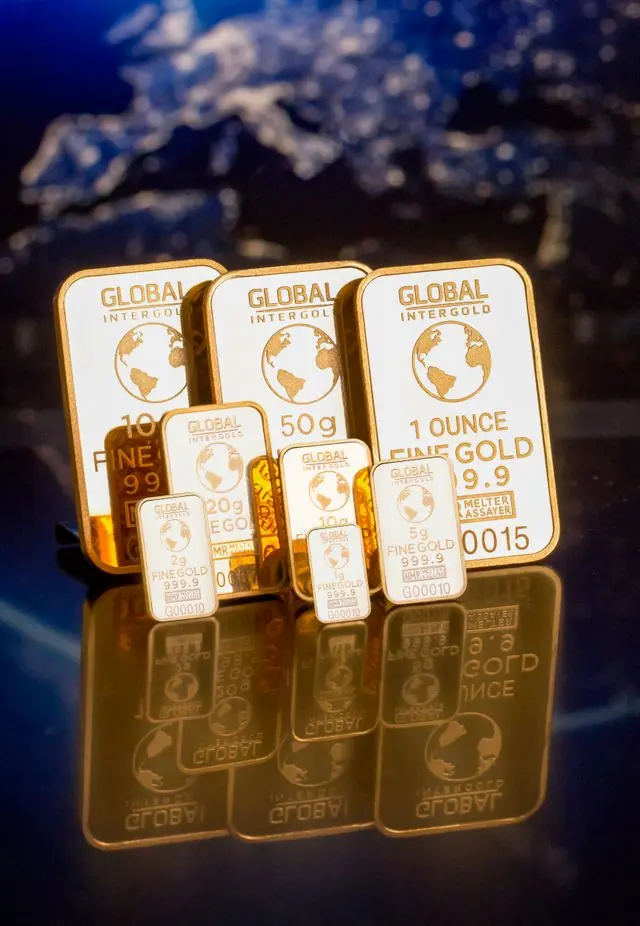
Is Gold a Good Investment in 2026? Pros, Cons & How to Buy
Gold can be a good investment — just probably not the kind you’re hoping for. It works as a portfolio diversifier and an inflation hedge, not a get-rich-quick play, and timing matters more than the headlines admit. After hitting a record above $5,590 in late January 2026, gold slid to around $4,000 by late June, then rebounded to the $4,500s by August. So is gold still a safe-haven asset in 2026, and is now a good time to buy? Below is the balanced, updated answer: why people own it, the real downsides (taxes included), how to invest, and how much to hold.
The Gist, in 30 Seconds
- Current priceRoughly $4,500–$4,580/oz as of Aug 21, 2026 — check live below.
- VerdictGood as a 5–10% diversifier. Not a growth engine.
- Since the Jan 2026 recordDown ~18–20%, but up sharply from June’s low.
- Biggest catchNo income, and physical gold/ETFs are taxed up to 28% (vs. 20% for stocks).
- Easiest way inA low-cost ETF like GLDM, SGOL, or IAU.
Gold at a Glance: Pros, Cons & Verdict
Here’s the whole decision on one screen. If you only read one thing, read the table: it answers whether gold is a good investment, whether now is a good time, what the real downsides are, how to buy, and how much to own.
| The question | The honest answer |
|---|---|
| Is gold a good investment? | Yes — as a diversifier and inflation hedge. No — if you expect it to grow wealth like stocks. |
| Is it a good time right now? | Gold has already rebounded off its June low. Better to dollar-cost average than to chase the next headline. |
| Biggest pros | Inflation hedge, safe haven in a crisis, low correlation to stocks, tangible, globally liquid. |
| Biggest cons | Pays no income, can be volatile, up to 28% tax on gains, storage/insurance costs for physical, lags stocks long-term. |
| Does it pay income? | No. Gold pays no dividends or interest — you only profit if the price rises. |
| How do you buy it? | ETFs (simplest), physical bullion and coins, gold mining stocks, a gold IRA, or futures. |
| How much should you own? | Typically 5–10% of a portfolio as a diversifier; some advisors stretch that to 15% for risk-tolerant investors. |
| Gold vs. stocks? | Stocks win long-term growth. Gold wins stability and crisis protection. |
| Current price | Around $4,500–$4,580 per ounce as of — verify before buying; gold moves daily. Live tracker below. |
Gold (XAU/USD) Spot Price
Quick Answers to the Top Questions
Is gold a good investment?
For most people, yes — in moderation. Gold is a proven store of value that holds up when inflation bites or markets panic. But it generates no income and has trailed stocks over the long term, so treat it as insurance for your portfolio rather than its engine. More on the case for gold in the pros below.
Is it too late to buy gold now?
Gold is still roughly 18–20% below its January 2026 record, so you’re not buying at the top — but it’s also well off June’s lows, so you’re not catching a bottom either. Nobody can reliably call either point, which is why averaging in over time beats betting on a single date.
Can you lose money investing in gold?
Absolutely. Gold has no guaranteed return and can fall hard — the drop from January’s record to June’s low is a live 2026 example. It can also lag cash and bonds for years at a stretch. The disadvantages section covers the full list of risks.
How do I start?
The simplest route for beginners is a low-cost gold ETF such as GLDM, SGOL, or IAU, bought through a regular brokerage account in minutes. Physical bullion, mining stocks, and a gold IRA are alternatives with different trade-offs, all compared in the five ways to invest.
How much should I own?
A common rule of thumb is 5–10% of your portfolio, though some advisors go as high as 15% for investors with a higher risk tolerance. Enough to diversify and cushion a downturn, but not so much that gold’s flat years drag down your overall returns. See how much gold to own.
Why People Invest in Gold (The Pros)
Gold’s appeal isn’t about beating the stock market — it’s about behaving differently from everything else you own. That’s what makes it useful.
Inflation hedge
Because gold is priced in dollars and can’t be printed, it has historically held purchasing power when currencies weaken. When inflation runs hot and cash quietly loses value, gold often holds or gains — one reason it tends to show up in conversations about safe investment options for beginners.
Safe haven in a crisis
In financial panics, wars, and currency scares, investors flee to gold. Its surge to a record in January 2026 came amid escalating U.S.–Iran tensions, a textbook flight to safety. Gold won’t always rise in a crisis, but it’s one of the few assets that frequently does when stocks are falling — which is largely why the question “is gold a safe haven asset in 2026” keeps coming up.
Diversification (low correlation to stocks)
Gold often moves independently of equities and bonds. Adding a slice of something that zigs when your portfolio zags can smooth out the ride and reduce overall volatility — the core reason advisors include it at all.
A tangible store of value
Gold is a physical asset with no counterparty risk: it can’t go bankrupt, default, or be diluted by a board issuing more shares. For investors who distrust paper assets, that permanence is the whole point — and it’s the heart of the physical gold vs. digital gold investment debate covered later in the FAQs.
Global liquidity
Gold is recognized and traded everywhere, around the clock, in nearly every currency. You can convert it to cash quickly almost anywhere in the world — a feature few other tangible assets can match.
The Disadvantages of Investing in Gold
This is the part the gold-hype ads skip. Gold has real, structural drawbacks — and knowing them is what separates a sensible diversifier from a costly mistake.
It pays no dividends or interest
This is gold’s defining weakness. A stock can pay dividends and a bond pays interest, but a gold bar just sits in a vault. Your only path to profit is selling it for more than you paid.
Is gold a good investment when interest rates are high?
This is where it gets tricky in 2026. When rates are high (or expected to rise), the “opportunity cost” of holding a non-yielding asset like gold rises too — money in gold could have been earning yield elsewhere. That’s part of why gold sagged over the spring as the Fed sounded hawkish. But when yields ease, that pressure lifts, which is part of why gold clawed back much of its loss by August.
It can be volatile — and you can lose money
Gold’s reputation for safety doesn’t mean stability. After peaking above $5,590 in January 2026, it fell to around $4,000 by June — a drop of roughly a quarter — before rebounding to the $4,500s. Anyone who bought near the top is still sitting on a loss; anyone who bought in June is sitting on a solid gain. Gold can also drift sideways or down for years at a time, testing the patience of long-term holders.
Storage and insurance costs (for physical gold)
Owning bars and coins means securing them. A home safe, a bank deposit box, or a third-party vault all cost money, and insuring valuable metal adds more. Those ongoing costs quietly eat into your return — and a non-yielding asset has no income to offset them.
It underperforms stocks over the long run
From 1971 to 2024, U.S. stocks returned about 10.7% a year versus roughly 7.9% for gold. Gold has closed some of that gap in the last two years — 2025 was one of gold’s strongest years in decades, with prices rising sharply for a second straight year before topping out in January 2026 — but that kind of run is unusual, not the historical norm. Over full decades, the growth gap between stocks and gold still compounds into an enormous difference in wealth. Gold is a hedge, not a growth engine — if long-term growth is your goal, a diversified stock portfolio has historically done far more of the heavy lifting. (See our beginner’s guide to investing in stocks.)
No cash flow to reinvest
Stocks and bonds throw off income you can compound. Gold doesn’t, so it misses out on the snowball effect that drives much of long-term investing returns. You’re betting purely on price appreciation.
Less favorable tax treatment
In the U.S., physical gold and most gold ETFs are taxed as “collectibles,” with long-term gains capped at a meaningfully higher rate than stocks. This is a big enough issue for American investors that it gets its own section — see Gold and U.S. taxes below.
Premiums and spreads on physical gold
Coins and small bars sell above the spot price (a dealer premium) and you’ll typically sell back below spot. That buy-sell spread means physical gold has to appreciate just to break even — and premiums can spike when demand is hot, as it has been at retailers like Costco (more on that in buying physical gold safely).
Is Gold a Good Investment Right Now? (August 2026 Update)
This is where 2026 gets interesting — and where most stale articles get it wrong. Gold isn’t sitting at record highs anymore, and it isn’t sitting at June’s lows either. The story this year is a sharp round trip: record high, sharp pullback, and a real recovery.
Gold opened 2026 around $4,200, then exploded to an all-time record of roughly $5,590–$5,600 on January 28–29, 2026 as U.S.–Iran tensions peaked. It then slid to around $4,000 by late June as the Fed sounded hawkish and Middle East tensions eased. Since then, gold has climbed back to roughly $4,500–$4,580 as of August 21, 2026 — a rebound driven by a weaker U.S. dollar and falling long-term Treasury yields after the U.S. Treasury moved to increase its buybacks of longer-dated debt, which lowers the opportunity cost of holding a non-yielding asset like gold. That puts gold up modestly for the year overall but still roughly 18–20% below its January peak. Check a live gold price source or the tracker above before you act — these numbers move every day.
Central bank gold buying trends: 2026 data
Central banks remain a key pillar of gold demand. They added roughly 1,045 tonnes to global reserves in 2024 alone — the 15th consecutive year of net buying — and kept adding through 2025 despite record prices, even as the pace of purchases eased somewhat from the torrid quarters of 2022–2023. In the World Gold Council’s most recent central bank survey, an overwhelming majority of respondents said they expect global central bank gold reserves to keep growing over the next 12 months, and none expected a decline. Persistent government debt, geopolitical risk, and continued de-dollarization all support the long-term buying case.
Gold price predictions for 2026 and 2027 (the bull case)
Several major banks remain bullish on where gold goes from here, with published 2026 targets that have ranged widely — some in the high-$4,000s, others well above $6,000 in more aggressive scenarios. Those are forecasts and opinions, not guarantees, and they’ve already shifted meaningfully once this year as the market swung from record highs to a steep correction and back.
The bear case (why it fell, and could again)
The same forces that fueled the rally can reverse quickly. A stronger U.S. dollar makes gold pricier abroad and dampens demand; easing geopolitical tensions can drain the crisis premium out of the price; and if the Fed leans hawkish again — some Federal Reserve officials have argued for raising rates to contain inflation — the opportunity cost of holding a non-yielding asset rises and gold typically struggles.
So what should you do?
Don’t try to call the top or the bottom — even the big banks keep revising their targets, and 2026 has already whipsawed from record high to steep correction to partial recovery in eight months. If gold fits your plan as a diversifier, a sensible approach is dollar-cost averaging: buying a fixed amount on a schedule so you average out the price over time instead of betting everything on today’s number. The right answer depends on your goals and time horizon, not on this week’s headline.
How to Invest in Gold (5 Ways)
There’s no single “best way to invest in gold” — it depends on whether you value simplicity, ownership, growth potential, or tax-advantaged retirement saving. Here are the five main routes compared.
| Method | How it works | Pros | Cons | Best for |
|---|---|---|---|---|
| Physical bullion & coins | Buy bars or coins from a dealer and store them yourself or in a vault. | Direct ownership; no counterparty risk; tangible. | Storage, insurance, and dealer premiums; harder to sell quickly; counterfeit risk. | Buyers who want to hold the real thing. |
| Gold ETFs (GLD, IAU, GLDM, SGOL) | Buy shares of a fund that holds gold, through any brokerage account. | Cheap, instant, highly liquid; no storage hassle. | Small annual fee; you don’t hold physical metal. | Beginners and most investors. |
| Gold mining stocks | Buy shares of companies that mine and sell gold. | Can outperform gold in a rally; some pay dividends. | Adds company and management risk; more volatile than gold itself. | Investors comfortable with stock risk. |
| Gold IRA | Hold IRS-approved gold inside a self-directed retirement account. | Tax-advantaged; combines gold exposure with retirement saving. | Custodian and storage fees; stricter rules. | Long-term retirement savers. |
| Gold futures | Contracts to buy or sell gold at a set price on a future date. | Leverage; large positions with less upfront cash. | High risk; leverage magnifies losses; not for beginners. | Experienced, active traders. |
Best gold ETFs to buy right now (for most beginners)
For beginners, gold ETFs are usually the simplest start. They trade like a stock and skip the storage headaches of physical metal. GLD and IAU are the biggest and most liquid names, but if cost is your priority, lower-fee options like GLDM, SGOL, and BAR exist specifically to undercut the older funds’ expense ratios while tracking the same spot price. You’ll need a brokerage account first — see our roundup of the best online stock brokers, and if you’re weighing fund types, our comparison of index funds vs. ETFs.
Gold mining stocks vs. physical bullion: pros and cons
Mining stocks give you leveraged exposure to the gold price — when gold rallies, well-run miners can rally harder, and some pay dividends that bullion never will. The trade-off is that you’re no longer just betting on gold; you’re also betting on a company’s costs, debt, management, and the country it operates in. Physical bullion strips that out entirely, at the cost of storage, premiums, and zero income. A diversified investor often uses ETFs or bullion for the core “hedge” allocation and treats mining stocks as a separate, higher-risk growth bet if they want that extra exposure.
How to hold physical gold in a U.S. IRA
Standard IRAs can’t hold physical metal directly — you need a self-directed IRA with a custodian and an IRS-approved depository, and the gold must meet minimum purity standards. Many people fund one by rolling over an existing 401(k) or traditional IRA (see the FAQ below). If you’re thinking about gold for retirement, our guide to a self-directed IRA for real estate, gold, and crypto walks through the rules.
Gold and U.S. Taxes (The Part Most Articles Skip)
American investors are often surprised at tax time to learn that gold isn’t taxed like a stock. The IRS classifies physical gold — and most gold ETFs backed by physical metal, including GLD and IAU — as a “collectible.”
Tax implications of selling gold ETFs vs. physical gold
For collectibles, long-term capital gains (assets held over a year) are taxed at your ordinary income rate, up to a maximum of 28%. Compare that with the maximum 20% long-term rate that applies to stocks, real estate, and most other assets — an eight-point gap that matters a lot on a large gain. This 28% cap applies whether you hold physical bars and coins or a collectible-structured ETF like GLD or IAU; the fund wrapper doesn’t change the tax treatment. Investors in lower tax brackets pay their normal bracket rate instead, since 28% is a ceiling, not a flat rate.
A gold IRA sidesteps this issue for retirement money, since gains inside the account aren’t taxed as collectibles year to year. Outside of retirement accounts, some investors use gold structured as a passive foreign investment company to seek standard capital-gains treatment instead — that’s a specialized strategy worth discussing with a tax professional, not a DIY move.
This is general information, not tax advice — confirm your specific situation with a CPA or tax advisor before you sell.
Buying Physical Gold Safely (Avoiding Fakes)
The biggest fear for a first-time physical gold buyer isn’t the price — it’s getting scammed. Counterfeit and underweight bars do circulate, especially with private sellers or unfamiliar online marketplaces.
- Buy from authorized, well-reviewed dealers. Look for dealers listed by the U.S. Mint as authorized purchasers, or ones with strong, verifiable accreditation from the Better Business Bureau.
- Stick to recognized refiners and mints (PAMP Suisse, Credit Suisse, Perth Mint, U.S. Mint) whose bars carry serial numbers and assay certificates.
- Be wary of prices far below spot. A “deal” that’s meaningfully cheaper than the live spot price is a red flag, not a bargain.
- Keep the paperwork — receipts and certificates make resale faster and support authenticity if you ever need to prove it.
How Much Gold Should You Own?
The most common guideline is to keep gold to about 5–10% of your overall portfolio. That’s enough to provide meaningful diversification and a cushion in downturns, without letting gold’s no-income, slower-growth nature drag on your long-term returns. Some advisors and outlets stretch that ceiling to around 15% for investors with a higher risk tolerance or a strong conviction in the inflation-hedge case — but that’s the upper edge of the range, not the default.
Think of gold as a diversifier, not a core holding. The bulk of a long-term growth portfolio typically sits in stocks (and bonds, depending on your age and risk tolerance), with gold playing a supporting role. If you go much above that range, you’re making a concentrated bet that gold will outperform — a much riskier stance than using it as a hedge.
Your exact number depends on your risk tolerance and time horizon. A nervous investor near retirement might lean toward the higher end of the range for stability; a young investor focused on growth might hold little or none. Whatever you choose, rebalance periodically — if a gold rally pushes your allocation well above target, trimming back to your plan locks in gains and keeps your risk in check.
Gold vs. Stocks vs. Bitcoin
Gold is often compared to stocks and, increasingly, to Bitcoin. They play very different roles.
Gold vs. S&P 500 long-term returns: Over the long run, stocks win on growth — roughly 10.7% a year versus 7.9% for gold from 1971 to 2024, plus dividends along the way. Gold narrowed that gap in 2024 and 2025, two unusually strong years for the metal, but multi-decade history still favors stocks for wealth-building. Gold’s edge is stability and crisis protection: it tends to hold up when stocks crash. The two aren’t really rivals; many investors hold mostly stocks and add a little gold precisely because the two behave differently. If you’re comparing dividend-focused and broad-market stock funds, see our SCHD vs. VOO comparison.
Physical gold vs. digital gold investment: “Digital gold” usually means an ETF, a gold-backed token, or an app-based fractional-gold account rather than a bar in a safe. It trades instantly, has no storage hassle, and is easy to rebalance — but you’re trusting a fund, exchange, or platform rather than holding the metal yourself. Physical gold gives you direct possession with no counterparty risk, at the cost of storage, insurance, and lower liquidity. Most everyday investors are better served by the digital route (ETFs); physical bullion tends to appeal more to those who specifically want to hold the metal itself.
Gold vs. Bitcoin: Bitcoin is sometimes called “digital gold” because supply is capped and some investors treat it as an inflation hedge. But it’s far more volatile and has a much shorter track record, so it behaves more like a high-risk growth bet than a safe haven. Gold has thousands of years of history as a store of value; Bitcoin has about fifteen. They can both diversify a portfolio, but they aren’t interchangeable — our guide to safe crypto investing in 2026 digs into the differences.
The takeaway: stocks for long-term growth, gold for stability and hedging, and Bitcoin as a speculative, higher-risk satellite holding if it suits your risk appetite.
Frequently Asked Questions
- Is gold a good investment in 2026?
- It can be, as a 5–10% diversifier and inflation hedge — but not as a primary growth investment. After a record in January and a sharp summer pullback, gold has partly recovered, so it’s still volatile. Whether it’s right for you depends on your goals, not the headlines.
- Is gold a safe haven asset in 2026?
- It has behaved like one this year — it spiked on U.S.–Iran tensions and pulled back as those tensions eased. Gold doesn’t rise in every crisis, but its track record of holding up (or gaining) when stocks fall is the core reason it’s still widely used as a safe haven.
- What is the maximum tax rate on gold investments in the U.S.?
- Physical gold and most gold ETFs are taxed as collectibles, with long-term capital gains capped at 28% — versus a 20% maximum for stocks. Lower-income investors pay their regular bracket rate instead, since 28% is a ceiling. See the tax section above for details.
- Can I roll over my 401(k) into a Gold IRA?
- Generally yes, if you’re eligible for a rollover (for example, after leaving an employer, or via an in-service rollover some plans allow). The funds move into a self-directed IRA with an approved custodian and depository that holds IRS-eligible gold. Rules around timing, eligible metals, and required minimum purity are strict, so work with a reputable custodian and, ideally, a tax advisor before moving retirement funds.
- Does buying Costco’s gold bars count as a good investment?
- The gold itself is legitimate — recognized PAMP Suisse bars from an authorized source at a competitive premium. But per-membership purchase limits mean it’s a convenient way to buy a small amount, not a practical way to build a meaningful gold allocation. For most people, an ETF is a more efficient way to get the same price exposure.
- Is it too late to buy gold after the 2026 swings?
- You’re buying well below January’s record but above June’s low. Nobody knows which direction is next. Rather than guess, many investors dollar-cost average — buying gradually to smooth out the price over time.
- What are the disadvantages of investing in gold?
- Gold pays no dividends or interest, can be volatile, costs money to store and insure if physical, has trailed stocks over the long run, and faces a 28% maximum “collectibles” tax rate in the U.S. It’s a hedge, not a growth engine.
- Can you lose money investing in gold?
- Yes. Gold has no guaranteed return and can fall significantly — it dropped roughly a quarter between January and June 2026 alone. It can also lag other assets for years at a time.
- How do I invest in gold as a beginner?
- The easiest way is a gold ETF such as GLD, IAU, GLDM, or SGOL, bought through a standard brokerage account. It gives you gold exposure in minutes with no storage or insurance to worry about.
- What’s the best way to invest in gold?
- There’s no single best way — it depends on your goal. ETFs are simplest, physical bullion gives direct ownership, mining stocks offer growth potential with more risk, and a gold IRA suits retirement savers. See the comparison table above.
- How much gold should I own?
- A common guideline is 5–10% of your portfolio as a diversifier, with some advisors allowing up to 15% for higher-risk-tolerance investors. Going much higher turns a hedge into a concentrated bet.
- Is gold better than stocks?
- Not for long-term growth — stocks have historically returned more, even after gold’s strong 2024–2025. Gold is better for stability and protection during crises. Most investors benefit from owning both.
- How much is 1 oz of gold right now?
- Roughly $4,500–$4,580 as of — but gold moves daily, so check the live tracker above or another live price source before buying.
- Does gold pay dividends?
- No. Gold pays no dividends or interest. Your only way to profit is selling it for more than you paid, which is one of its main drawbacks versus stocks and bonds.
- Is gold or silver the better investment?
- Gold is the more stable store of value; silver is cheaper per ounce, more volatile, and more tied to industrial demand. Silver can rise faster in a metals rally but can also fall harder. Gold is generally the steadier hedge, and note that silver faces the same 28% collectibles tax cap.
- Will gold keep going up?
- No one knows. Bank forecasts for the rest of 2026 and into 2027 span a wide range, and several were already revised once this year as gold swung from record highs to a steep correction and back. These are opinions, not certainties — don’t invest on the assumption that gold can only go up.
This article is for informational and educational purposes only and is not financial, investment, or tax advice. Gold prices are highly volatile and can swing sharply in both directions, as they did in 2026; past performance doesn’t predict future results. Verify the current price and consider speaking with a qualified financial or tax advisor before investing.
Sources: World Gold Council (central-bank demand data), Kitco, Bullion.com, and Trading Economics (live/recent price data), Forbes Advisor (record price and historical return data), IRS collectibles tax rules as summarized by multiple financial publications, and published forecasts from major banks (cited as opinion).
Last updated: — gold moves daily; update the price and recent trend regularly.

Daniel Hayes is the founder and sole researcher at AdvoraHQ. He covers U.S. personal finance, insurance, and consumer law — working directly from IRS publications, federal and state statutes, court opinions, and SEC filings rather than secondary summaries. His focus is the gap between what readers think they know and what the source documents actually say. Daniel is not a licensed attorney, CPA, or financial advisor; his articles are educational and not personalized advice. Reach him at Daniel.Hayes@advorahq.com.