
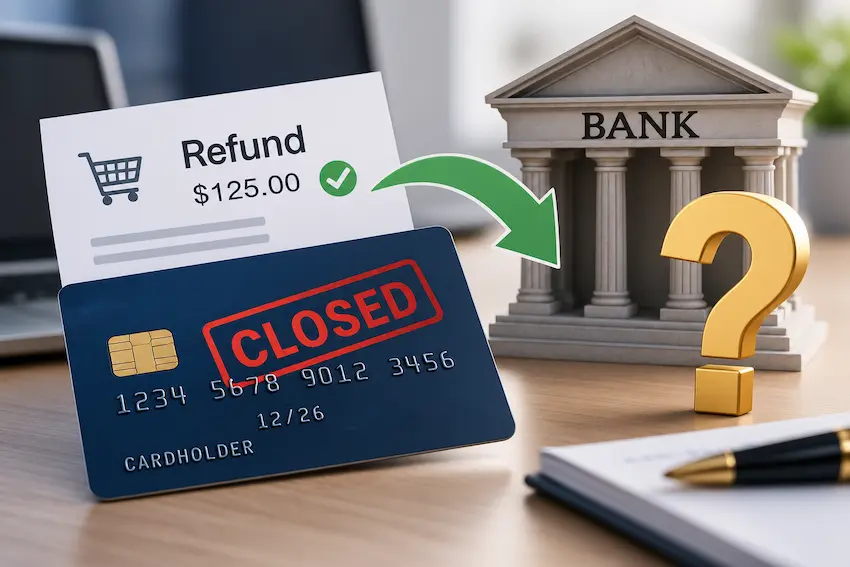
A refund sent to a closed credit card is almost never lost. If your card was only replaced or expired, the account is usually still open and the refund lands on it. If the account itself is closed, the refund typically becomes a credit balance the issuer owes you, and federal law requires the issuer to refund it within seven business days after it receives your written request.
Build your refund request letter and see your deadline
Why the merchant won’t just send it to your new card, and the one situation where they can. Read why
Credit Balance Refund Letter Builder
Answer a few questions and get a ready-to-send letter that asks your issuer for the credit balance under Regulation Z, plus an estimated deadline. Nothing you type leaves your browser.
Your request
General information only, not legal advice. The deadline is an estimate; confirm your issuer’s business days.
First: Is Your Card Actually Closed?
If you are waiting on a refund to a closed credit card, start by working out what “closed” means in your case. Three different things get called “closed,” and they behave very differently. A card that expired or was replaced is usually the same credit account with a new number or date. A closed account is one that has actually been ended. A charged-off account is one the lender has written off, but the debt may still be owed.
The fastest way to tell is to log in to your online account or call the number on your last statement and ask: “Is the account still open, and what happened to the card ending in these four digits?” Then find your situation in the table.
| Situation | What it usually means | Where the refund usually goes | What to do |
|---|---|---|---|
| Expired | The date passed and a renewal was sent | Usually the same account | Check the current statement |
| Replaced (lost/stolen) | New number, same account | Usually matched to the same account | Check after one statement cycle; use the letter if missing |
| You closed the account | The account was ended | A credit balance, a mailed check, or rejected back to the merchant | Ask the issuer; send the credit-balance letter |
| Issuer closed the account | The issuer ended the account | Same as above | Same as above |
| Charged off | The lender wrote off the debt; you may still owe it | Usually reduces what you owe first | Ask for a statement showing how the credit was applied |
| In collections | The debt was sold or placed with a collector | Depends on who holds the account | Ask who holds it, in writing |
| Debit card / bank account closed | Different rules apply | May be returned to the merchant | Ask the merchant to reissue by check |
Refund to a Replaced, Expired, or Lost Card: Usually Automatic
When your card is replaced after a loss, theft or fraud report, or renewed at expiration, you generally get a new number or expiration date on the same credit account. A credit card refund sent to the old number is usually matched to that account and shows up as a credit. Issuer practices vary, which is why this section says “usually.” A refund to an expired credit card is handled the same way when the account is still open.
If you reported the card lost or stolen, the replacement is still tied to your account history. If the loss involved charges you didn’t make, see Unauthorized Credit Card Charges.
When to check: look at your current statement and your online account for the refund. If the merchant says it sent the money and you see nothing after one full statement cycle, use the letter builder above or the billing-error steps below.
Refund Sent to a Closed Credit Card Account: What Happens Next
When an account is closed and a merchant sends a refund to it, one of three things generally happens:
- The issuer accepts and posts it. The account now shows a negative balance. That is a credit balance the issuer owes you, and the Regulation Z refund rule covers it.
- The issuer sends you the money. Some issuers mail a check or deposit the amount to a linked bank account without being asked.
- The issuer rejects it. The money goes back to the merchant’s side. You then need the merchant to pick another method, such as a check.
If you are still deciding whether to close a card, read How to Cancel a Credit Card first. If the issuer closed your account without telling you, see Credit Card Closed Without Warning.
Why the Merchant Won’t Send It to Your New Card
This is not a quirk of one store. Card network rules generally have merchants send a refund to the same payment credential used for the original purchase. A merchant usually can’t just pick your new card, because the refund is tied to the original sale.
There is an exception. Visa’s merchant guidance on returns says a merchant may refund to a different account of the same brand when the original account is no longer available or valid (for example, the card was replaced) or the issuer declines the refund. The merchant has to confirm the original purchase first, and when no card option works, it may offer another form of credit such as a check or store credit. The rule describes what merchants are permitted to do, so it does not give you a right to demand a particular method.
What to ask the merchant, in writing:
- The date the refund was issued.
- The exact amount.
- The Acquirer Reference Number (ARN), a tracking number that lets your issuer and the merchant’s bank trace a specific refund. The merchant can get it from its payment processor.
Hotel and Airline Refunds to an Old Card
Travel refunds can be slow, and an old card can add complications. Common problems are long delays, partial credits, and a voucher offered when you expected money back on your card. Before you accept anything, ask for these in writing:
- Whether it is a refund to your original form of payment or a voucher or credit.
- The refund date and the amount.
- The ARN, so you can give it to your issuer if the credit doesn’t appear.
Rules for refundable versus non-refundable fares, and for trips the provider canceled versus ones you canceled, vary by provider and by ticket. If the card is gone, say so up front and ask for a check or a refund to your new card as an alternative.
Negative Balance on a Credit Card: What It Means
A negative balance means the issuer owes you money. Getting that money back is called a credit card credit balance refund. A negative balance can come from a merchant refund that is larger than what you owe, or from an overpayment. Either way, you have two choices: leave it on the account so it offsets future purchases, or ask for it back.
Leaving it is fine on an open account you still use. On a closed account there is nothing to offset, so you will want to request the refund. The issuer may take into account purchases that are pending or not yet on a statement when it works out how much is left to refund.
Credit balance refund rules at a glance:
| Item | What the rule says |
|---|---|
| Minimum balance | Over $1 |
| Deadline after written request | 7 business days after receipt |
| If you don’t ask | Good-faith refund effort once the balance has stayed more than 6 months |
| Refund methods | Cash, check, money order, or deposit to your account |
| Rule | 12 CFR § 1026.11(a) |
The 7-Business-Day Rule: How to Get a Credit Balance Refunded
When a credit balance over $1 exists on your credit card account, Regulation Z requires the issuer to credit it to your account and to refund any part of it within seven business days after it receives your written request.
The clock starts on receipt, not on the day you mail it. That is why certified mail with return receipt matters: it proves the date the issuer got your letter. Use the letter builder to see an estimated deadline.
What counts as a business day. For this rule, Regulation Z § 1026.2(a)(6) defines it as a day the creditor’s offices are open to the public for carrying on substantially all of their business functions. That depends on the issuer, so the tool above estimates by skipping weekends and Federal Reserve holidays. Treat its date as a guide and confirm with your issuer.
What if you only called? The official commentary says an issuer may also refund on an oral or electronic request. That is something issuers are allowed to do, not something that starts the seven-day clock. Call if you like, since many issuers will help immediately, but also send the letter. The commentary doesn’t say an email or secure message counts as a written request, so send certified mail and a secure message together, and keep proof of both. Standing orders to refund any future credit balance don’t have to be honored.
If you do nothing. The issuer must make a good-faith effort to refund a credit balance that has remained in the account for more than six months. That includes tracing you through your last known address or phone number if needed. If the effort fails, the rule imposes nothing further, and what happens to the money is decided under other applicable law, usually state law (see the unclaimed property section below).
Refund Issued but Not Showing? Use the 60-Day Billing-Error Rule
Merchants say “processed” before the credit reaches your account. If your closed credit card refund has not been received, or it still hasn’t appeared after a full statement cycle, you have a formal route. Under Regulation Z § 1026.13, a failure to properly reflect a payment or other credit on your statement is a billing error.
Your written notice is generally due within 60 days after the issuer sent the statement that reflects the problem. For a missing refund, that is the statement where the credit should have appeared. Send it to the issuer’s billing-error address, which is listed on your statement and is usually not the payment address. Include your name, the account number, the amount, the date the merchant said it refunded, and the ARN if you have it. The issuer must acknowledge a proper notice within 30 days and resolve it within two billing cycles (no more than 90 days).
The full process, including what to do when the merchant never issued the refund, is in How to Dispute a Credit Card Charge.
Where to send what:
| Problem | Send to | Deadline |
|---|---|---|
| Credit balance refund | The issuer’s correspondence address on your statement | 7 business days after the issuer receives it |
| Missing refund credit (billing error) | The issuer’s billing-error address | Generally within 60 days after the statement that should have shown the credit |
| Merchant never issued the refund | The merchant first, in writing; then your issuer’s dispute department | Issuer dispute windows vary, so act soon and see the dispute guide |
Refund to a Charged-Off Card or an Account in Collections
A charge-off is an accounting step by the lender. It doesn’t automatically erase what you owe. When a refund posts to an account that still has an outstanding balance, the credit generally reduces that balance first. Any amount left over can become a credit balance owed to you.
Hypothetical examples. If you owe $1,000 on a charged-off account and a $300 refund posts, you generally owe $700 afterward. If you owe $100 and a $300 refund posts, you generally owe nothing and the issuer owes you the remaining $200.
If the debt was sold or placed with a collector, where the refund goes depends on who holds the account. Ask in writing who currently holds it, and ask for an account statement showing how the credit was applied. For background, see What Happens If You Don’t Pay Your Credit Card and Debt Collector Rights. The letter builder includes a line asking the holder to confirm how the credit was applied.
Refund to a Closed Debit Card or Bank Account: Different Rules
The credit balance rule in Regulation Z § 1026.11 applies to credit accounts only. It does not apply to debit cards or bank accounts, so the seven-day refund right and the letter above don’t carry over.
A refund sent to a closed deposit account may be returned to the merchant, and deposit-account rules differ from credit card rules. If the bank account is still open and only the card was replaced, the refund often still reaches the account, but confirm with your bank. If it bounced back, ask the merchant to reissue the refund by check or another method. For a closed or frozen account, see Bank Froze or Closed Your Account.
Can an Old Refund Become Unclaimed Property?
It can. When a credit balance goes unclaimed and the issuer can’t find you, what happens next is decided under other applicable law, and that is generally state law. Dormancy periods and reporting rules vary by state, and there is no single federal timeline.
To look for money held for you, search the official programs in your current state and in any state where you have lived. USAGov explains how, and the National Association of Unclaimed Property Administrators lists every state program at unclaimed.org. Searching official programs is generally free, so be wary of anyone who asks for a fee to find your money.
How Credit Card Refunds Normally Work — and How Long They Take
A credit card refund has two halves. First the merchant processes it and sends a credit to its bank. Then your issuer receives the credit and posts it to your account. When a merchant says “processed,” only the first half is done.
Federal rules set outer limits for both steps. Under Regulation Z § 1026.12(e), a merchant that accepts a return or forgives a debt for services must send a credit statement to the card issuer within 7 business days, and the issuer must credit your account within 3 business days of receiving it. Those limits don’t cover every step in between, so in practice a few days to a couple of weeks is common, and it can run longer.
You may first see the credit as pending. Pending items can change before they post, so wait for the credit to post before you count on it. For your own case, the refund date the merchant gives you and your next statement date are the best clues to when it should show up.
What to Do Today: Step by Step
- Check whether the account is open. Log in or call the number on your last statement.
- Get the refund date, amount and ARN from the merchant, in writing.
- Check the statement after one cycle. Look for a credit or a negative balance.
- Send the credit-balance letter by certified mail with return receipt. Use the letter builder.
- Use the billing-error notice if the credit is missing, within 60 days of the statement that should have shown it.
- Escalate to the CFPB if the issuer doesn’t respond, using the CFPB complaint portal.
Frequently Asked Questions
Can a refund go to a closed credit card?
A merchant can send it, and the issuer may accept it. If it posts to a closed account, it generally becomes a credit balance the issuer owes you. The issuer may also reject it, which sends the money back toward the merchant.
What happens if a refund is sent to a closed credit card?
Either it posts as a negative balance you can request in writing, the issuer sends you a check or deposit, or the issuer rejects it and the merchant has to reissue it another way. Check your online account first to see which happened.
Will a refund go to my replacement card?
Usually yes. A replacement is generally the same account with a new number, and refunds sent to the old number are typically matched to the account. Check your statement after a cycle and use the letter if it doesn’t appear.
What if my card expired after the purchase?
A renewed card is usually the same account, so the refund normally posts there. If the merchant’s refund was declined because of the old date, ask them to retry or issue a check.
Can a merchant refund to a different card?
Network rules generally send refunds to the original card. Visa’s merchant guidance allows a refund to a different account of the same brand when the original is unavailable or the issuer declines it. It’s permitted, not guaranteed, so the merchant decides.
Why does my credit card show a negative balance?
The issuer owes you money. It usually comes from a refund bigger than your balance or from an overpayment.
How do I get a negative balance refunded?
Ask your issuer to refund it, and put the request in writing. For a credit balance over $1, the issuer must refund it within seven business days after it receives your written request. The letter builder writes the request for you.
How long does a credit balance refund take?
Seven business days after the issuer receives your written request, under 12 CFR § 1026.11(a)(2). Mailing time comes first, since the clock starts on receipt.
Does the 7-day clock start when I send the letter or when the bank receives it?
When the issuer receives it. That’s why certified mail with return receipt helps.
What if I only called?
The issuer may refund on an oral request, but the guaranteed seven-day clock is tied to a written request. Follow up with a letter.
Does an email count as a written request?
The official commentary doesn’t say email or a secure message counts. It describes refunds on an oral or electronic request as something an issuer may do. To be safe, send certified mail and a secure message, and keep proof of both.
What if the merchant says the refund was processed but I don’t see it?
“Processed” usually means the merchant sent it, not that your issuer posted it. Ask for the date and ARN, wait one statement cycle, then use the billing-error notice if it’s still missing.
Can I dispute a missing refund?
Yes. A failure to properly reflect a credit is a billing error, and your written notice is generally due within 60 days after the statement that should have shown it. See How to Dispute a Credit Card Charge.
What happens to a refund on a charged-off card?
A credit generally reduces the balance you owe first. Any excess may be owed to you.
What if the account is in collections?
Where the refund goes depends on who holds the account. Ask in writing who holds it and how the credit was applied.
What happens with a closed debit card?
The credit balance rule doesn’t apply. A refund to a closed deposit account may bounce back to the merchant, who can reissue it by check.
Will a hotel or airline refund go to my new card?
Usually it goes to the original card and is matched if the account is open. Ask for the refund date and ARN in writing, and ask whether you’re getting money back or a voucher.
Can an old refund become unclaimed property?
It can. What happens to an unclaimed credit balance is decided under other applicable law, generally state law. Dormancy periods vary by state, and there is no single federal timeline. Search your state’s official unclaimed property program.
Should I close a card while waiting for a refund?
Waiting is usually simpler. Keeping the account open until pending refunds post makes them easier to track. If you do close it, request any credit balance afterward.
Can I withdraw a negative balance as cash?
Not directly. You ask the issuer to refund it. The rule lists cash, check, money order, or a deposit to your account, and issuers usually offer a check or a bank deposit.
This article is for educational purposes only and is not legal or financial advice. Rules and practices vary by issuer, merchant and state. All dollar examples are hypothetical.

Daniel Hayes is the founder and sole researcher at AdvoraHQ. He covers U.S. personal finance, insurance, and consumer law — working directly from IRS publications, federal and state statutes, court opinions, and SEC filings rather than secondary summaries. His focus is the gap between what readers think they know and what the source documents actually say. Daniel is not a licensed attorney, CPA, or financial advisor; his articles are educational and not personalized advice. Reach him at Daniel.Hayes@advorahq.com.