
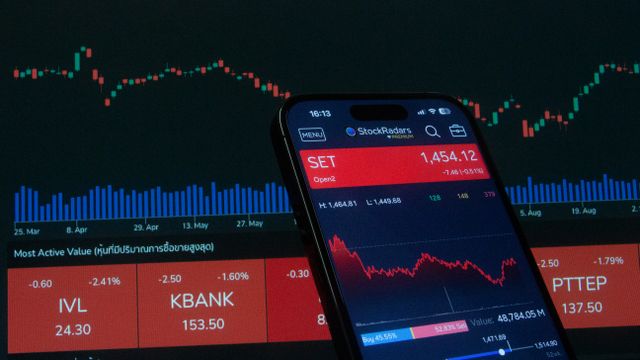
Can You Trade Stocks After Hours? Extended-Hours Trading Explained (Sessions, Rules, and Risks in 2026)
Yes — if your broker offers it, you can buy and sell stocks and ETFs before the opening bell and after the closing bell, and at a handful of brokers you can trade overnight too. What changes outside 9:30 a.m.–4:00 p.m. ET isn’t just the clock: there are fewer buyers and sellers, the gap between bid and ask is wider, and almost every broker takes away every order type except the limit order.
Most U.S. brokers let you trade stocks and ETFs somewhere between 4:00 a.m. and 8:00 p.m. ET, and several now offer overnight sessions — but only with limit orders, at thinner liquidity and wider spreads than the regular 9:30 a.m.–4:00 p.m. session.
- Pre-market: 4:00 a.m.–9:30 a.m. ET — most large brokers open at 7:00 a.m.
- After-hours: 4:00 p.m.–8:00 p.m. ET
- Limit orders only at most brokers
- Mutual funds: never tradable outside regular hours
| Session | Hours (ET) | Who can trade | What’s different | Order types |
|---|---|---|---|---|
| Pre-market | 4:00 a.m. – 9:30 a.m. | Retail and institutions, through brokers that offer it — most large brokers open at 7:00 a.m. | Very thin before 8:00 a.m.; no consolidated best-price protection | Limit orders only at most brokers |
| Regular | 9:30 a.m. – 4:00 p.m. | Everyone | Deepest liquidity, tightest spreads; sets the official opening and closing prices | Full range — market, limit, stop, stop-limit |
| After-hours | 4:00 p.m. – 8:00 p.m. | Retail and institutions, through brokers that offer it | Where most earnings land; small volume can move a price sharply | Limit orders only at most brokers |
| Overnight | ≈8:00 p.m. – 4:00 a.m. | Retail at a handful of brokers, on a restricted list of securities | Thinnest session of all; matched on alternative trading systems with price bands | Limit orders only; often whole shares only |
4:00–8:00 p.m.
≈8:00 p.m.–4:00 a.m.
4:00–9:30 a.m.
9:30 a.m.–4:00 p.m.
And the price you see at 7 p.m. is not the price you’ll get at the open — here’s why.
U.S. Trading Sessions: When You Can Actually Trade
The U.S. stock market has one official session and three unofficial ones. The official session — the one that produces the opening and closing prices you see quoted everywhere — runs 9:30 a.m. to 4:00 p.m. ET, Monday through Friday. That’s the window the SEC defines as regular trading hours, and it hasn’t moved since 1985.
Everything on either side of it is extended-hours trading. FINRA describes the pre-market as the period before regular trading begins and after-hours as the period after it ends, with overnight trading — roughly 8:00 p.m. to 4:00 a.m. ET — more recently made available to retail investors in certain stocks.
Here’s the part that trips people up: the market-wide session and your broker’s session are two different things. Pre-market trading on the exchanges begins as early as 4:00 a.m. ET, but most large retail brokers won’t accept an order until 7:00 a.m. FINRA itself describes the typical pre-market as running from 7:00 a.m., because that’s when the broker doors actually open for most people. If you tried to trade at 5 a.m. and the button was greyed out, that’s why — not because the market was closed, but because your broker wasn’t in it yet.
Weekends, Sundays, and market holidays
U.S. equity markets are closed on weekends and on official exchange holidays, and there is no extended-hours trading on those days either. What confuses people is the “24/5” language: a trading week that runs continuously starts on Sunday evening ET, not Sunday morning. Robinhood’s overnight market, for instance, opens Sunday at 8:00 p.m. ET and runs to Friday at 8:00 p.m. ET. So “trading on Sunday” in practice means Sunday night — the front end of Monday’s trading day, not a genuine weekend session.
If any of this is landing on top of a shakier foundation than you’d like, our Beginner’s Guide to Investing in Stocks 2026 covers the ground this article assumes you already have.
How Extended-Hours Trading Actually Works
During regular hours, your order goes to an exchange where market makers stand ready to quote both sides of a trade, and brokers are generally required to fill your order at the best price available across all venues — the National Best Bid and Offer, or NBBO.
Outside those hours, that machinery is mostly switched off. Extended-hours orders are matched on electronic communication networks (ECNs) and alternative trading systems (ATSs) — SEC-regulated venues that pair a buy order directly against a sell order, with no market maker obliged to step in and no consolidated best-price requirement. FINRA is explicit about this: the NBBO is only published during regular trading hours, so the best-execution protection you rely on during the day does not apply after hours. Two venues can show two different prices for the same stock at the same moment, and you may get the worse one.
How you turn it on
Before a firm can let you trade outside regular hours, FINRA Rule 2265 requires it to give you an extended-hours risk disclosure — and to post that disclosure conspicuously on its website. In practice this means a one-time agreement you accept in your account settings or on the order ticket itself. At some brokers it’s now switched on by default at account opening; at others you’ll find it under trading permissions or as an “extended hours” toggle when you place the order. There’s no application, no minimum, and no fee for the permission itself.
The Four Risks You’re Taking
FINRA’s model risk disclosure names six risks; four of them are what an ordinary investor will actually run into. None of this is a reason to never trade after hours. It is a reason to know what you’re paying for the convenience.
1. Lower liquidity
Far fewer participants are active, so there may simply be nobody on the other side of your order at your price. Your order may fill partially, or not at all. FINRA puts it plainly: extended-hours activity is still dwarfed by the tens of millions of transactions that take place during regular hours.
2. Wider bid-ask spreads
The spread is the gap between what you can buy at and what you can sell at, and it is a real cost on every single trade. Thin books widen it. A large-cap stock that trades a penny wide at 2 p.m. can be a nickel or a dime wide at 2 a.m. — money that comes out of your side of the trade before the position has done anything at all.
3. Higher volatility
Fewer trades means each one moves the price more. Layer a company’s earnings release on top of that and you get the classic after-hours whipsaw: a stock lurches on a few thousand shares, then settles somewhere else entirely once the full market has had time to read the numbers.
Why thin markets play tricks on your judgment
The first three risks compound into something worth naming on its own: a market this thin doesn’t just move more, it feels more dramatic than it is. A few thousand shares can swing a price 5–10% in either direction, and because that percentage looks identical on your screen whether it came from a million trades or fifty, it’s easy to react to after-hours noise as if it carried the weight of a full session’s worth of information. That’s the setup for both classic reactions: chasing a spike out of fear of missing it (FOMO), or dumping a position into a dip that a deeper market would have absorbed without comment. Neither reaction is irrational given what’s on the screen — the mistake is treating a thin-volume print with the same confidence you’d give a regular-hours price. The FINRA risks above are the mechanism; this is the behavioral consequence of not accounting for it.
4. Order-type limits and unlinked markets
You lose the order types you’re used to and the best-price protection that comes with the consolidated quote. FINRA also flags unlinked markets — the price on one extended-hours venue may not reflect the price on another operating at the same moment.
| Factor | Regular session | Extended hours |
|---|---|---|
| Liquidity | Deepest of the day; most orders fill | Thin; partial fills and no-fills are normal |
| Bid-ask spread | Tightest — often a penny on large caps | Wider, sometimes substantially |
| Volatility | Absorbs news across millions of trades | Small volume can move a price sharply |
| Order types allowed | Market, limit, stop, stop-limit and more | Limit orders only at most brokers |
| Best-price protection | NBBO applies across venues | No consolidated NBBO; venues aren’t linked |
| Who’s trading | Retail, institutions, market makers | Mostly professionals and news reactors; no obliged liquidity providers |
What You Can and Can’t Trade After Hours
That once-daily pricing mechanic is worth understanding on its own terms, and we walk through it in Mutual Funds for Beginners in 2026. If the thing you actually want is a fund you can trade intraday, that’s an ETF — and the structural differences are laid out in Index Funds vs ETFs.
| Instrument | Tradable in extended hours? | Why |
|---|---|---|
| Stocks | Yes — eligible list varies | Matched on ECNs and ATSs; overnight lists are usually restricted to large, liquid names |
| ETFs | Yes — eligible list varies | Trade like stocks on an exchange, so the same venues apply |
| Mutual funds | No — never | Priced once daily at NAV after the close; an evening order fills at the next day’s NAV |
| Options | Very limited | Options exchanges offer extended-hours trading in only a small number of contracts |
| Fractional shares | Varies — check your broker | Several brokers restrict overnight sessions to whole shares only |
Weekends and holidays: nothing trades. U.S. equity markets are closed Saturday and Sunday and on official exchange holidays, and extended-hours sessions don’t run on those days either. Brokers with “24/5” offerings start their week Sunday evening ET.
How Options Traders Are Affected
Options and their underlying stock don’t keep the same hours, and that gap catches people off guard. Standard equity options stop trading at 4:00 p.m. ET, right when the stock itself keeps going for another four hours in after-hours trading — and potentially longer once the industry’s overnight sessions arrive.
Pin risk: the assignment uncertainty that doesn’t end at the close
If you write (sell) options, the after-hours session creates a specific hazard called pin risk. The Options Clearing Corporation automatically exercises any option that’s in the money by even $0.01 at the 4:00 p.m. close — but option holders have until 5:30 p.m. ET to submit instructions overriding that default, a deadline FINRA sets industry-wide. Between 4:00 p.m. and 5:30 p.m., the underlying stock is trading in the after-hours market and can move enough to flip an option from in-the-money to out-of-the-money or back. If you’re short a contract near the strike price, you may not find out whether you’ve been assigned 100 shares per contract until the following Monday — a real position, taken on by a stock move you had no way to react to in real time. Traders who don’t want that exposure typically close or roll positions well before 4:00 p.m. on expiration day rather than carrying them into the print.
| Product | Regular close | Extended access |
|---|---|---|
| Most equity options | 4:00 p.m. ET | None — closes with the regular session |
| Select multi-listed stock options (Cboe) | 4:00 p.m. ET | Pre-market 7:30–9:25 a.m.; post-market 4:00–4:15 p.m. — eligible list only, since July 13, 2026 |
| SPX, XSP, VIX, RUT index options | 4:00 p.m. ET (Curb runs to 5:00 p.m.) | Global Trading Hours, 8:15 p.m.–9:25 a.m., nearly every trading night |
| Underlying stock itself | 4:00 p.m. ET | After-hours to 8:00 p.m.; overnight at some brokers |
Which Brokers Offer Extended Hours (and When)
The single most common question about extended hours isn’t what it is — it’s whether your own broker does it, and until when. Below are the published windows from five widely used firms, taken from each firm’s own disclosures. This is a factual table, not a ranking: no broker here is better than another for extended hours, and choosing one is a different question entirely, which we cover in Best Online Stock Brokers 2026.
| Broker | Pre-market (ET) | After-hours (ET) | Overnight | Order types |
|---|---|---|---|---|
| Fidelity | 7:00 a.m. – 9:28 a.m. | 4:00 p.m. – 8:00 p.m. | None published | Limit orders only; no GTC; unfilled orders auto-cancel at session end |
| Charles Schwab | 7:00 a.m. – 9:25 a.m. | 4:05 p.m. – 8:00 p.m. | 24/5 continuous via thinkorswim (EXTO), 1,100+ eligible stocks and ETFs | Limit orders only |
| E*TRADE | 7:00 a.m. – 9:30 a.m. | 4:00 p.m. – 8:00 p.m. | 8:00 p.m. – 7:00 a.m., Sun–Thu | Limit orders only; extended-hours agreement required |
| Vanguard | None published | 4:15 p.m. – 6:30 p.m. | None published | Limit orders only; unfilled orders cancel at session end |
| Robinhood | 7:00 a.m. – 9:30 a.m. | 4:00 p.m. – 8:00 p.m. | 24 Hour Market, 8:00 p.m. Sun – 8:00 p.m. Fri, select list | Limit orders only; whole shares only overnight |
Two things stand out. First, Vanguard is the outlier — it publishes no pre-market session at all and closes its evening window at 6:30 p.m., well before the industry’s 8:00 p.m. That’s consistent with a firm built around long-horizon fund investors rather than active traders. Second, the brokers that go furthest overnight route those orders to alternative trading systems and restrict them hard: a short list of eligible securities, whole shares only, limit orders only.
What actually shows up on those overnight-eligible lists is consistent across brokers, even though the lists themselves aren’t identical: the mega-cap names and the highest-volume ETFs — think Apple, Nvidia, Amazon, Tesla, and Microsoft on the stock side, and SPY, QQQ, and IWM on the ETF side. That’s not a coincidence; brokers select for it specifically because those names have enough natural order flow to keep the overnight book from being empty. A thinly traded small-cap almost never makes an overnight list, and the exact roster at any given broker changes as liquidity conditions shift — check your broker’s current list rather than assuming a name you saw mentioned elsewhere is still on it.
Turning it on: a step-by-step walkthrough
The process is broadly the same everywhere and takes about a minute the first time.
- Accept the extended-hours risk disclosure. Look in account settings, trading permissions, or on the order ticket itself. Some brokers now enable this automatically at account opening; others need a one-time opt-in.
- Build your order as usual — ticker, buy or sell, share quantity.
- Select the extended-hours session or time-in-force on the order ticket. This is where broker terminology diverges: Fidelity and Robinhood let you pick the session directly; Charles Schwab (including thinkorswim) uses order codes EXT (regular extended hours) and EXTO (24/5 overnight); E*TRADE uses an EXT duration setting.
- Enter a limit price only — market orders are typically greyed out or unavailable outside the regular session.
- Submit, then re-check it. Most extended-hours orders expire when that session ends rather than carrying into the next one, so confirm it filled, or re-enter it, before you assume it’s still working.
Why the After-Hours Price Isn’t the Opening Price
This is the misconception worth dismantling. A stock reports earnings at 4:15 p.m., the after-hours quote jumps 6%, and it feels like a preview of tomorrow. It isn’t.
An after-hours quote is the last price at which a small number of shares changed hands in a thin market. It is a data point, not a forecast. FINRA is direct about this: extended-hours trading doesn’t change the exchanges’ official closing prices, and it doesn’t determine the next day’s opening price. The official close is the 4:00 p.m. price, whatever happens afterward — that’s the number funds use to value their holdings.
Between 8 p.m. and 9:30 a.m., a great deal happens. Analysts publish. Asian and European markets trade. More news lands. And then the opening auction gathers every buy and sell order that accumulated overnight and matches them at a single clearing price — a process involving vastly more volume than the entire after-hours session it follows. A stock quoted up 6% at 7 p.m. can open flat, or down.
A concrete version of this: say a mid-cap company reports earnings at 4:15 p.m. and beats estimates. In the first few minutes, a handful of traders bid the stock up 8% on a few thousand shares — that’s the whole move, because that’s the whole order book. Overnight, an analyst downgrades the stock on valuation despite the beat, and European funds trim their position before the U.S. session even opens. By the 9:30 a.m. auction, tens of millions of shares change hands and the stock opens up only 2%. Nothing about the after-hours 8% was wrong — it was a real, filled trade — but it was a preview drawn from a tiny sample, not a forecast.
Why the news lands after the bell at all
By design. Most U.S. companies release quarterly results immediately after the close or before the open, precisely so the market has time to read them outside the regular session rather than digesting a 10-K’s worth of information in the middle of a trading day. The after-hours move you’re watching is the market’s first draft of an opinion, formed by whoever happened to be at a desk.
What’s Changing in 2026: The Move Toward 24-Hour Markets
The U.S. equity market is genuinely rebuilding itself around a longer day, and since this article was first published the scattered timelines below have converged on a single date. The picture is still dated deliberately, because approved, launched, and proposed remain three different things and most coverage blurs them.
Off-hours trading reached 11.5% of all U.S. equities activity in Q2 2025 — over 2 billion shares and $62 billion traded daily outside regular hours, roughly double the just-over-5% share in Q1 2019. The overnight slice of that is still tiny: NYSE Research puts genuine overnight activity (8 p.m.–4 a.m.) at under 0.15% of total volume through 2025. Source: NYSE Research, Q2 2025 Extended Hours Trading Review; NYSE Research, “Night Moves: What Trades and When in the Overnight Market.”
What has already launched
- 24X National Exchange began trading on October 15, 2025 as the first SEC-approved 23/5 national securities exchange. Its first phase runs 4:00 a.m. to 8:00 p.m. ET on weekdays; its overnight stage is now targeting the same December 6, 2026 date as the rest of the industry.
- NSCC 24×5 clearing went live on June 28, 2026. The DTCC subsidiary that clears and guarantees virtually all U.S. equity trades now operates from 8:00 p.m. ET Sunday to 8:00 p.m. ET Friday, extending its central counterparty guarantee to overnight trades. This was the unglamorous piece everything else was waiting on.
- Cboe’s extended options session for select multi-listed single-stock options launched July 13, 2026 — see the options section above.
What is approved and now has a target launch date
- NYSE Arca received SEC approval on February 11, 2025 to operate 22–23 hours a day on weekdays. NYSE’s own extended-hours FAQ (v4.0, August 2026) now names December 6, 2026 as its Overnight Session launch date, running 9:00 p.m.–4:00 a.m. ET alongside its existing Early and Late sessions.
- Nasdaq received SEC approval on April 10, 2026 for a 23-hour, five-day schedule it calls Global Trading Hours — a Day Session from 4:00 a.m. to 8:00 p.m. ET, a one-hour maintenance pause from 8:00 p.m. to 9:00 p.m. for systems work and corporate actions, and a Night Session from 9:00 p.m. to 4:00 a.m. On August 25, 2026, Nasdaq confirmed December 6, 2026 as its launch date. It is not operating yet.
- Cboe received SEC approval in June 2026 for 23/5 U.S. equities trading on its EDGX exchange and is targeting the same December window.
Nasdaq’s approved schedule is 23 hours a day, five days a week — not 24. The missing hour is a deliberate 8:00–9:00 p.m. ET pause for maintenance, testing, and processing dividends, splits, and other corporate actions. Major corporate actions — splits, large dividends, mergers, symbol changes — will generally stay halted until 8:00 a.m. ET the next morning even once the session is live. Source: SEC approval order, File No. SR-Nasdaq-2025-109, April 10, 2026; Nasdaq Global Trading Hours corporate-actions FAQ.
What everything still waits on
Exchanges can’t run overnight sessions until the Securities Information Processors — the systems that publish the consolidated tape and the official NBBO — extend their own hours. The SIPs’ own plan amendment targets December 2026 as well, which is precisely why the industry converged on that date. Until it happens, there is no consolidated quote overnight, which is exactly why the “unlinked markets” risk exists today. Internationally, LSEG announced LSE 24 in July 2026, a near-round-the-clock weekday venue, with client testing due by the end of 2026 and the first products in the first half of 2027, subject to approval.
The case on both sides
Supporters point to a market that has outgrown one time zone: foreign investors hold trillions of dollars of U.S. equities and currently have to sit on unhedged overnight risk or trade on less-regulated venues, and a longer day lets anyone respond to news when it breaks rather than queuing until 9:30 a.m. Regulators and market participants have raised the other side: overnight liquidity is genuinely thin — under 0.15% of total volume today, by NYSE’s own data — spreads widen accordingly, fragmenting volume across more hours may weaken price discovery, and there is a real concern that always-on markets nudge ordinary investors toward trading more than is good for them. Both sets of arguments are sound. We take no position on whether the change is an improvement.
Should Long-Term Investors Care?
Honestly? For most people reading this, almost not at all.
If you’re buying broad-market funds on a schedule, extended-hours access changes nothing about your outcomes — and using it works mildly against you, because you’d be paying a wider spread for the privilege of transacting in a thinner market. The regular session exists for a reason: it’s where the liquidity is, where spreads are narrowest, and where the price you see is the price the whole market agrees on. Trading at 3 a.m. does not get you a better fill; it gets you a worse one, more often than not.
There are narrow legitimate uses. You already decided to act on an earnings release and don’t want to wait 17 hours. Your work schedule genuinely can’t reach the regular session. You need to exit a position after news you can’t ignore. Those are real. “The stock is moving and I want in” is not.
We’re not going to re-litigate market timing here — Is Now a Good Time to Invest? covers why reacting to news rarely helps a long-term investor, and Dollar-Cost Averaging vs. Lump Sum covers the schedule-based approach that makes session timing irrelevant in the first place.
One rule change worth knowing about
Buying and selling the same security on the same trading day is a day trade regardless of which session it happens in — an extended-hours round trip counts. For 25 years that mattered enormously, because four such trades in five business days got a margin account flagged as a “pattern day trader” and required $25,000 in equity to keep going.
That rule is gone. As of June 4, 2026, FINRA replaced the pattern-day-trader designation and its $25,000 minimum equity requirement with new risk-based intraday margin standards. Source: FINRA Regulatory Notice 26-10 and FINRA, “Understanding the New Intraday Margin Requirements”
Frequently Asked Questions
- Can you trade stocks after hours?
- Yes, if your broker offers it. Most major U.S. brokers support pre-market and after-hours trading in stocks and ETFs, and a few now offer overnight sessions. You’ll need to accept a risk disclosure first, and you’ll be limited to limit orders at most firms.
- What time does after-hours trading start and end?
- The after-hours session runs from 4:00 p.m. to 8:00 p.m. ET at most brokers. Vanguard is a notable exception, closing at 6:30 p.m. Schwab starts five minutes late, at 4:05 p.m.
- What time does pre-market trading start?
- Pre-market trading on the exchanges can begin as early as 4:00 a.m. ET, but most large retail brokers don’t open their pre-market session until 7:00 a.m. ET. It runs until the opening bell at 9:30 a.m. — Fidelity and Schwab cut theirs off a couple of minutes early, at 9:28 and 9:25 respectively.
- Can I use a market order after hours?
- At most brokers, no. Extended-hours sessions accept limit orders only, because a market order in a thin book can fill at a price far from where the stock last traded. Some brokers will accept a market order but queue it for the next regular session rather than executing it overnight.
- Can I trade mutual funds after the market closes?
- No — and this is structural, not a broker rule. Mutual funds price once per trading day at net asset value, calculated after the close. An order placed at 6 p.m. executes at the next day’s NAV. There is no such thing as an after-hours mutual fund price.
- Can I trade ETFs in extended hours?
- Yes. ETFs trade on exchanges like stocks, so they’re eligible for the same extended sessions. Eligibility for overnight sessions is narrower and varies by broker — Schwab’s overnight list, for example, includes several hundred ETFs but not all of them.
- Which brokers allow after-hours trading?
- Fidelity, Charles Schwab, E*TRADE, Vanguard and Robinhood all publish extended-hours sessions, though the windows differ substantially — see the broker table above for each firm’s published hours as of July 2026. Schwab, E*TRADE and Robinhood also offer overnight trading on restricted lists of securities.
- Why is the pre-market price different from the opening price?
- Because they’re produced by different mechanisms. A pre-market quote reflects a handful of trades on a single venue with no consolidated best-price requirement. The opening price comes from an auction that gathers every accumulated order and matches them at one clearing price, on far greater volume. News overnight, global markets, and the auction itself all move the number in between.
- Is after-hours trading safe for beginners?
- It’s regulated and legitimate, but the conditions are worse: less liquidity, wider spreads, more volatility, and no best-price protection across venues. For a new investor buying funds, there’s no benefit to offset those costs. If you do trade extended hours, use a limit order and set a price you’d genuinely accept.
- Do after-hours trades count as day trades?
- Buying and selling the same security on the same trading day is a day trade whichever session it happens in. As of June 4, 2026, FINRA eliminated the pattern-day-trader designation and its $25,000 minimum equity requirement, replacing them with risk-based intraday margin standards — but firms have until October 20, 2027 to transition, so your broker may still be counting. Ask yours.
- Can you buy stocks on the weekend?
- No. U.S. equity markets are closed Saturday and Sunday, and extended-hours sessions don’t run then either. “24/5” offerings start Sunday evening ET — Robinhood’s overnight market opens Sunday at 8:00 p.m. ET, which is functionally the start of Monday’s trading day. You can place orders over the weekend, but they’ll queue for the next session.
- When will 24-hour stock trading actually start?
- No U.S. exchange runs a near-24-hour session yet, but the industry now has a shared target: Nasdaq, NYSE Arca, and 24X have all named December 6, 2026 as the launch date for their overnight sessions, pending the Securities Information Processors and DTCC’s clearing systems being ready in time. The SEC is holding a roundtable on September 17, 2026 to work through the remaining operational questions. It’s a real date, not a rumor — but it’s still a target until the sessions are actually live.
- Do I have to pay extra fees to trade after hours?
- Your regular commission structure carries over — most major brokers still charge $0 commission on after-hours stock and ETF trades. What can add cost is a per-share ECN or venue fee, charged by some brokers only when you specifically direct an order to a named ECN rather than letting the broker route it. E*TRADE, for instance, discloses a $0.005-per-share fee for directed orders. Check your broker’s fee schedule before routing large orders this way.
- Can I exercise or get assigned on options after the market closes?
- The options themselves stop trading at 4:00 p.m. ET (a small list of Cboe products runs later — see the options section above), but the exercise decision doesn’t lock in until 5:30 p.m. ET, and the underlying stock keeps trading after the bell. That gap is where “pin risk” lives: a stock that closes right at a strike price can move in or out of the money during after-hours trading, leaving option holders and writers uncertain about assignment until the next session.
- Can I get filled at multiple different prices on one after-hours order?
- Yes. Because extended-hours liquidity is thin and orders are matched directly against whatever is resting on an ECN, a larger limit order can fill in several partial pieces at different prices — all at or better than your limit, but not necessarily at one uniform price the way a deep regular-hours market often allows.
- How late can I cancel an after-hours order?
- Generally, any unfilled portion of a limit order can be cancelled any time before the session ends or before it executes — whichever comes first. Once it matches against a counterparty on the ECN, that portion is done; you can’t unwind a fill. Check your specific broker’s cutoff, since some auto-cancel unfilled orders a couple of minutes before the official session close.
- Does after-hours volume predict how a stock will open the next day?
- Not reliably. Heavy after-hours volume tells you sentiment is strong in one direction, but the opening auction the next morning aggregates a far larger set of orders — including overnight news, analyst moves, and global market activity — and can reprice the stock well away from where it sat at 8 p.m. Read after-hours volume as a signal of surprise, not a forecast of the open.
Sources. Session definitions and risk framing: FINRA, “Extended-Hours Trading: Know the Risks” and FINRA Rule 2265. Regular-hours definition: SEC, “After-Hours Trading”. Margin rule change: FINRA, “Understanding the New Intraday Margin Requirements” and FINRA Regulatory Notice 26-10. Options exercise cutoff: FINRA Information Notice on expiring-options exercise cut-off times. Volume figures: NYSE Research, Q2 2025 Extended Hours Trading Review and NYSE Research, “Night Moves: What Trades and When in the Overnight Market.” Exchange launch dates: NYSE Arca Extended-Hours FAQ (v4.0, August 2026), Nasdaq Global Trading Hours announcement (August 25, 2026), and 24X National Exchange overnight-trading FAQ. Options extended hours: Cboe Global Markets press release, May 28, 2026, and Cboe SPX product specifications. ECN fee disclosure: E*TRADE Rates and Fees. Broker hours: Fidelity, Charles Schwab, E*TRADE, Vanguard, Robinhood.
This article is for educational and informational purposes only and is not investment advice. Trading session times, eligible securities, order-type rules, and fees vary by broker and change over time, and extended-hours trading carries additional risks including lower liquidity, wider spreads, and greater volatility. Regulatory approvals and launch timelines described here — including the December 6, 2026 target date — were verified as of the update below but remain subject to change pending final regulatory and infrastructure readiness. Confirm current details with your broker and consider your own goals and risk tolerance before trading.

Daniel Hayes is the founder and sole researcher at AdvoraHQ. He covers U.S. personal finance, insurance, and consumer law — working directly from IRS publications, federal and state statutes, court opinions, and SEC filings rather than secondary summaries. His focus is the gap between what readers think they know and what the source documents actually say. Daniel is not a licensed attorney, CPA, or financial advisor; his articles are educational and not personalized advice. Reach him at Daniel.Hayes@advorahq.com.